

Grilled Vegetable Skewers with Herb Butter
There’s a moment at every barbecue when the meat comes off the grill and everyone suddenly looks around for something fresh to go with it. That’s when these skewers earn their place. They are bright, smoky, a little charred at the edges, and finished with herb butter that melts into every ridge and corner while the vegetables are still hot. No one has to be talked into eating them. They just reach for another one.
I started making vegetable skewers the way most people do, as an afterthought. A few peppers and onions, thrown on because someone at the table didn’t eat meat, or because the grill had a spare corner. Then I noticed something: the skewers were gone before the chicken. People who said they were just having a little taste came back for a second, and the plate that was supposed to be the token healthy option needed refilling. The difference was never complicated. It was the butter. Plain grilled vegetables are fine. Grilled vegetables brushed with warm garlic and herb butter, while the char is still fresh, taste like something you planned all along.
What makes this version work is balance. You want vegetables that cook at roughly the same speed, cut to roughly the same size, so nothing turns to mush while something else is still raw in the middle. You want a hot grill, not a timid one, because that quick blast of heat is what gives you colour and those dark, smoky edges without drying everything out. And you want the butter to go on at the end, not the beginning, so the herbs stay bright and the garlic doesn’t burn. Get those three things right and the rest is just chopping.
This is also one of the easiest sides to scale. Two skewers or twenty, the method doesn’t change. You can prep everything in the morning, keep the skewers covered in the fridge, and grill them in ten minutes while the main dish rests. They sit happily next to burgers, ribs, grilled chicken, or fish, and they are just as good cold the next day, chopped into a salad or tucked into a wrap. If you only learn one vegetable side for the grill this summer, make it this one.
Why These Skewers Work So Well
The first reason is texture. A good skewer should have a bit of everything: something sweet, like bell pepper or red onion that softens and caramelises; something firm, like zucchini or mushroom that holds its shape; and something with a little bite, like cherry tomatoes that go warm and jammy inside without bursting all over the grill. When you cut them all to about the same size, around an inch and a half, they cook evenly and every bite is different from the last.
The second reason is the grill itself. Vegetables love direct heat in a way a pan never quite matches. The high temperature drives off surface moisture fast, so instead of steaming, the outside chars lightly and the natural sugars start to brown. That is where the flavour comes from. You don’t need a marinade that sits for hours, and you don’t need a long list of spices. Oil, salt, and heat do most of the work, and the herb butter at the end does the rest.
The third reason is that herb butter. Butter carries flavour in a way oil alone doesn’t. It clings to the vegetables, it melts into the little pockets left by the grill marks, and it lets the garlic, parsley, and lemon settle over everything without overpowering it. You brush it on while the skewers are still sizzling, so it soaks in rather than sliding off. If you have ever wondered why restaurant grilled vegetables taste better than the ones you make at home, this is usually the answer. They finish with fat and seasoning while the food is hot.
It helps, too, that this recipe is forgiving. If a pepper is a little bigger than the rest, it still works. If you swap in whatever is in the fridge, it still works. As long as you keep the pieces a similar size and don’t crowd the grill, you will get good skewers. And if you are cooking for people with different tastes, skewers make that easy. Make a few with mushrooms, a few without. Leave the onion off one batch. Nobody has to pick around anything, because each skewer is its own little serving.
Ingredients You’ll Need
You don’t need anything fancy here, and that is part of the point. The shopping list is short, the vegetables are the kind you can find at any grocery store, and the herb butter comes together from things most kitchens already have. Buy vegetables that feel heavy for their size and look fresh, not tired. A limp pepper or a soft zucchini will not improve on the grill.
For the skewers, you will need two bell peppers, one red and one yellow if you can find them, cut into one-and-a-half-inch pieces. Add one large red onion, cut into wedges and separated into two or three layers each, one medium zucchini sliced into thick half-moons, about eight ounces of whole button or cremini mushrooms, and a pint of cherry tomatoes. The tomatoes go on last and need a gentler touch, which we will get to. If you like a little heat, one jalapeño, sliced into thick rings with the seeds left in for warmth or taken out for a milder bite, is a good addition.
For the herb butter, melt half a stick, four tablespoons, of unsalted butter. Stir in two cloves of garlic, finely minced, a tablespoon of chopped fresh parsley, a teaspoon of chopped fresh thyme or rosemary, the zest of half a lemon, and a good pinch of flaky salt. If you only have dried herbs, use half the amount and let the butter sit for five minutes so they soften. Fresh is better here because the flavour stays bright, but dried will still give you a good result, and it is better than skipping the butter altogether.
You will also need two tablespoons of olive oil for tossing the vegetables before they go on the grill, a teaspoon of kosher salt, half a teaspoon of black pepper, and half a teaspoon of smoked paprika if you want a little extra smokiness. The paprika is optional, but on a charcoal grill it adds a depth that suits the whole dish. If you are using wooden skewers, soak them in water for at least thirty minutes before you start, and keep a small bowl of water nearby in case the ends start to char. Metal skewers work just as well and don’t need soaking, though they stay hot, so have tongs and a folded towel ready.
Equipment That Makes It Easier
You don’t need special equipment, but a few things make the job smoother. A grill basket or a piece of heavy-duty foil with holes poked in it is useful if your vegetable pieces are small, though skewers solve most of that problem on their own. Long skewers, ten to twelve inches, are easier to turn than short ones, and flat metal skewers are better than round ones because the vegetables don’t spin when you flip them. If you only have round skewers, thread two side by side through each piece, like a little ladder, and the spinning stops.
A pastry brush is the right tool for the herb butter. A spoon works in a pinch, but a brush gets the butter into the nooks without pooling at the bottom of the plate. Keep a small saucepan or a heatproof bowl near the grill so the butter stays warm and liquid while you cook. If it starts to firm up, set it over the cooler side of the grill for thirty seconds and it will loosen again. A pair of long tongs is essential, both for turning the skewers and for moving them to a cooler spot if the flames flare up.
How to Make Grilled Vegetable Skewers with Herb Butter
Start by getting the grill ready. You want medium-high heat, around 400 to 450 degrees Fahrenheit, with one side a little cooler than the other so you have somewhere to move the skewers if they char too fast. On a gas grill, that means turning one burner down. On charcoal, push the coals to one side. Clean the grates well with a brush while they are hot, then oil them lightly with a folded paper towel dipped in oil and held with tongs. Clean, oiled grates are the difference between neat grill marks and vegetables stuck to the metal.
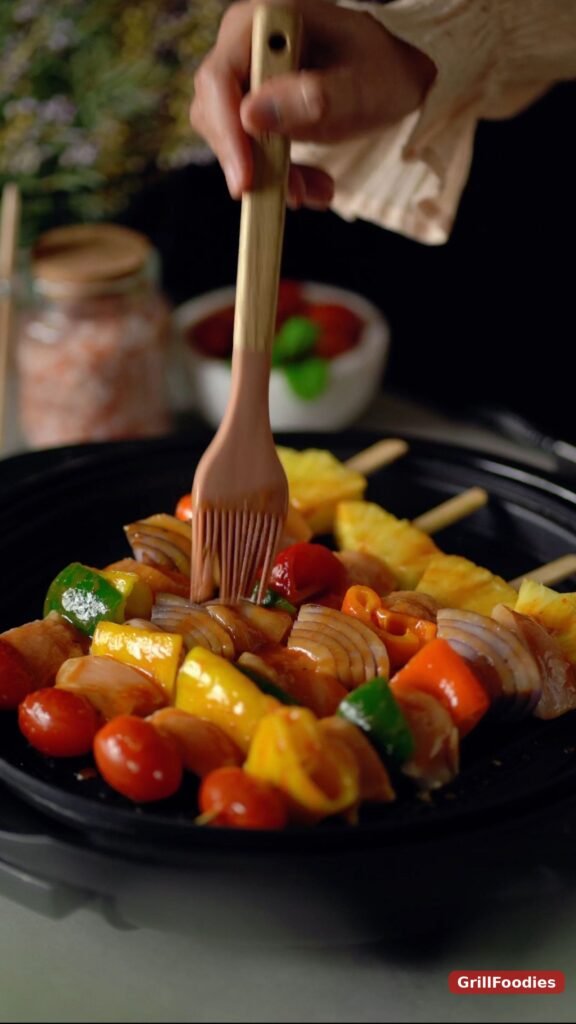
While the grill heats, cut your vegetables. Keep the pieces chunky. A pepper piece that is too small will cook in two minutes and fall apart; a piece that is too big will still be raw when the rest is done. Aim for pieces about an inch and a half across, and cut the zucchini into half-inch thick slices so they don’t bend and break on the skewer. Leave the mushrooms whole if they are small, or halve them if they are large. Keep the cherry tomatoes whole. Put everything except the tomatoes in a large bowl, drizzle with the olive oil, salt, pepper, and smoked paprika, and toss gently with your hands until every piece has a light sheen. Don’t drown them. Too much oil drips, flares, and leaves a bitter taste.
Thread the vegetables onto the skewers, alternating colours and shapes as you go. A good pattern is pepper, onion, mushroom, zucchini, pepper, onion, and so on, with a tomato at each end to anchor the skewer and keep the smaller pieces from sliding off. Leave a tiny gap between pieces, about a quarter of an inch, so the heat can reach all sides. If you pack them tight, the middles steam instead of grilling and you lose the char. Thread the tomatoes onto their own skewers if you can, or put them on the ends, because they cook faster than everything else and you will want to pull them off a minute or two early.
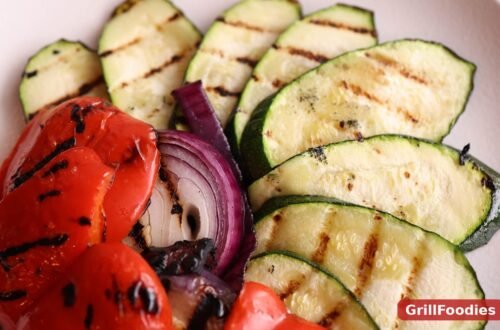
Lay the skewers on the hot side of the grill, across the grates so they don’t slip through, and close the lid. Let them cook for three to four minutes without moving them. This is the hardest part, because it feels like you should be turning them constantly. Don’t. Leaving them alone is what builds the colour. After three or four minutes, turn each skewer a quarter turn with tongs. You should see dark grill marks and edges that are starting to soften. Cook for another three to four minutes, then turn again. Most skewers are done in ten to twelve minutes total. The peppers should be tender with blackened spots, the zucchini should bend slightly when you press it, and the mushrooms should look glossy and shrunken. Pull the tomato skewers off a little earlier, when the skins just start to split.
Move the finished skewers to a platter and brush them generously with the warm herb butter while they are still hot. Turn each skewer once as you brush so the butter coats all sides. Sprinkle with a little extra chopped parsley and a pinch of flaky salt, and serve right away. The butter will melt and pool slightly on the plate, and that is exactly what you want. People will mop it up with bread, or spoon it over the chicken, and nothing will go to waste.
Tips for the Best Skewers Every Time
Cut everything the same size. It sounds obvious, but it is the single biggest factor between skewers that cook evenly and skewers where half the pieces are perfect and the other half are either raw or mushy. Take an extra two minutes at the chopping board. It saves you from standing at the grill trying to rescue individual pieces.
Don’t marinate the vegetables for hours. A long soak in an acidic marinade makes peppers and zucchini soft before they even reach the heat. Oil, salt, and seasoning right before grilling is enough. The herb butter at the end adds all the flavour you need. If you want a marinade flavour, brush on a little extra butter and let the skewers rest for five minutes before serving.
Watch the tomatoes. Cherry tomatoes go from perfect to burst in about a minute. If you thread them on the same skewers as everything else, put them at the ends where you can see them, and pull the whole skewer off when the tomatoes look ready, even if a pepper piece could use another minute. A slightly firm pepper is better than a tomato that has collapsed and dripped juice all over the coals.
Use the cooler side of the grill. If the flames flare up from dripping oil, or if one skewer is charring faster than the rest, slide it to the cooler side for a minute. There is no rule that says everything has to stay on the hottest spot the whole time. Moving food around is part of grilling, and it is better than serving something burnt.
Make the herb butter ahead. You can melt the butter with the garlic and herbs up to a day in advance and keep it in the fridge. Warm it gently before serving, and add the lemon zest at the last minute so it stays fresh. If you are cooking for a crowd, double the butter. People always want more than you think they will.
Serving Ideas
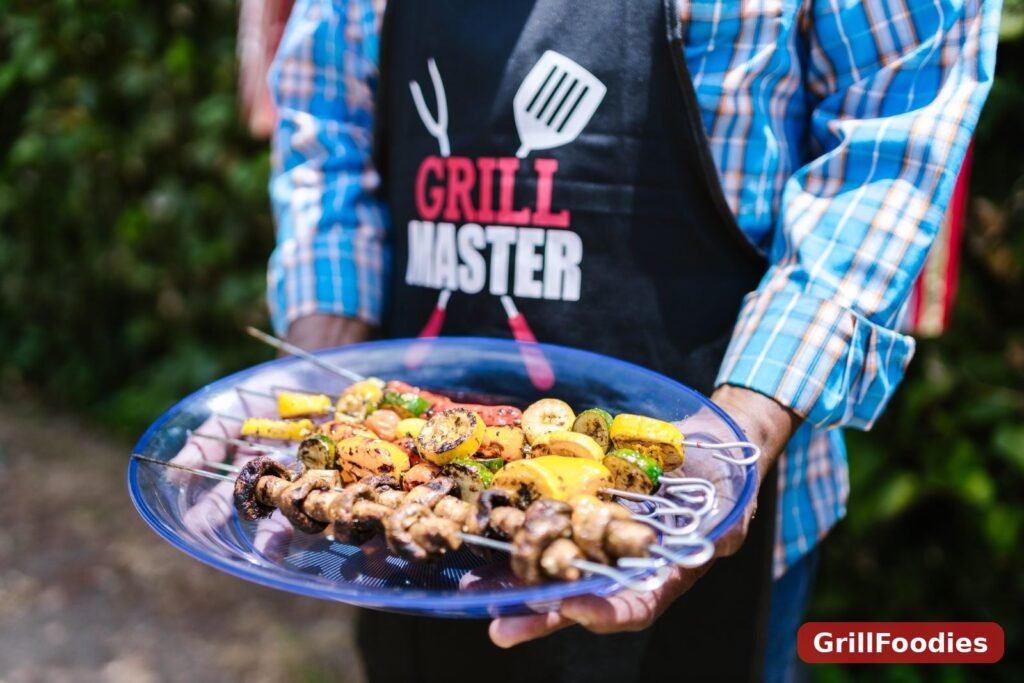
These skewers are at their best next to something smoky from the grill, and they have a way of making the whole plate look like you put in more effort than you did. They are a natural match for grilled BBQ chicken breast with smoky rub, where the sweet peppers and the herb butter balance the rub’s heat. They also work beautifully with burgers, steak, or grilled fish, because the butter and lemon cut through rich, fatty meat without needing a sauce.
If you want to turn them into a main dish, slide the vegetables off the skewers and toss them with cooked pasta, a squeeze of lemon, and a handful of grated Parmesan. Or pile them into warm flatbread with hummus and a spoonful of yoghurt. For a lighter lunch, chop them up and scatter them over a grain bowl with rice, quinoa, or couscous, and drizzle the leftover herb butter over the top. They also make a good topping for pizza, especially if you chop them small and add them after the pizza comes out of the oven so they stay bright.
At a barbecue, serve the skewers on a big platter with the herb butter in a small bowl on the side for anyone who wants extra. Put a pair of tongs on the platter so people can help themselves without handling the hot metal skewers. If you are using wooden skewers, remind people the ends are hot, and have a plate ready for the empty sticks. Little details like that keep a busy barbecue moving.
For more ideas on getting vegetables right on the grill, have a look at our guide to easy grilled vegetables for beginners, and if you are short on fresh produce, grilled vegetables with frozen vegetables shows how to make a good side from what is already in the freezer. A plate of grilled zucchini with Parmesan is another easy option when zucchini is plentiful.
Storage and Make-Ahead
Leftover skewers keep well in the fridge for three to four days in a sealed container. Slide the vegetables off the skewers before storing them, so they take up less space and reheat evenly. To reheat, warm them in a skillet over medium heat for three to four minutes, or in a 350-degree oven for about eight minutes. The microwave works too, but it softens the char, so use it only if you are in a hurry. Cold leftovers are good chopped into salads, stirred into scrambled eggs, or layered into a sandwich with a little mayonnaise.
You can prep the skewers up to a day ahead. Thread them, cover tightly with plastic wrap, and keep them in the fridge. Make the herb butter ahead as well and store it separately. Take the skewers out of the fridge twenty minutes before grilling so they aren’t ice cold when they hit the heat, which helps them cook evenly. Don’t oil them until just before grilling, or the salt will draw out moisture and leave them damp.
Frequently Asked Questions
Do I need to soak wooden skewers?
Yes, soak wooden skewers in water for at least thirty minutes before grilling. Dry wood catches fire quickly over direct heat, and soaking slows that down enough to get through a ten-minute cook. Even soaked skewers will char at the ends, which is normal. If you grill often, metal skewers are worth buying, because they last for years, don’t need soaking, and conduct a little heat into the centre of the vegetables, which helps them cook evenly.
What vegetables work best on skewers?
Firm vegetables that hold their shape are best. Bell peppers, red onion, zucchini, mushrooms, and cherry tomatoes are the classic mix because they cook in about the same time and give you a range of colours and textures. Eggplant, summer squash, and thick asparagus spears cut into pieces also work well. Avoid vegetables that are very soft, like cucumber, or very hard, like raw potato or carrot, unless you par-cook them first. If you want to add something unusual, try chunks of halloumi or pineapple, which grill beautifully alongside the vegetables.
How do I keep vegetables from falling off the skewer?
Cut the pieces large enough to grip the skewer, and thread them through the firmest part. For zucchini, go through the skin side rather than the soft centre. For mushrooms, go through the cap. Leaving a small gap between pieces helps too, because tightly packed vegetables push against each other and slide. Flat metal skewers, or two round skewers side by side, stop the spinning that loosens pieces. And turn the skewers with tongs, gripping the skewer itself, rather than trying to flip the vegetables.
Can I make these skewers in the oven?
Yes. Heat the oven to 425 degrees Fahrenheit, lay the skewers on a rimmed baking sheet lined with foil, and roast for fifteen to eighteen minutes, turning once halfway through. You won’t get the same smoky char, but you will still get tender, browned vegetables, especially if you finish them under the broiler for two minutes at the end. Brush with the herb butter as soon as they come out. An air fryer also works in smaller batches, at 400 degrees for eight to ten minutes, shaking the basket once.
Can I make the herb butter dairy-free?
Yes, use a good dairy-free butter or olive oil in place of the butter. Olive oil won’t give you quite the same rich flavour, but with garlic, herbs, and lemon it is still very good. If you use oil, warm it gently with the garlic for a minute so the flavour infuses, then stir in the herbs off the heat. Check the safe handling guidance from the USDA if you are grilling for a crowd, and Serious Eats has a useful guide to grilling vegetables well.


3 Comments
Pingback:
Pingback:
Pingback: