
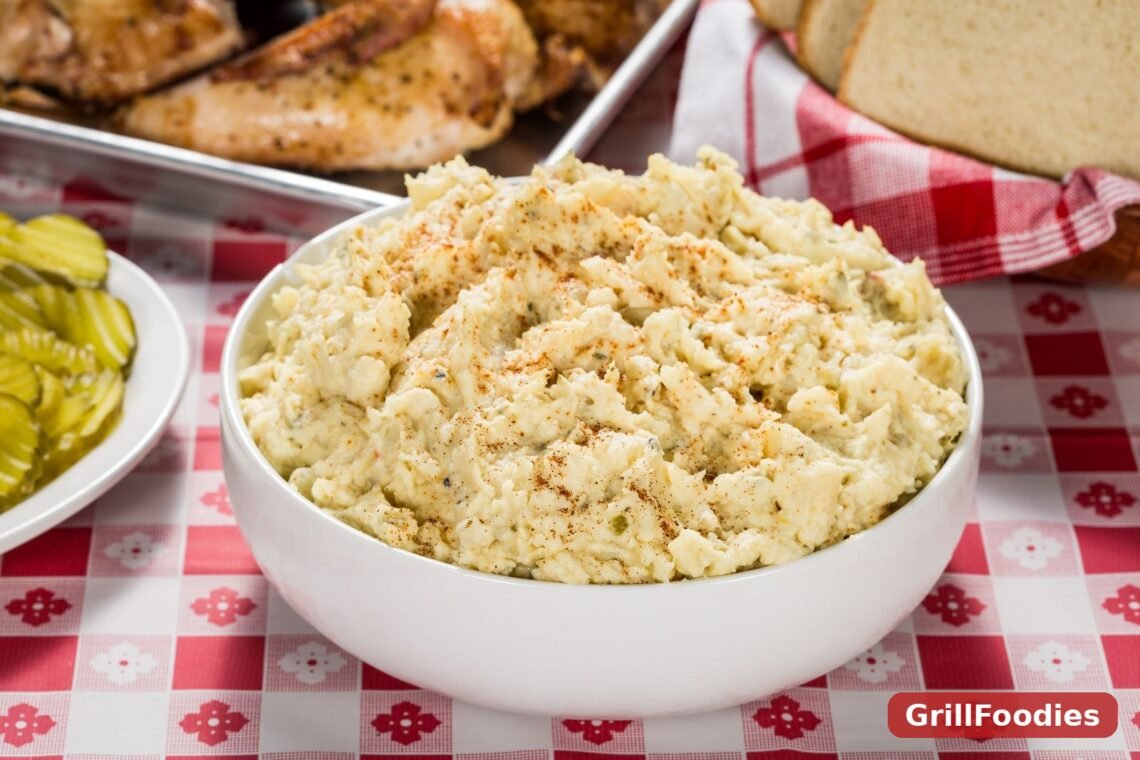
Creamy Potato Salad with Dill
Potato salad is one of those dishes that everyone thinks they know, until they taste a really good one. A good potato salad is not heavy, it is not bland, and it is not swimming in mayonnaise. It is creamy, yes, but it is also tangy and fresh, with potatoes that are tender all the way through but still hold their shape, a crunch from celery and red onion, and a bright, green flavour from fresh dill that makes the whole bowl taste like summer. It is the side dish that sits next to the grill and quietly holds the whole plate together.
I have made a lot of potato salads over the years, and I have learned that the difference between a forgettable one and a memorable one is not a secret ingredient. It is a handful of small decisions, made in the right order. Cook the potatoes in salted water, starting them cold, so they cook evenly. Dress them while they are still warm, so they absorb the flavour instead of just wearing it on the outside. Use a dressing that is more than mayonnaise, with sour cream and mustard and vinegar to keep it bright. And use fresh dill, not dried, because dried dill tastes dusty and flat next to the real thing. Get those things right, and you don’t need anything fancy.
This version is creamy, but it is not heavy. The dressing is a mix of mayonnaise and sour cream, thinned with a little pickle brine and lemon juice, so it coats the potatoes without drowning them. The dill is generous, because it is the flavour that makes this salad different from every other potato salad on the table. The eggs add richness and a little extra protein, the celery adds crunch, and the red onion adds a sharp bite that keeps the creaminess in check. It is a classic potato salad, but it is a thoughtful one, and it tastes like someone cared about it.
Potato salad is also one of the most useful dishes for a barbecue, because it is meant to be made ahead. It needs time in the fridge for the flavours to come together, and it tastes better on the second day than it does on the first. That means you can make it the night before a cookout, put it in the fridge, and forget about it until it is time to serve. While everyone else is rushing to finish a side at the last minute, yours is already done, chilled, and ready to go.
Why This Potato Salad Works
The first reason is the potatoes. Potato salad lives or dies on the potatoes, and the right potato matters. Waxy potatoes, like Yukon Gold or red potatoes, hold their shape when they are cooked and dressed. They are creamy inside, but they don’t fall apart. Starchy potatoes, like Russets, are better for mashing, but in a salad they break down, turn mushy, and soak up too much dressing. Yukon Golds are my first choice, because they have a naturally buttery flavour and a golden colour that looks good in the bowl. Red potatoes are a close second, and they have the advantage that you can leave the skin on for colour and texture.
The second reason is the timing of the dressing. Most people wait until the potatoes are cold to dress them, and that is a mistake. Warm potatoes absorb flavour. When you toss them with vinegar and a little of the dressing while they are still warm, they soak it in, and the whole salad tastes seasoned all the way through, not just on the surface. You add the rest of the dressing after the potatoes have cooled, so it stays creamy and doesn’t melt into a thin sauce. That two-step dressing is the single most important technique in this recipe, and it is what separates a good potato salad from a great one.
The third reason is balance in the dressing. Mayonnaise on its own is rich and a little flat. It needs help. Sour cream adds tang and lightness. Dijon mustard adds sharpness and a little heat. Apple cider vinegar and lemon juice add brightness. Pickle brine adds salt and a savoury, briny note that makes the whole dressing taste more interesting. None of these ingredients is strong on its own, but together they make a dressing that is creamy and tangy at the same time, and that keeps you coming back for another spoonful.
The fourth reason is the dill. Fresh dill is not a garnish here. It is a main flavour, and you need a lot of it. A quarter cup, chopped, is the minimum. Dill has a fresh, slightly sweet, almost anise-like flavour that is hard to describe but easy to recognise, and it pairs beautifully with potatoes and creamy dressing. Dried dill doesn’t compare. It tastes muted and a little bitter. If you can only find dried dill, use it, but use half the amount and add a little extra lemon and parsley to compensate. Fresh is worth seeking out, especially in summer when it is cheap and plentiful.
Ingredients You’ll Need
For eight servings, you will need two and a half pounds of Yukon Gold potatoes, scrubbed and cut into one-inch chunks. Leave the skin on if you like, or peel them if you prefer a smoother salad. I leave the skin on, because it adds colour and texture and saves time, but either way works. Try to cut the pieces a similar size so they cook evenly. If some pieces are much larger than others, they will still be hard in the middle when the smaller ones are done.
You will also need four large eggs, hard-boiled, peeled, and chopped, three stalks of celery, finely diced, half a red onion, finely diced, and a quarter cup of chopped fresh dill, plus a little extra for garnish. The celery should be diced small so you get crunch in every bite without large, stringy pieces. The red onion should be diced fine as well, because large pieces of raw onion can overpower the salad. If raw onion is too strong for you, soak the diced onion in cold water for ten minutes, drain it, and pat it dry. That takes the sharp edge off without losing the flavour.
For the dressing, you will need three-quarters of a cup of mayonnaise, half a cup of sour cream, a tablespoon of Dijon mustard, a tablespoon of apple cider vinegar, a tablespoon of lemon juice, two tablespoons of pickle brine from a jar of dill pickles, a teaspoon of sugar, a teaspoon of kosher salt, and half a teaspoon of black pepper. The sugar is not there to make the dressing sweet. It is there to balance the vinegar and the mustard, and you won’t taste it as sweetness. If you prefer a lighter dressing, you can use half mayonnaise and half Greek yoghurt in place of the sour cream, though the flavour will be tangier.
You will also need two tablespoons of chopped dill pickles, if you like a little extra crunch and brininess, and a pinch of paprika for garnish. The pickles are optional, but they add a nice texture and a salty bite that suits the creamy potatoes. Use dill pickles, not sweet pickles, because sweet pickles will make the salad taste sugary.
Equipment You’ll Need
You need a large pot for boiling the potatoes, a colander, a large mixing bowl, and a smaller bowl for the dressing. A potato masher is not needed, and in fact you should avoid mashing the potatoes at all. A wooden spoon or a large spatula is the right tool for folding the dressing in gently, because you want to keep the potato chunks intact. A sharp knife and a cutting board are essential for cutting the potatoes evenly and dicing the celery and onion finely.
For the eggs, a small saucepan and a bowl of ice water will help you get clean, easy-to-peel hard-boiled eggs. If you have an egg timer or a favourite method for boiling eggs, use it. The key is not to overcook them, because overcooked eggs get a grey ring around the yolk and a rubbery texture. Ten minutes in boiling water, followed by an ice bath, gives you a firm yolk without the grey ring.
How to Make Creamy Potato Salad with Dill
Put the potato chunks in a large pot and cover them with cold water by about an inch. Add a tablespoon of salt to the water. Starting the potatoes in cold water, rather than dropping them into boiling water, helps them cook evenly from the outside in. If you drop them into boiling water, the outside cooks too fast and falls apart while the inside is still hard. Bring the pot to a boil over high heat, then reduce the heat to medium and simmer gently. Cook for twelve to fifteen minutes, until the potatoes are tender when pierced with a fork, but still hold their shape. Test a few pieces, not just one, because they cook at slightly different rates. Drain the potatoes in a colander and let them sit for five minutes so the steam can escape and the surfaces can dry a little.
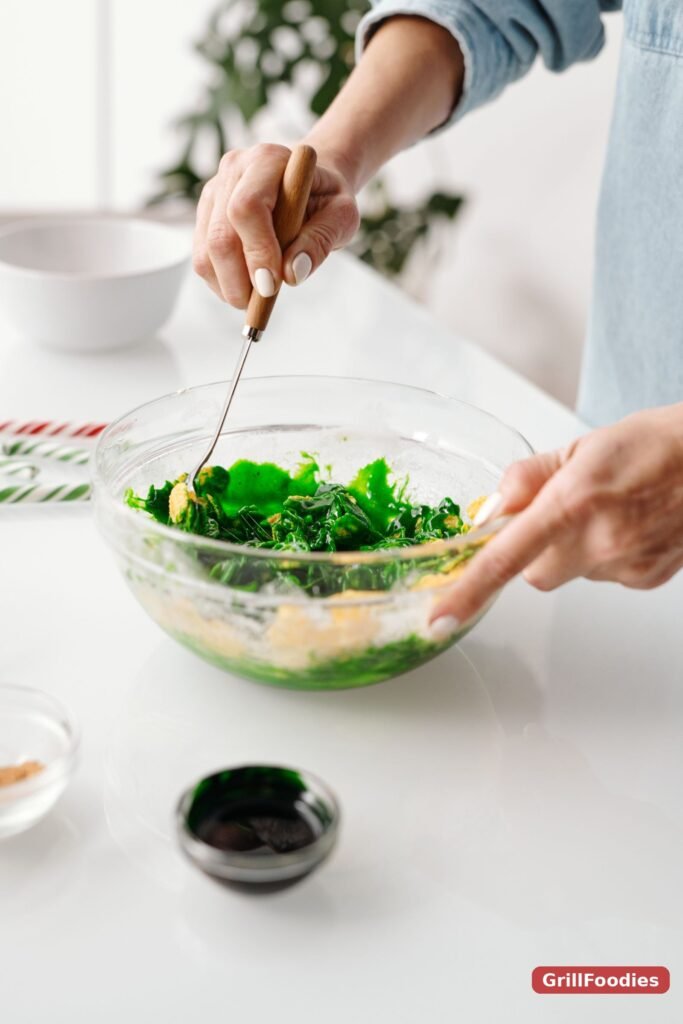
While the potatoes are cooking, make the dressing. In a small bowl, whisk together the mayonnaise, sour cream, Dijon mustard, apple cider vinegar, lemon juice, pickle brine, sugar, salt, and pepper until smooth. Taste it. It should be tangy, creamy, and well seasoned, with a little sharpness from the mustard. Adjust the salt, vinegar, or lemon to your taste. The dressing will taste a little strong on its own, but remember that it is going onto a large bowl of plain potatoes, so it needs to be bold. Set the dressing aside.
While the potatoes are still warm, transfer them to a large bowl and sprinkle them with a tablespoon of apple cider vinegar and a pinch of salt. Toss gently. This is the first dressing step, and it is what seasons the potatoes from the inside. Let the potatoes cool for fifteen to twenty minutes, until they are warm but not hot. If you add the full dressing while the potatoes are steaming hot, the mayonnaise will thin out and turn oily. Warm is good. Hot is too much.
Once the potatoes have cooled slightly, add the chopped eggs, celery, red onion, dill pickles if you are using them, and most of the chopped dill, reserving a tablespoon for garnish. Pour about two-thirds of the dressing over the top and fold it in gently with a large spatula, turning the bowl as you go, until the potatoes are evenly coated. Don’t stir vigorously, or you will break the potatoes. Add the remaining dressing a little at a time until the salad is as creamy as you like it. You may not need all of it, depending on how the potatoes absorbed the first dressing. Taste and adjust the salt and pepper.
Cover the bowl and refrigerate the potato salad for at least two hours, or overnight if you can. Chilling is not optional. It lets the flavours come together, lets the potatoes absorb the dressing, and lets the dill settle into the whole dish. Before serving, give the salad a gentle stir, taste it again, and adjust the seasoning. Cold food needs a little more salt than warm food, so don’t be surprised if it needs another pinch. Sprinkle with the reserved dill and a pinch of paprika, and serve cold or at cool room temperature.
Tips for the Best Potato Salad
Don’t overcook the potatoes. This is the most common mistake, and it is hard to fix. Overcooked potatoes fall apart when you fold in the dressing, and you end up with mashed potato salad, which is not what you want. Start testing at twelve minutes, and pull them as soon as a fork goes in easily but the piece still holds together. Remember that they will keep cooking for a minute or two from residual heat after you drain them, so it is better to pull them a touch early than a touch late.
Don’t skimp on the salt in the cooking water. Potatoes need salt while they cook, not just after. Unsalted potatoes taste bland no matter how much dressing you add, because the dressing sits on the outside. A tablespoon of salt in the pot seasons the potatoes all the way through. It sounds like a lot, but most of it stays in the water, and the potatoes will only absorb what they need.
Use fresh dill, and use enough of it. Dill is the flavour that defines this salad, and a timid amount won’t do it. A quarter cup of chopped fresh dill is the right amount for this recipe, and you can add more if you love it. Chop it just before you use it, because it wilts quickly once it is cut. If your dill is a little limp, soak it in ice water for ten minutes and it will perk up.
Let it chill. Potato salad that is served right after it is made tastes unfinished. The dressing hasn’t soaked in, the dill hasn’t spread its flavour, and the whole dish tastes like separate ingredients rather than one salad. Two hours in the fridge is the minimum. Overnight is better. If you are in a hurry, spread the salad in a shallow dish so it chills faster, and stir it once after an hour.
Serving Ideas
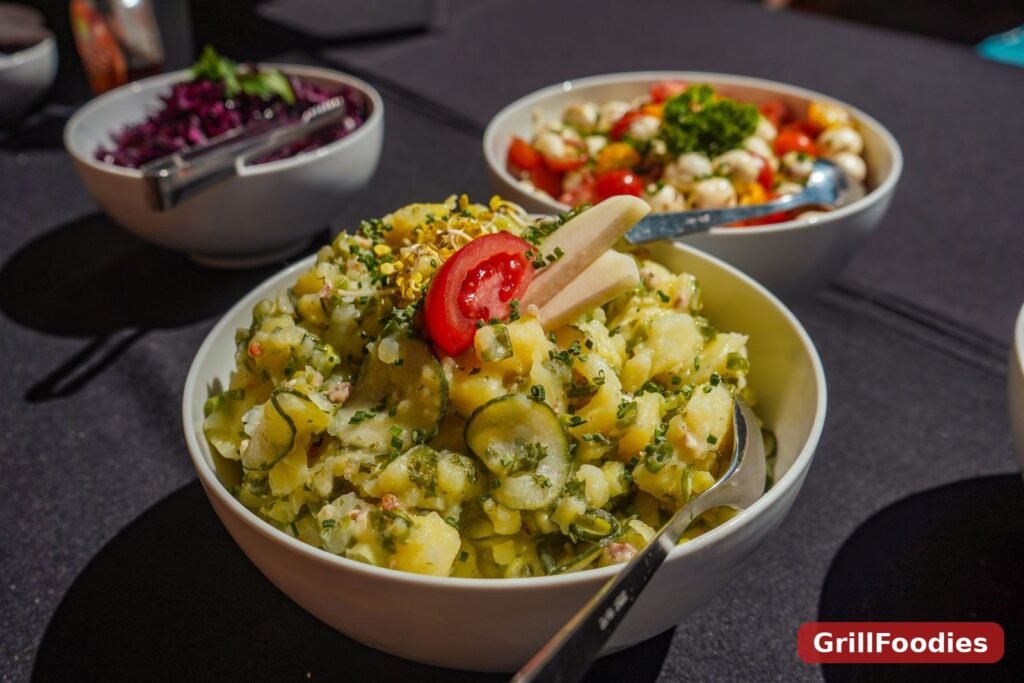
Creamy potato salad with dill belongs at a barbecue, and it is one of the few sides that can stand next to rich, smoky meat without being overwhelmed. It is a classic partner for grilled BBQ chicken breast with smoky rub, where the cool, tangy salad balances the heat of the rub. It is just as good with burgers, ribs, or grilled sausages, and it is the dish that makes a plate feel complete.
For a full cookout spread, serve the potato salad alongside smoky baked beans with bacon and a simple green salad. The beans bring sweetness and smoke, the potato salad brings creaminess and tang, and the green salad brings freshness. Together they cover everything a barbecue plate needs. A plate of crispy grilled potatoes without oil is another good option if you want a hot potato dish as well, though one potato dish is usually enough. Easy grilled potatoes without foil is a simpler alternative for a weeknight, when you don’t want to wait for a salad to chill.
At a picnic or potluck, potato salad travels well if you keep it cold. Pack it in a sealed container, set that container in a cooler with ice packs, and don’t leave it out in the sun. It is best served cold, straight from the cooler, and it will hold well for a couple of hours if it is kept in the shade. Bring a serving spoon and a small bowl of extra dill for garnish, so it looks fresh when you open it.
For a lighter meal, serve the potato salad as a main dish with a green salad and some crusty bread. Or spoon it into lettuce cups for a low-carb lunch. It is also good the next day, tucked into a sandwich with sliced tomato and lettuce, or served alongside leftover grilled chicken for a quick, satisfying lunch that doesn’t need any cooking.
Storage and Food Safety
Potato salad keeps in the fridge for three to four days in a sealed container. It actually tastes better on the second day, after the flavours have had more time to come together, so don’t be afraid to make it ahead. Stir it gently before serving, and add a spoonful of sour cream or mayonnaise if it looks dry, because the potatoes will continue to absorb dressing as they sit. Don’t freeze potato salad. The potatoes turn watery and grainy when they thaw, and the dressing separates. It is not worth it.
Food safety matters with potato salad, because it contains mayonnaise and eggs and it is often served outdoors in warm weather. Keep it refrigerated until you are ready to serve it, and don’t leave it out for more than two hours, or one hour if the temperature is above 90 degrees Fahrenheit. Put the bowl on ice if you are serving it outside for a long time, and return leftovers to the fridge promptly. When in doubt, throw it out. It is not worth the risk, and potato salad is easy enough to make again.
Frequently Asked Questions
What potatoes are best for potato salad?
Waxy potatoes, like Yukon Gold or red potatoes, are best because they hold their shape when cooked and dressed. Yukon Golds are my first choice for their buttery flavour and golden colour. Red potatoes are also good, and you can leave the skin on for texture. Avoid Russets, which are starchy and fall apart in a salad. If you only have Russets, cook them very carefully, test them early, and handle them gently when you fold in the dressing, but expect a softer result.
Can I make potato salad without eggs?
Yes. Leave out the eggs and the salad will still be good, though it will be a little less rich. You can add a little extra celery and dill pickles for texture, or stir in a tablespoon of capers for a salty bite. If you are making it for someone with an egg allergy, check that your mayonnaise is egg-free as well, since most regular mayonnaise contains egg. There are good egg-free mayonnaise options available now, and they work well in this recipe.
How far ahead can I make potato salad?
You can make it up to two days ahead, and it will taste better on the second day. Make it, cover it tightly, and keep it in the fridge. Before serving, stir it gently, taste it, and adjust the seasoning. If it looks dry, add a spoonful of dressing. Don’t garnish it with dill and paprika until just before serving, or the garnish will wilt and sink into the salad. Potato salad is one of the few dishes that genuinely improves with a night in the fridge.
Why is my potato salad bland?
Bland potato salad usually means the potatoes weren’t salted while they cooked, or the dressing wasn’t seasoned enough. Potatoes need salt in the cooking water, and the dressing needs to taste bold on its own, because it is going onto a large amount of plain potato. If your salad is already made and tastes bland, stir in a pinch of salt, a squeeze of lemon, and a little extra dill, and let it sit for half an hour. Those three things will brighten it without changing the recipe. A spoonful of pickle brine helps too.
Is potato salad safe to leave out at a barbecue?
Potato salad should not sit out for more than two hours at room temperature, or one hour if it is above 90 degrees Fahrenheit. Keep it in the fridge until serving, set the bowl on ice if you are outside, and put leftovers back in the fridge as soon as the meal is over. The USDA has clear guidance on safe temperatures for food served outdoors, and BBC Good Food has more barbecue side ideas for your next cookout.



One Comment
Pingback: