
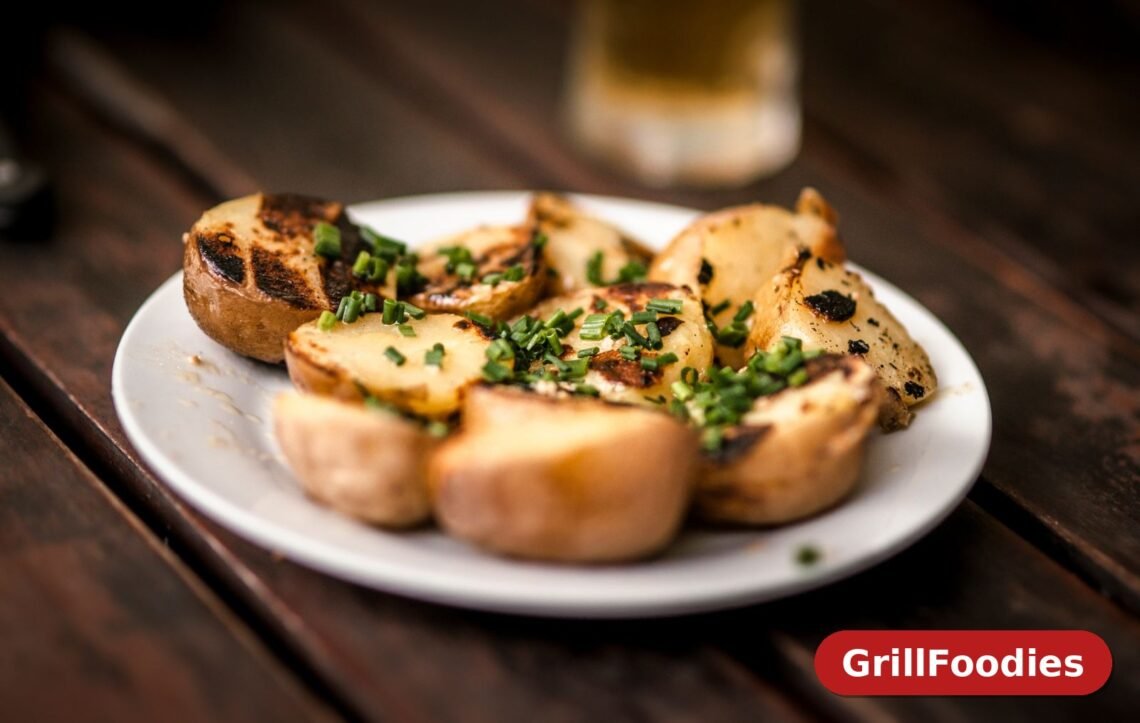
Grilled Potato Salad with Mustard Vinaigrette
I’ll be honest with you: potato salad used to bore me. Not the idea of it — I love potatoes — but the version that shows up at every backyard cookout, sitting in a plastic tub, sweating in the sun, all pale and gluey and tasting mostly of fridge. I must have eaten a hundred scoops of that stuff before I finally asked myself why I kept going back for it when I never actually enjoyed it. The answer, it turned out, was that I liked the idea of potato salad a lot more than the execution. So a few summers ago I decided to rebuild it from scratch, and the grill ended up being the thing that changed everything.
The first time I tried it, I was honestly just trying to avoid heating up the kitchen. It was one of those July afternoons where the air feels thick and the house is already warm by noon, and the last thing I wanted was a pot of water steaming up the stove for twenty minutes. I had a bag of small yellow potatoes on the counter, a grill that was already hot from the burgers, and about half a jar of Dijon mustard in the fridge door. That’s it. That’s how this whole recipe started — not with a plan, but with a hot grill and a refusal to turn on the stove.
What came off that grill surprised me so much that I made it again the very next weekend, and then the weekend after that, and somewhere along the way it became the side dish people actually ask me to bring. Not the burgers. Not the ribs. The potato salad. My brother-in-law, who is the kind of person who treats side dishes as an inconvenience between him and the meat, went back for thirds. My neighbor asked for the recipe while standing in my driveway with a paper plate in her hand. That’s when I knew this one was a keeper.
Why Grilling Potatoes Works So Well
Here’s the thing nobody tells you about regular potato salad: boiling is a pretty rough way to treat a potato. Drop it in a pot of water and it soaks up moisture like a sponge, and by the time it’s tender, the outside is threatening to fall apart while the middle is still catching up. You drain it, it steams, it goes a bit gummy, and then you drown it in mayonnaise to cover up the fact that the potato itself doesn’t taste like much anymore.
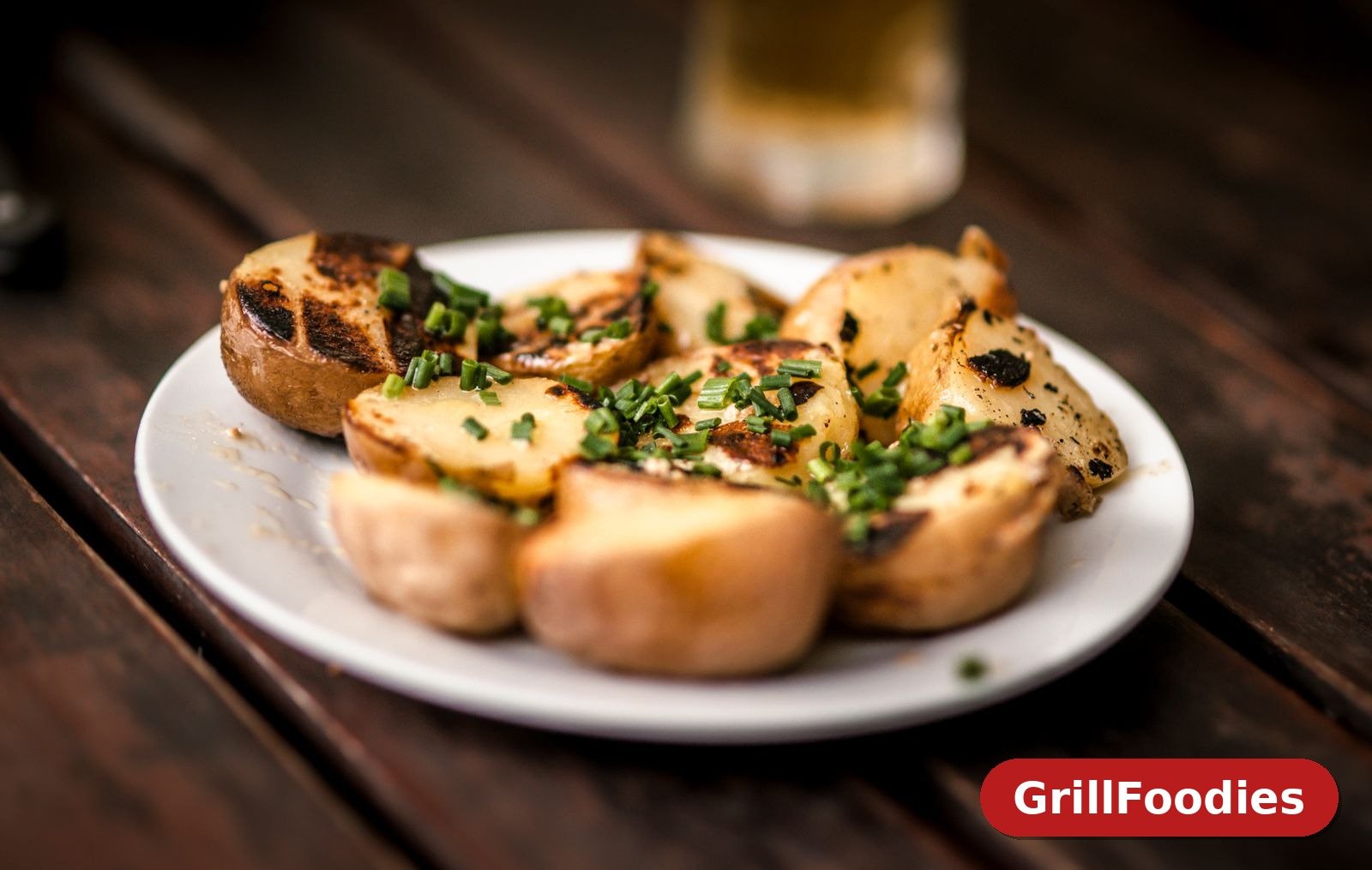
Grilling flips all of that. The dry heat does two things at once. First, it drives off surface moisture instead of adding it, so the outside gets these crisp, golden-brown edges with actual char on them — real grill marks, real smoky flavor, the kind of thing you can’t fake with a seasoning shaker. Second, the inside steams in its own skin, so it stays creamy and dense instead of waterlogged. You end up with a potato that tastes like a potato, only better: nutty at the edges, buttery in the middle, with a little bit of smoke running through the whole thing.
And then there’s the practical side, which matters more than people admit. When you’re already grilling, the potatoes just go on the same fire. No extra pot, no extra burner, no colander to wash, no kitchen heating up. At a cookout, that means you’re standing outside with your guests instead of inside watching water boil. I’ve started timing it so the potatoes go on when the chicken or burgers are about halfway done, and by the time the main course rests, the salad is basically assembled. It fits into a grill session instead of competing with it.
The other thing I love is that this version holds up. A mayo-based potato salad has a clock ticking on it the second it leaves the fridge — an hour in the sun and you’re doing mental math about whether it’s still safe to eat, and honestly, you’re right to worry. A vinaigrette-based salad like this one is far more forgiving on a hot day. The mustard and vinegar actually help it keep, and it tastes just as good at room temperature as it does chilled, which is exactly what you want when dinner happens on a patio and nobody’s in a rush to clear the table.
Choosing the Right Potatoes
This is the part where I have to be a little firm, because the potato you choose genuinely decides whether this works or not. You want a waxy potato. That means Yukon Golds, red potatoes, or those little fingerlings if you can find them at a good price. Waxy potatoes hold their shape when they’re cooked — they slice cleanly, they stay in distinct pieces, and they soak up dressing without falling apart into mush.
What you do not want is a russet. I know, russets are everywhere and they’re cheap and they’re great for a baked potato. But they’re starchy, and starchy potatoes are built to fall apart. The first time I made this salad I grabbed russets because that’s what I had, and by the time I tossed them with the dressing I had something closer to warm mashed potatoes with grill marks on it. It tasted fine, honestly, but it wasn’t a salad. It was a side dish having an identity crisis.
Size matters too. Aim for potatoes that are roughly the size of a golf ball, maybe a little bigger. If they’re much larger than that, cut them in half before they go on the grill so they cook evenly. If they’re tiny, leave them whole — the skin protects them and they get this wonderful blistered exterior. Whatever you do, try to keep the pieces roughly the same size so they finish at the same time. Nothing’s more annoying than half your potatoes being perfect and the other half still crunchy in the middle.
And leave the skins on. Seriously. The skin is where a lot of the flavor lives once it hits the grill — it crisps up, it picks up the smoke, and it keeps the inside from drying out. Just scrub them well under cold water and pick off any green spots or sprouts. If you’re the kind of person who peels potatoes out of habit, this is the recipe that will convert you. The skins are the best part.
The Mustard Vinaigrette
The dressing is the soul of this salad, and I spent a whole summer fiddling with it before I landed on the version I make now. It’s a mustard vinaigrette, which sounds fancy but is really just a handful of things whisked together in a jar: good olive oil, Dijon mustard, a splash of red wine vinegar, a little honey, a minced shallot, and a pinch of salt and pepper. That’s the whole list. No mayonnaise, no sour cream, nothing that needs to stay cold to be safe.
The mustard does most of the heavy lifting. Dijon gives it that sharp, tangy backbone, and it also helps the dressing emulsify, which is a fancy way of saying it keeps the oil and vinegar from separating into two sad layers. I use about three tablespoons for a batch this size, and I don’t measure the honey very carefully — a teaspoon, maybe a little more, just enough to round off the sharp edges without making anything sweet. The vinegar is what makes the whole thing bright. Red wine vinegar is my go-to, but white wine vinegar works, and in a pinch I’ve used apple cider vinegar and liked it just fine.
Here’s the trick that makes the biggest difference: pour the dressing over the potatoes while they’re still warm. Warm potatoes are like little sponges — they drink the dressing right in, and the flavors get all the way into the potato instead of just sitting on the surface. I learned this the hard way after dressing a batch that had already cooled, and the difference was night and day. The cold batch tasted like potatoes with sauce on them. The warm batch tasted like the dressing and the potatoes had become one thing. So don’t wait. Grill, slice, dress, and then let it sit for ten minutes while you finish everything else.
One more thing about the dressing: make a little more than you think you need. Potatoes keep absorbing as they sit, and what looks perfectly dressed at first can look a little dry an hour later. I keep the extra in the jar and splash a bit more over the top right before serving, along with a final handful of fresh herbs. It wakes everything back up.
How to Make It, Step by Step
Start by getting your grill going. You want medium-high heat, somewhere around 400 to 450 degrees if your grill has a thermometer, or the point where you can hold your hand about six inches above the grate for three or four seconds before it gets uncomfortable. While the grill heats, scrub about two pounds of small Yukon Gold or red potatoes, pat them dry, and cut any big ones in half. Toss them in a bowl with a couple of tablespoons of olive oil, a good pinch of salt, and a few cracks of black pepper. Don’t be shy with the salt — potatoes need it, and a lot of it ends up on the grill grates anyway.
Now, there’s a decision to make about how to grill them, and I’ve tried it both ways enough times to have an opinion. You can put the potatoes straight on the grates, cut-side down, which gives you the best char and the prettiest grill marks. But small pieces have a habit of slipping through the grates, and fishing a potato out of a hot grill is nobody’s idea of fun. My compromise is a grill basket or a piece of heavy-duty foil with holes poked in it. You still get the smoke and most of the char, and nothing falls through. If your potatoes are big enough to sit safely on the grates, go direct — it’s better. If they’re small, use the basket. Either way works.
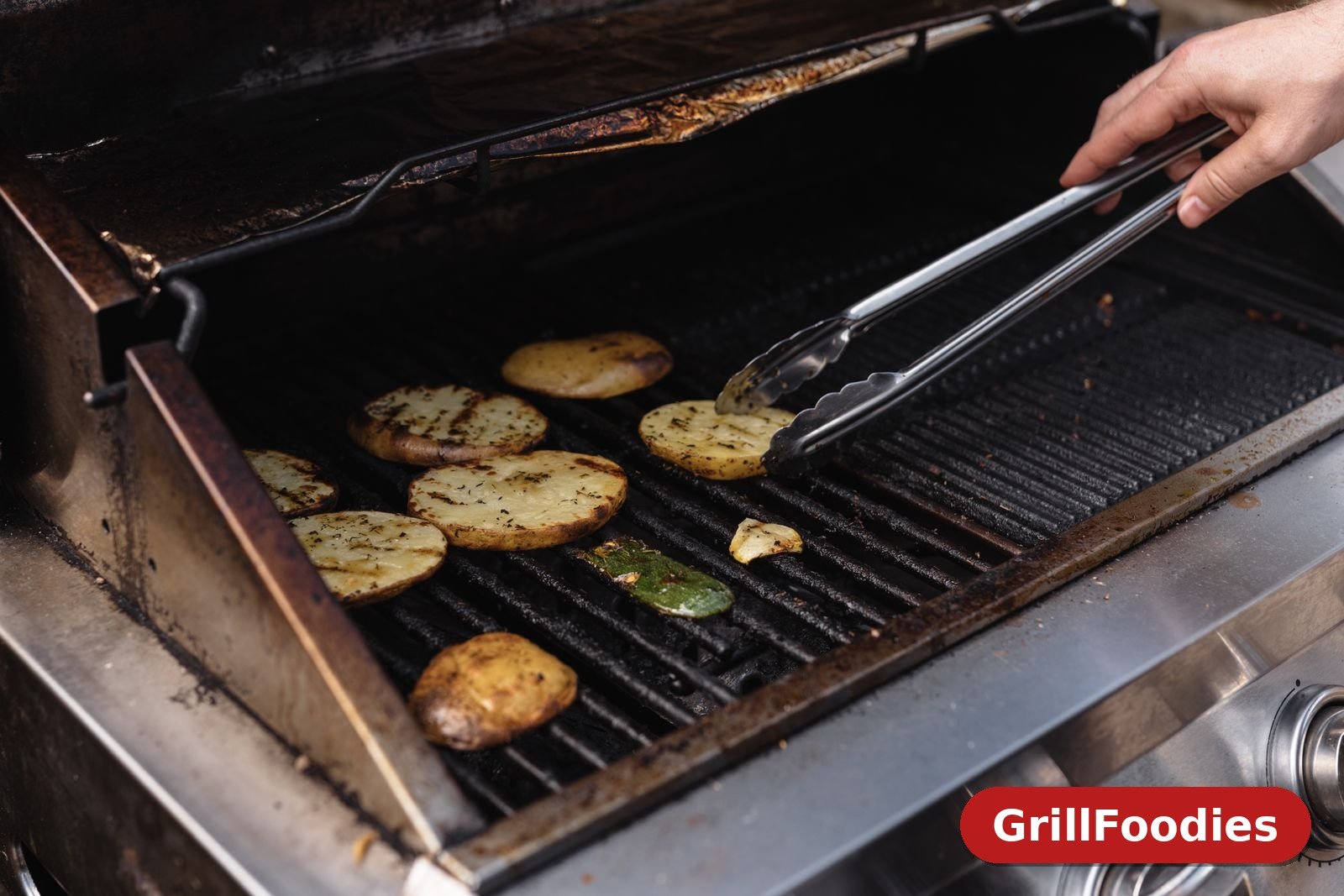
Grill the potatoes for about 20 to 25 minutes total, turning them every five minutes or so. You’re looking for two things: the outside should be golden with dark grill marks, and a skewer or thin knife should slide into the center without any resistance. Don’t rush this part. Potatoes that look done on the outside but are still firm in the middle are the most common mistake with this recipe, and there’s no fixing it once the dressing is on. When in doubt, give them another five minutes. A slightly overdone potato is still delicious in this salad. An underdone one is not.
While the potatoes are on the grill, make the dressing. Whisk together a third of a cup of olive oil, three tablespoons of Dijon mustard, two tablespoons of red wine vinegar, a teaspoon of honey, one small shallot minced as finely as you can manage, and salt and pepper. Shake it in a jar if you’d rather — I do, because it’s faster and the jar doubles as storage for the extra dressing. Taste it. It should be punchy, sharp, a little bit salty, and make you want to dip a piece of bread in it. If it tastes flat, add a little more vinegar. If it tastes too sharp, a tiny bit more honey.
When the potatoes come off the grill, let them cool for just two or three minutes — long enough to handle without burning your fingers, but still properly warm. Cut them into bite-sized chunks, about an inch across, and drop them into a big bowl. Pour about two-thirds of the dressing over the top and toss gently. Then add a handful of chopped fresh chives, a little chopped parsley, and if you like a bit of crunch, a few thinly sliced scallions. Let the whole thing sit for ten minutes so the potatoes can soak up the dressing, then taste and adjust. More salt? Almost always a little more salt. More dressing? Probably. That’s the whole recipe.
For serving, I like it in a wide, shallow bowl so you can see the golden edges and the flecks of green herbs on top. A final drizzle of dressing, a scattering of chives, and maybe a little flaky salt if you have it. It feeds about six people as a side dish, or four if those four people really like potato salad, which in my experience they will.
Serving and Make-Ahead Tips
This salad is at its best served warm or at room temperature, about 20 to 30 minutes after you make it, when the potatoes have soaked up the dressing but the herbs are still bright and fresh. That’s the sweet spot. Cold from the fridge, it’s still good — the flavors actually deepen overnight — but the olive oil in the dressing firms up a bit when it’s cold, and the potatoes taste denser. If you’re serving leftovers from the fridge, let the bowl sit on the counter for 20 minutes first and give it a splash of the reserved dressing. It comes right back to life.
If you’re making it ahead for a party, you’ve got two good options. The first is to grill the potatoes and make the dressing the day before, store them separately, and then slice, dress, and toss an hour before guests arrive. That’s my preferred method because the herbs stay fresh and the potatoes don’t get soggy from sitting in dressing all night. The second option is to make the whole thing the night before and keep it in the fridge — it will still taste great, honestly, it just won’t look quite as pretty, so save the herbs and the final drizzle for the next day.
Food safety is worth a quick word here, because this is exactly the kind of dish that sits out at a cookout for hours. The good news is that a vinaigrette-based potato salad is much safer at room temperature than a mayonnaise-based one, but it’s still food, and food sitting in the sun for four hours isn’t a great idea for any dish. My rule is two hours out, then it goes back in the fridge or gets tossed. If it’s a genuinely hot day — over 90 degrees — I cut that to one hour. The FDA has solid guidance on selecting and serving produce safely, and it’s worth a read before your next outdoor gathering.
As for what to serve it with, honestly, almost anything that comes off a grill. It’s fantastic next to grilled chicken thighs, burgers, or a good steak, and it holds its own next to smoked ribs too. But my favorite pairing is the simplest one: a plate of grilled sausages, this potato salad, and a cold drink. If you want more ideas from the grill, my grilled vegetable skewers with herb butter make a great second side, and they cook in about half the time the potatoes do.
Variations Worth Trying
Once you’ve made the base recipe a few times, it becomes a template, and that’s when it gets really fun. The version I make most often after the original adds a handful of crispy bacon crumbles and a spoonful of the bacon fat whisked into the dressing. I know, I know — that sounds like a lot. It is a lot. It’s also the version that disappears first at every single cookout I’ve brought it to, so I keep making it.
If you want something lighter, try folding in a cup of blanched green beans, cut into inch-long pieces, right at the end. They stay crisp and bright green, and they make the whole salad feel fresher. A few handfuls of arugula wilted in by the warm potatoes works too, and it adds this peppery bite that plays beautifully against the mustard. In late summer, when the garden is going crazy, I’ll throw in a cup of halved cherry tomatoes — just don’t add them until the potatoes have cooled a bit, or the tomatoes go soft and the whole thing gets watery.
For a Mediterranean turn, swap the chives for fresh dill, add a handful of pitted Kalamata olives, and crumble some feta over the top just before serving. The salty feta against the tangy mustard dressing is one of those combinations that tastes like it was always meant to be together. And if you like heat, a finely diced jalapeño or a pinch of red pepper flakes in the dressing gives the whole thing a slow warmth that builds as you eat. Not spicy enough to scare anyone off, just enough to keep people reaching for another spoonful.
The sweet potato version deserves a mention too, because it’s a different animal in the best way. If you’ve got a bag of sweet potatoes sitting around, my grilled sweet potato wedges with chipotle mayo use the same grill technique, and once you’ve got the method down, swapping sweet potatoes into this salad with a smoky paprika in the dressing is a short step. The sweetness against the mustard is genuinely great.
One more variation, and this one’s for the people who grew up on the classic creamy version and aren’t ready to give it up entirely: you can split the difference. Make the mustard vinaigrette as written, then stir in two or three tablespoons of mayonnaise at the very end. You get the tang and brightness of the vinaigrette with a little of the creaminess people expect from potato salad. It’s not traditional, and it’s not quite this recipe anymore, but it’s delicious, and honestly, if it gets the mayo loyalists in your family to try the grilled version, it’s worth it. If you want the full creamy experience instead, my creamy potato salad with dill is the one to make — it’s the recipe I reach for when the grill stays in the garage.
Frequently Asked Questions
Can I make grilled potato salad ahead of time?
Yes, and it actually tastes better the next day once the flavors have had time to settle in. Grill the potatoes and make the dressing up to a day ahead, store them separately in the fridge, and then slice and toss everything together an hour before serving. If you assemble the whole salad the night before, hold back the fresh herbs and the final drizzle of dressing until just before you serve it, so it still looks and tastes fresh. Let it come to room temperature for about 20 minutes before putting it on the table.
Do I have to peel the potatoes?
No, and you really shouldn’t. The skins crisp up beautifully on the grill, they pick up the smoke, and they keep the inside of the potato from drying out. Just scrub the potatoes well under cold running water and cut out any green spots or sprouts. If you’re using thin-skinned Yukon Golds or red potatoes, the skins are tender enough that you won’t even notice them — except for the flavor, which is the whole point.
What if I don’t have a grill?
You can absolutely make this on a stovetop grill pan, and it comes out about 90 percent as good. Heat the grill pan over medium-high heat, brush it lightly with oil, and cook the potatoes cut-side down in batches so you don’t crowd the pan. You won’t get the smoky flavor from real charcoal or gas flames, but you’ll still get the crispy edges and the grill marks. A pinch of smoked paprika in the dressing helps make up for the missing smoke. If you want a broader look at the technique, Taste of Home’s guide to grilled potatoes covers the basics well.
Can I use russet potatoes instead?
You can, but I wouldn’t recommend it. Russets are starchy potatoes, which means they fall apart easily once they’re cooked — great for mashed potatoes, not great for a salad where you want distinct pieces. If russets are all you have, cut them into larger chunks, handle them very gently when you toss them, and expect a softer, more rustic result. Yukon Golds or red potatoes will always give you a better texture here.
How long does it keep in the fridge?
Three to four days in a sealed container, and honestly it might be at its best on day two, once the dressing has really soaked in. After day three the herbs start to look tired and the potatoes can get a little dense, but it’s still perfectly fine to eat. Give it a good stir and a splash of extra dressing or a squeeze of lemon before serving leftovers. And don’t leave it sitting out at a cookout for more than two hours — one hour if it’s over 90 degrees outside.
Is this potato salad gluten-free and vegan?
Yes to both, as long as you check your mustard. The potatoes, oil, vinegar, herbs, and shallot are all naturally gluten-free and vegan. Dijon mustard is usually gluten-free, but a few brands add wheat-based thickeners, so check the label if you’re cooking for someone with celiac disease. The only non-vegan ingredient is the teaspoon of honey in the dressing — swap it for maple syrup or agave and the whole salad is fully vegan without changing the flavor in any way that matters.
What should I serve with grilled potato salad?
Pretty much anything that comes off the grill. It’s a natural partner for burgers, grilled chicken, steak, and sausages, and it works just as well at a picnic next to cold cuts and sandwiches. If you’re building a whole grilled menu, my grilled zucchini with parmesan cooks fast and rounds out the table nicely. And if you’re feeding a crowd, double the recipe — it scales perfectly, and I’ve never once had leftovers when I’ve doubled it.


You May Also Like
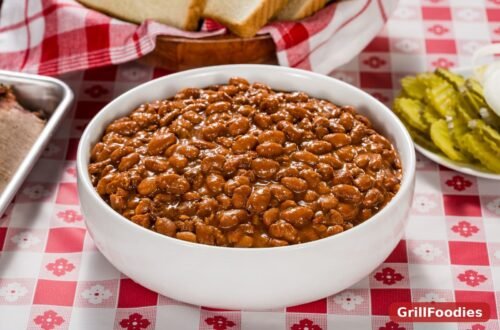
Smoky Baked Beans with Bacon
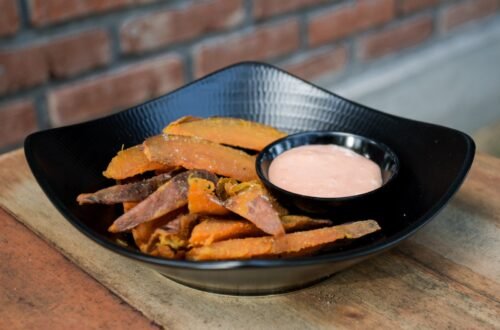
Grilled Sweet Potato Wedges with Chipotle Mayo
