

Grilled BBQ Chicken Breast with Smoky Rub
There is something about a chicken breast coming off the grill, still sizzling, with dark grill marks and a smoky crust that smells faintly of paprika and brown sugar, that makes an ordinary weeknight feel like a small celebration. This grilled BBQ chicken breast with smoky rub is the recipe I turn to when I want dinner to feel special without spending the whole afternoon on it. The rub takes five minutes to mix, the chicken needs only a short rest in it, and the grill does most of the work after that. What you get is juicy meat inside, a lightly caramelised edge outside, and enough flavour that you do not need to drown it in sauce afterwards.
I have cooked chicken breast on the grill more times than I can count, and I have learned the hard way that the difference between dry and juicy is rarely the recipe itself. It is the small things: how evenly the breast is pounded, how hot the grill really is, whether you let the meat rest before slicing, and whether you pull it off at the right temperature instead of guessing. This recipe builds all of those little habits into the method, so even if grilling chicken has let you down before, this version gives you a much better chance of getting it right the first time.
The smoky rub is the heart of the dish. It is built on smoked paprika, garlic powder, onion powder, brown sugar, salt, black pepper, and a little chilli powder for warmth. The sugar helps the outside caramelise and pick up those dark, appetising grill marks, while the paprika brings the smoke without needing a smoker or wood chips. If you like things spicier, you can add a pinch of cayenne. If you are cooking for children, leave the chilli out and add a little extra paprika instead. The rub is forgiving, and once you have made it a couple of times you will start adjusting it to your own taste without even thinking about it.
What I like most about this recipe is how useful the leftovers are. Slice the chicken for sandwiches the next day, chop it into a salad, tuck it into wraps, or pile it onto rice with grilled vegetables. One batch on a Sunday evening can quietly cover two or three meals, which is exactly the kind of cooking that makes a busy week easier. And because the chicken is grilled rather than fried, it stays light enough for summer evenings but satisfying enough for a proper family dinner.
Why This Grilled BBQ Chicken Breast Works So Well
Chicken breast has a reputation for drying out on the grill, and honestly, it has earned it. It is lean, it has no bone to protect it, and it goes from perfectly cooked to overcooked in about two minutes. The good news is that all three of those problems have simple fixes. First, we pound the thicker end of each breast down to an even thickness, so the thin end does not turn to cardboard while the thick end is still catching up. Second, we use a two-zone grill, with one hot side for searing and one cooler side for finishing gently. Third, we rest the chicken for five minutes before slicing, which lets the juices settle back into the meat instead of running out onto the cutting board.
The rub also does more than add flavour. Salt in the rub draws a little moisture to the surface at first, then, given twenty to thirty minutes, it seasons the meat all the way through and helps it hold onto its juices. The brown sugar and paprika form a thin crust as the chicken cooks, and that crust acts like a light seal, keeping the inside moist while the outside gets that lovely charred edge. It is a simple bit of kitchen science, but you can taste the difference.
Another reason this recipe works is that it does not ask you to babysit the grill. Once the chicken is on, you turn it once, maybe twice, and you check the temperature near the end. There is no basting every two minutes, no complicated sauce to reduce, and no need to move the chicken around constantly. That calm, steady approach is what produces even cooking and clean grill marks. If you are new to grilling, this is a friendly place to start. If you have been grilling for years, it is the kind of reliable recipe you will keep coming back to because it simply works.
Ingredients
You do not need anything fancy for this recipe. Most of the ingredients are probably already in your spice cupboard, and the chicken itself is the only fresh item you really need to plan for. Buy breasts that are roughly the same size if you can, because even cooking starts at the shop. If one breast is much larger than the others, pound it a little thinner or give it an extra minute on the cooler side of the grill.
- 4 boneless, skinless chicken breasts, about 170 to 200 g each
- 2 tablespoons smoked paprika
- 1 tablespoon light brown sugar
- 1 tablespoon garlic powder
- 1 tablespoon onion powder
- 1 teaspoon chilli powder
- 1 teaspoon fine sea salt
- 1 teaspoon ground black pepper
- 1/2 teaspoon cayenne pepper, optional
- 2 tablespoons olive oil
- 1 tablespoon lemon juice, freshly squeezed
- Barbecue sauce, for brushing and serving, optional
- Fresh parsley or coriander, chopped, for serving
- Lemon wedges, for serving
A quick note on the paprika: smoked paprika is not the same as sweet paprika, and it makes a real difference here. Sweet paprika will give you colour but very little smoke, while smoked paprika brings that deep, campfire flavour that makes the rub taste like it came from a proper barbecue joint. If your jar has been sitting in the cupboard for a year or more, it is worth buying a fresh one. Spices lose their punch over time, and this rub leans on them heavily.
How to Make Grilled BBQ Chicken Breast with Smoky Rub
Start by taking the chicken out of the fridge about twenty minutes before you plan to grill. Cold chicken straight from the fridge tends to cook unevenly, with the outside racing ahead while the centre stays cool. While it comes up to temperature, mix the rub. Stir the smoked paprika, brown sugar, garlic powder, onion powder, chilli powder, salt, black pepper, and cayenne, if you are using it, together in a small bowl until the colour is even and there are no clumps of sugar left. That even colour matters, because it means every bite will be seasoned the same way.
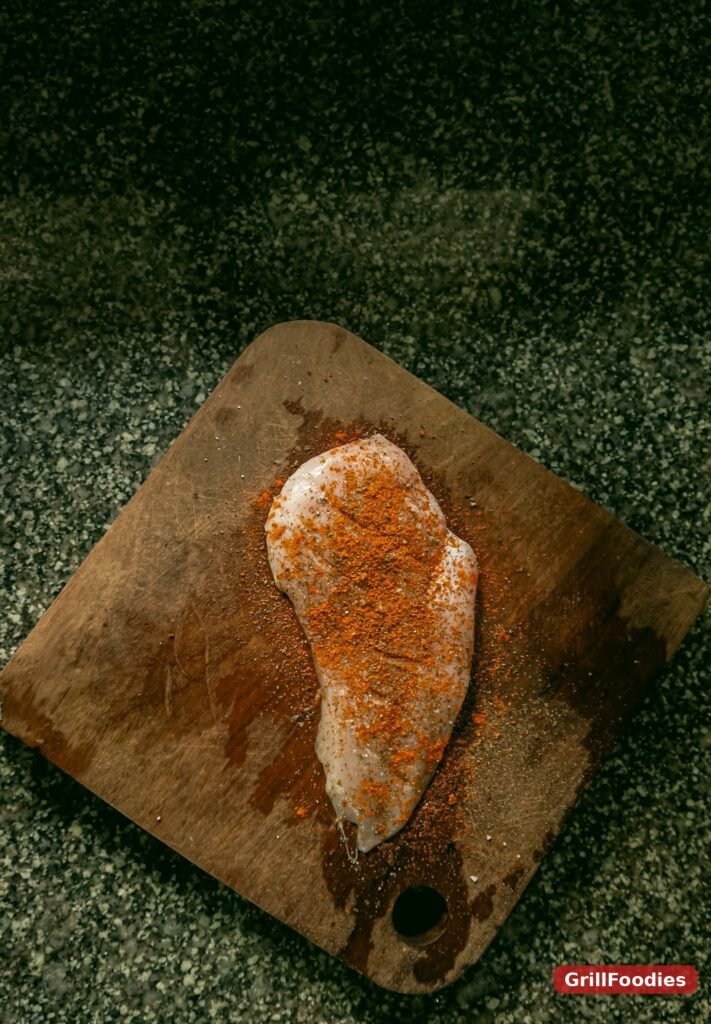
Place each breast between two sheets of baking paper or inside a large food bag and pound the thick end gently with a rolling pin or the flat side of a meat mallet until the whole breast is about 2 cm thick. You are not trying to flatten it into a cutlet, just evening it out. Pat the chicken dry with kitchen paper, rub it all over with the olive oil and lemon juice, then sprinkle the spice mix over both sides, pressing it in lightly with your hands so it sticks. Leave the chicken to sit for twenty to thirty minutes at room temperature. If you have more time, you can cover it and leave it in the fridge for up to four hours, then bring it back to room temperature for twenty minutes before grilling.
- Heat your grill to medium-high, about 200 to 220°C. Set up two zones if you can: one side hot for searing, the other cooler for finishing. Clean the grates well with a grill brush, then oil them lightly with a folded piece of kitchen paper dipped in oil and held with tongs. A clean, lightly oiled grate is what gives you proper grill marks instead of sticking.
- Place the chicken on the hot side of the grill and close the lid. Leave it alone for five to six minutes. Resist the urge to lift it and check every minute, because the chicken needs that uninterrupted contact to form a crust and release naturally from the grate. When it is ready to turn, it will lift away easily.
- Turn each breast once and cook for another five to six minutes on the second side. If the outside is colouring too quickly but the centre still needs time, move the chicken to the cooler side, close the lid, and let it finish there for two to four minutes. This two-zone trick is the easiest way to avoid burnt outsides and undercooked middles.
- If you like a light barbecue glaze, brush a thin layer of sauce over the chicken during the last two minutes of cooking only. Brushing it on earlier is a common mistake, because the sugar in the sauce burns long before the chicken is done. One thin layer, right at the end, is all you need for a sticky, glossy finish.
- Check the temperature with an instant-read thermometer in the thickest part of the largest breast. You are looking for 74°C, which is the safe temperature for chicken recommended by the USDA food safety guidance for chicken. If you do not have a thermometer, cut into the thickest part and check that the juices run clear and there is no pink meat left, but a thermometer is far more reliable and worth owning if you grill often.
- Transfer the chicken to a clean plate or board and let it rest for five minutes before slicing. Tent it loosely with foil if you like, but do not wrap it tightly, or the crust will steam and soften. Resting is not wasted time. It is the step that keeps the chicken juicy when you cut into it, and it is the step most people skip.
- Slice the chicken against the grain into strips about 1 cm thick, or serve the breasts whole if you prefer a neater plate. Scatter over the chopped parsley, add lemon wedges, and serve with extra barbecue sauce on the side for anyone who wants more.
Once you have the basic method down, you will find it easy to adapt. On a gas grill, keep one burner on high and one on low to create your two zones. On a charcoal grill, pile the coals to one side and leave the other side empty. On a grill pan indoors, use medium-high heat, work in batches so you do not crowd the pan, and open a window, because the rub will smoke a little. The method stays the same; only the heat source changes.
Tips for Juicy, Smoky Chicken Every Time
The single best investment for grilled chicken is an instant-read thermometer. Guessing doneness by time alone is unreliable because breasts vary in size, grills vary in heat, and the weather changes how a grill behaves. A thermometer takes the guesswork out of it and stops you from overcooking by just a few degrees, which is exactly where juiciness is lost. Pull the chicken at 74°C and rest it, and it will stay tender. Leave it on until 80°C or beyond and no amount of sauce will bring back the moisture.
Pounding the chicken evenly is the second habit worth keeping. It feels like an extra step, but it is the difference between a breast that is dry at one end and underdone at the other and a breast that is even all the way through. Use gentle, even pressure and work from the centre outwards. If you hit it too hard you will tear the meat, so think of it as coaxing rather than hammering. A rolling pin works perfectly well if you do not own a mallet.
Do not skip the rest after rubbing. Even twenty minutes makes a difference to flavour, because the salt has time to work its way in. If you are in a real hurry, ten minutes is better than none, but try to give it the full half hour when you can. Similarly, do not slice the chicken the moment it comes off the grill. I know it is tempting when it smells that good, but those five minutes of resting are when the juices redistribute. Slice too soon and you will see them pool on the board instead of staying in the meat.
Keep the lid closed while the chicken cooks. Every time you lift it, heat escapes and the cooking time stretches out, which dries the chicken. A closed lid also helps the smoke from the rub circulate around the meat, adding flavour. Open it only to turn the chicken, to move it to the cooler side, or to check the temperature near the end. If your grill flares up, move the chicken to the cooler side straight away rather than trying to fight the flames where they are.
If you want an even deeper smoky flavour, you can add a small handful of soaked wood chips to a charcoal grill or a smoker box on a gas grill. Hickory and applewood both work well with chicken, though applewood is gentler and less likely to overpower the rub. You do not need much. A little smoke goes a long way, and too much can turn bitter. For a deeper dive into getting the most from grilled chicken, the Serious Eats guide to grilled chicken breast is a useful reference for temperature and timing.
Serving Ideas
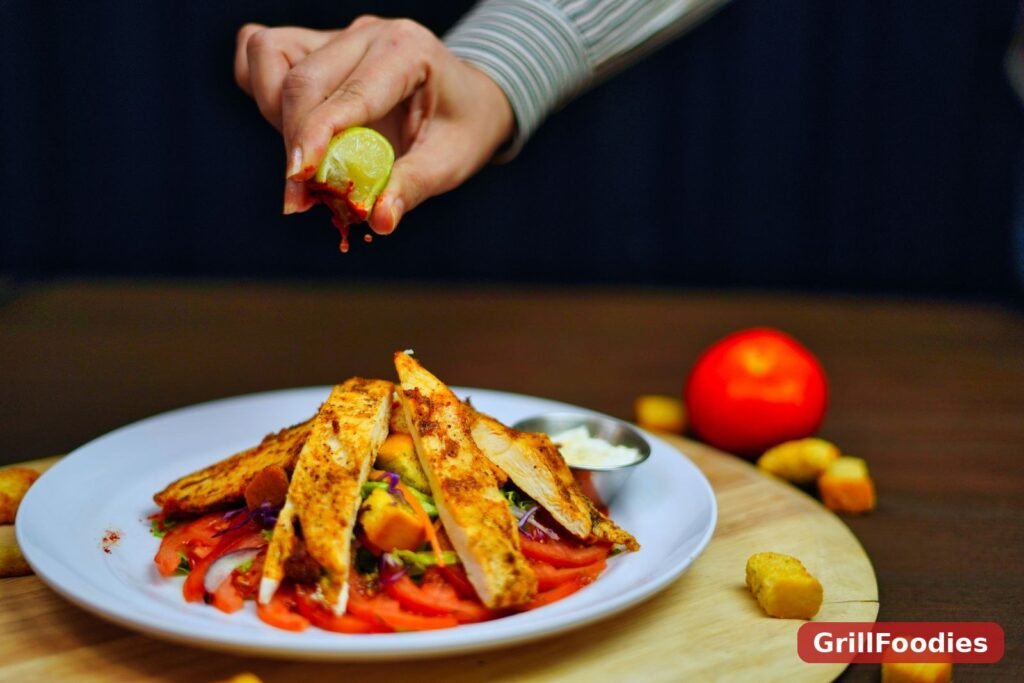
This chicken is at its best served simply, straight off the grill with a few good sides and no fuss. A crisp green salad, grilled corn on the cob, and a bowl of coleslaw make a classic barbecue plate that needs nothing else. If you are feeding a crowd, add a big bowl of potato salad, some baked beans, and a basket of warm bread rolls, and you have a full spread that will keep everyone happy. The chicken also works beautifully sliced over rice with grilled vegetables, which is my usual choice when I want something a little lighter on a weeknight.
For sandwiches, pile the sliced chicken into a toasted brioche bun with lettuce, tomato, red onion, and a spoonful of barbecue sauce or garlic mayonnaise. Add a slice of cheese and a few pickles if you like. It is a proper, satisfying sandwich that beats most takeaway versions, and it uses up leftovers without feeling like a repeat of last night’s dinner. For wraps, warm a large tortilla, add sliced chicken, shredded cabbage, grated carrot, and a drizzle of yoghurt sauce, then roll it up tightly. It travels well, which makes it a good option for packed lunches and picnics.
On a lighter note, try the chicken sliced over a grain bowl with quinoa, roasted sweet potato, avocado, and a lemon dressing, or over a simple green salad with cucumber, tomatoes, and a mustard vinaigrette. The smoky flavour stands up well to sharp dressings and fresh herbs, so do not be shy with lemon, parsley, or a little chilli. If you are planning a full barbecue menu, it pairs well with grilled vegetable skewers with herb butter and a cold drink, and it sits happily next to other grilled dishes without competing with them.
For a family dinner, I often serve this chicken with one-pan BBQ chicken and potatoes on the side when I want something hearty, or I keep the plate lighter with a big chopped salad and grilled flatbreads. Either way, put the sliced chicken on a serving platter in the middle of the table and let people help themselves. Barbecue food always tastes better shared, and this chicken is no exception.
Storage and Make-Ahead
Cooked chicken breast keeps well in the fridge for three to four days in an airtight container. Let it cool completely before you put the lid on, and store it whole rather than sliced if you can, because whole breasts stay juicier. When you reheat it, do so gently. A few minutes in a covered pan over low heat with a splash of water or stock, or a short spell in the microwave at half power, will warm it through without drying it out. Avoid blasting it on high heat, which is what turns good leftover chicken rubbery.
You can also freeze the cooked chicken for up to three months. Wrap each breast tightly in cling film, then place them in a freezer bag, squeezing out as much air as you can. Label the bag with the date so you do not forget what is in there. Thaw overnight in the fridge and reheat gently as above. The texture will not be quite as perfect as freshly grilled, but it is still very good sliced into salads, pasta, or wraps, where a little sauce or dressing helps it along.
The rub itself can be made ahead in a larger batch and stored in a sealed jar in a cool, dark cupboard for up to three months. Make double or triple the quantities, label the jar, and you will have smoky rub ready whenever you need it. It is also lovely on pork chops, chicken thighs, and even roasted chickpeas, so it earns its place in the cupboard quickly. If you are planning a barbecue, mix the rub and season the chicken the night before, then keep it covered in the fridge and bring it to room temperature before grilling.
Variations to Try
Once you are comfortable with the basic recipe, there are plenty of easy ways to change it up. For a sweeter, stickier version, add an extra teaspoon of brown sugar to the rub and brush on a little more barbecue sauce at the end. For a hotter version, increase the cayenne to a full teaspoon and add a pinch of crushed chilli flakes. For a herby version, add a teaspoon of dried oregano and a teaspoon of dried thyme to the rub, and finish the chicken with lemon zest instead of barbecue sauce.
If you like a mustard note, stir a teaspoon of Dijon mustard into the olive oil before rubbing it onto the chicken. It adds a gentle tang that works well with the smoke. If you want a Tex-Mex twist, swap the chilli powder for a taco-style blend and serve the sliced chicken in tortillas with salsa, sour cream, and grated cheese. And if you are cooking for someone who avoids sugar, leave the brown sugar out altogether. The chicken will not caramelise quite as deeply, but the spice flavour will still be there, and a squeeze of lemon at the end lifts it nicely.
You can also use this same rub on chicken thighs if you prefer darker meat. Thighs are more forgiving than breasts because they have a little more fat, so they stay juicy even if you overshoot the temperature by a few degrees. Cook bone-in thighs for a little longer, and check that they reach 74°C in the thickest part away from the bone. For more ideas in that direction, our grilled lemon garlic chicken thighs are a bright, herby alternative that uses the same two-zone grilling method.
Frequently Asked Questions
How long should I grill chicken breast?
For breasts pounded to about 2 cm thick, allow five to six minutes per side over medium-high heat, then two to four minutes on the cooler side if needed, for a total of roughly twelve to fifteen minutes. The exact time depends on the size of the breasts and the heat of your grill, so always check with a thermometer. You are aiming for 74°C in the thickest part. Time is a guide, temperature is the answer, and resting for five minutes after grilling finishes the job.
Should I marinate chicken breast before grilling?
You do not need a wet marinade for this recipe. The dry rub, given twenty to thirty minutes, seasons the chicken well and helps form a crust that a wet marinade would prevent. If you prefer a marinade, keep it short, no more than two hours, and pat the chicken dry before grilling so it sears properly. Very acidic marinades left too long can make the surface of the meat soft and mealy, so a dry rub is often the safer choice for chicken breast.
Why does my grilled chicken breast always dry out?
The most common reasons are uneven thickness, cooking at too high a heat for too long, and skipping the rest. Pound the breast to an even thickness, use a two-zone grill so you can move the chicken to cooler heat if it colours too fast, pull it at 74°C rather than cooking it well past that, and rest it for five minutes before slicing. If you have struggled with this before, our guide to grilled chicken breast without drying out walks through the same fixes in more detail.
Can I make this chicken without an outdoor grill?
Yes, a grill pan or a heavy cast-iron pan on the hob works well. Heat the pan over medium-high heat, add a little oil, and cook the chicken for five to six minutes per side, then lower the heat and cover the pan for a few minutes to finish cooking through. You will not get quite the same smoky flavour, but the rub still gives you plenty of taste, and the grill marks from a ridged pan look the part. Open a window and turn the extractor fan on, because the sugar in the rub will smoke a little.
What barbecue sauce goes best with smoky chicken?
A classic sweet and smoky barbecue sauce is the natural partner, but a tangy Carolina-style sauce or a spicy chipotle sauce both work well too. If you are buying sauce, look for one with a short ingredient list and real sugar rather than corn syrup where you can. Better still, warm the sauce gently before serving so it coats the chicken nicely instead of sitting cold on top. Serve it on the side rather than pouring it over everything, so people can add as much or as little as they like.


7 Comments
Pingback:
Pingback:
Pingback:
Pingback:
Pingback:
Pingback:
Pingback: