

Grilled Jerk Chicken with Mango Salsa
The first time I had real jerk chicken, it was not in a restaurant. It was at a friend’s backyard barbecue, where a neighbour from Kingston had taken over the grill and was cooking the way his family always had, over charcoal, with the lid half open and the smoke drifting across the garden. The chicken came off dark and blistered, smelling of allspice and thyme and something hot I could not quite name, and it was served with a simple mango salsa that cut through the heat in the nicest possible way. I went back for seconds before I had even finished my first piece, and I have been chasing that flavour ever since.
Jerk is one of those dishes that sounds intimidating until you understand it. At its heart it is a paste, rubbed into chicken and left to work, then grilled over real heat until the outside chars and the inside stays juicy. The paste is built on allspice, which Jamaicans call pimento, along with Scotch bonnet peppers, spring onions, thyme, garlic, ginger, soy sauce and lime. It is hot, yes, but it is not just hot. The allspice brings a warm, almost sweet depth, the thyme keeps it earthy, and the lime lifts everything so the heat never feels flat or one-note.
This version is the one I make at home now, and it has become my default for summer weekends. The marinade takes ten minutes in a blender, the chicken needs a few hours in the fridge to really take on the flavour, and the mango salsa comes together while the grill heats up. What you get is chicken with a dark, sticky crust and a smoky edge, meat that is tender all the way through, and a cool, sweet salsa that makes every bite taste balanced. It is the kind of food that makes people gather around the grill instead of sitting politely at the table.
What I like most about this recipe is how forgiving it is once you understand the two things that matter. First, give the marinade time. Four hours is the minimum, overnight is better, and that patience is what puts the flavour into the meat instead of just on it. Second, control the heat. Jerk chicken wants a medium-hot grill, not a raging one, because the sugars in the marinade burn quickly. Get those two things right and the rest is easy.
Why This Jerk Chicken Works So Well
The marinade does three jobs at once, and that is why this recipe tastes like more than the sum of its parts. The salt and soy sauce season the meat deeply and help it hold onto moisture. The lime juice and a little vinegar gently tenderise the surface. And the oil carries the fat-soluble flavours of the allspice, thyme and peppers right into the chicken. Blending the paste until it is smooth matters, because a rough paste sits on the surface in clumps and burns, while a smooth one coats evenly and cooks into a proper crust.
The mango salsa is not an afterthought. It is doing real work on the plate. Jerk chicken is rich, salty, spicy and smoky, and it needs something fresh and sweet to sit next to it. Mango gives you sweetness without heaviness, red onion adds a little bite, lime juice keeps everything bright, and a handful of chopped coriander ties it to the marinade. I have served this chicken without the salsa when I was in a hurry, and it is still good, but it is not the same dish. The contrast is what makes people reach for a second piece.
The grilling method matters too. We use a two-zone grill, one side medium-hot for searing and colour, the other cooler for finishing gently. Jerk paste has sugar in it, and sugar burns, so the cooler zone is your safety net. If the outside is colouring too fast, you simply move the chicken across and let it finish slowly with the lid closed. That patience is what gives you dark, blistered skin and fully cooked meat instead of a burnt outside and a pink middle.
Ingredients
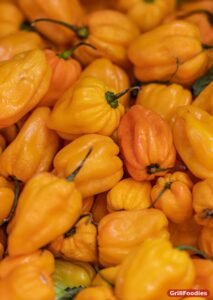
Most of the marinade ingredients are probably already in your cupboard, with the exception of the Scotch bonnets and the allspice, which are worth buying fresh. If you cannot find Scotch bonnets, habanero peppers are the closest substitute, with the same fruity heat. If you cannot find whole allspice berries, ground allspice works fine. Buy chicken pieces that are roughly the same size so they cook evenly, and choose skin-on, bone-in pieces if you can, because the skin protects the meat and crisps beautifully.
For the jerk marinade:
- 8 bone-in, skin-on chicken thighs and drumsticks, about 1.5 kg in total
- 4 spring onions, roughly chopped
- 1 small onion, roughly chopped
- 1 to 2 Scotch bonnet peppers, stalks removed, seeds left in for heat or removed for less
- 4 garlic cloves, peeled
- 2 cm piece of fresh ginger, peeled and roughly chopped
- 1 tablespoon ground allspice, or 2 teaspoons ground allspice plus a few crushed allspice berries
- 1 tablespoon fresh thyme leaves, or 2 teaspoons dried thyme
- 3 tablespoons soy sauce
- 2 tablespoons lime juice, freshly squeezed
- 2 tablespoons vegetable oil
- 1 tablespoon brown sugar
- 1/2 teaspoon ground nutmeg
- 1/2 teaspoon ground cinnamon
- 1 teaspoon fine sea salt
- 1 teaspoon ground black pepper
For the mango salsa:
- 2 ripe mangoes, peeled and diced
- 1/2 small red onion, finely diced
- 1 small red chilli, deseeded and finely chopped, optional
- 1 lime, juice only
- A small handful of fresh coriander, chopped
- Salt, to taste
To serve:
- Lime wedges
- Extra spring onions, sliced, for scattering
A quick note on the peppers: Scotch bonnets are hot, properly hot, and the heat lives mostly in the seeds and the white membrane inside. If you are cooking for people who like things fiery, leave the seeds in. If you want a gentler warmth, scrape them out and use one pepper instead of two. Either way, wear disposable gloves while you handle them, and do not touch your eyes. I learned that lesson once and I have never forgotten it.
How to Make Grilled Jerk Chicken with Mango Salsa
Start by making the marinade. Put the spring onions, onion, Scotch bonnet peppers, garlic, ginger, allspice, thyme, soy sauce, lime juice, oil, brown sugar, nutmeg, cinnamon, salt and pepper into a blender or food processor and blend until you have a thick, fairly smooth paste. It does not need to be perfectly silky, but there should be no large chunks of onion or pepper left. Taste a tiny amount on the tip of a spoon if you like, remembering that the flavour will mellow as it cooks. If it tastes too sharp, add a pinch more sugar. If it tastes flat, add another squeeze of lime.
Slash each piece of chicken two or three times, cutting down to the bone. These cuts are important, because jerk flavour needs a way into thick pieces of chicken, and the marinade cannot do its work through skin alone. Put the chicken in a large bowl or a strong food bag, pour over the marinade, and use your hands to rub it into every cut and crevice. Cover the bowl tightly or seal the bag, squeezing out as much air as you can, and put it in the fridge for at least four hours. Overnight is better, and I usually do it the evening before a barbecue so the flavour has a full night to develop.
- Take the chicken out of the fridge thirty minutes before you plan to grill, so it loses its chill and cooks more evenly. Wipe off the thickest clumps of marinade with the back of a knife or your fingers, leaving a thin, even coating. Thick clumps burn before the chicken is done, so this step is worth doing properly. Keep any leftover marinade in the bowl for basting, but only use it if you boil it first, since it has touched raw chicken.
- Heat your grill to medium, about 180 to 200°C, and set up two zones if you can: one side with the coals or burners on, the other side empty or on low. Clean the grates well with a grill brush and oil them lightly with a folded piece of kitchen paper dipped in oil, held with tongs. A clean, oiled grate is what stops the chicken from sticking and tearing the skin.
- Place the chicken skin-side down on the hot side of the grill and close the lid. Leave it for six to eight minutes without moving it. You want the skin to crisp and darken, and moving it too soon will tear it. When it releases easily from the grate, turn each piece and cook for another six to eight minutes on the second side.
- Move the chicken to the cooler side of the grill, close the lid, and let it finish cooking for ten to fifteen minutes more, turning once halfway through. The skin should be dark and blistered, almost blackened in places, which is exactly right for jerk chicken. Check the temperature in the thickest part of the largest piece, away from the bone. You are looking for 74°C, the safe temperature for chicken.
- While the chicken finishes, make the mango salsa. Put the diced mango, red onion, chilli if you are using it, lime juice and coriander in a bowl, season lightly with salt, and toss gently. Do not mash it. You want distinct pieces of mango that hold their shape on the plate. Let it sit for ten minutes so the flavours come together.
- Transfer the chicken to a clean platter and let it rest for five minutes before serving. Resting lets the juices settle back into the meat, and it gives you time to scatter over the sliced spring onions and arrange the lime wedges. Serve the mango salsa in a bowl alongside, or spoon it generously over the chicken, and let people help themselves.
Once you have the method down, it adapts easily. On a gas grill, keep one burner on medium and one on low. On a charcoal grill, pile the coals to one side. In the oven, roast the chicken on a rack over a lined tray at 200°C for forty to forty-five minutes, then finish it under a hot grill for three to five minutes to get the char. You will not get quite the same smoky flavour, but the marinade still does most of the work.
Tips for the Best Jerk Chicken
Give the marinade time, and do not try to rush it. Four hours is the minimum for flavour to reach the meat, and overnight is genuinely better. If you only have an hour, the chicken will still taste good on the outside, but the flavour will not have travelled into the meat, and you will notice the difference. When I am planning a barbecue, I make the marinade the night before, and it is one less thing to think about on the day.
Control the heat and watch the sugar. The brown sugar in the marinade is what gives jerk chicken its dark, sticky crust, but it is also what burns first. A medium grill, not a blazing one, is the right call. If you see the skin blackening too quickly, move the chicken to the cooler side straight away. A little char is traditional and delicious. A lot of char tastes bitter, and there is no fixing it once it happens.
Do not skip the slashes in the chicken. Thick thighs and drumsticks need help for the marinade to reach the meat near the bone, and two or three cuts per piece make a real difference. Cut down to the bone but not through it, and push the marinade into the cuts with your fingers. It feels fiddly, but it takes two minutes and it is the difference between chicken that is spicy on the outside and plain inside, and chicken that tastes of jerk all the way through.
Use a thermometer if you have one. Bone-in chicken is harder to judge by time alone, because pieces vary in size and grills vary in heat. Checking for 74°C in the thickest part, away from the bone, takes the guesswork out of it. If you do not have a thermometer, pierce the thickest part with a skewer and check that the juices run clear and the meat near the bone is no longer pink. For more detail on safe temperatures and timing, the BBC Good Food jerk chicken recipe is a useful reference, and the RecipeTin Eats Jamaican jerk chicken drumsticks show the same marinade method with drumsticks.
Keep a clean, oiled grate. Jerk marinade is sticky, and sticky marinade plus a dirty grate equals torn skin and a mess. Brush the grates clean while the grill heats, oil them lightly, and let the chicken sit undisturbed until it releases naturally. If it sticks, it is not ready to turn yet. Give it another minute and try again.
Serving Ideas
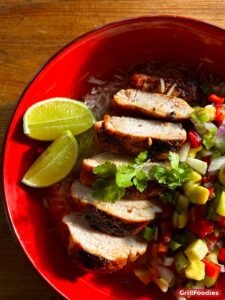
This chicken is at its best served family-style, piled on a platter in the middle of the table with the mango salsa in a bowl beside it and plenty of lime wedges. The classic partners are rice and peas, fried plantain, and a simple slaw, and if you want to lean into the Caribbean theme, those three make a proper plate. A cold beer or a glass of rum punch is the traditional drink, though a tall glass of iced limeade works just as well on a hot afternoon.
For a lighter meal, serve the chicken sliced over a big green salad with cucumber, tomatoes and a lime dressing, or tuck it into warm flatbreads with the mango salsa and a spoonful of sour cream. The salsa does double duty here, acting as both a topping and a sauce, so you do not need much else. If you are feeding a crowd, add a bowl of grilled vegetable skewers with herb butter and a tray of corn on the cob, and the table will look like a proper barbecue spread.
Leftovers are excellent the next day, sliced cold into sandwiches or chopped into a rice bowl with black beans and avocado. The heat mellows slightly overnight, and the smoky flavour actually deepens, which makes it one of the rare grilled dishes that is arguably better on day two. If you are planning a full barbecue menu, this chicken sits happily next to our honey chipotle grilled chicken wings without competing with them, since the flavours are quite different.
For a weeknight version when a barbecue is not practical, roast the chicken in the oven as described above and serve it with rice and a quick cucumber salad. It will not have the same smoke, but the marinade still carries the dish. And if you enjoy bright, herby grilled chicken, our grilled lemon garlic chicken thighs are a gentler alternative for nights when you want less heat.
Storage and Make-Ahead
Cooked jerk chicken keeps well in the fridge for three to four days in an airtight container. Let it cool completely before you put the lid on, and store the mango salsa separately, because it softens quickly once it has been sitting with warm chicken. The salsa itself keeps for about a day in the fridge, though the mango will soften, so it is best made fresh.
To reheat, warm the chicken gently in a covered pan over low heat with a splash of water, or in the oven at 160°C for ten to twelve minutes until hot through. The air fryer works well too, at 180°C for about five minutes, and it crisps the skin up nicely. Avoid the microwave if you can, because it softens the skin and dries the meat.
You can also freeze the cooked chicken for up to three months. Wrap each piece tightly in cling film, then place them in a freezer bag, squeezing out as much air as you can. Thaw overnight in the fridge and reheat gently as above. The marinade itself can be made ahead and kept in a sealed jar in the fridge for up to a week, or frozen in portions for up to three months, so you can have jerk chicken ready to go whenever the mood strikes.
Variations to Try
For a milder version, use one Scotch bonnet with the seeds removed and add an extra tablespoon of brown sugar to the marinade. The sweetness rounds out the heat without changing the character of the dish, and children usually manage it happily. For a hotter version, use two or three Scotch bonnets with the seeds left in, and add a teaspoon of chilli flakes to the paste. The heat builds slowly and lingers, which is exactly what jerk lovers are looking for.
For a different fruit salsa, swap the mango for pineapple, peach, or a mix of both. Pineapple brings a sharper sweetness that works well with the smoke, while peach is softer and rounder. You can also add diced avocado to the salsa for creaminess, though it is best added at the last minute so it does not brown.
If you prefer boneless chicken, use thigh fillets instead of bone-in pieces. They take the marinade beautifully and cook faster, about five to six minutes per side over medium heat. They are also easier to slice for wraps and sandwiches. For a whole-bird version, spatchcock a chicken, rub it all over with the paste, and grill it over indirect heat for forty-five to fifty minutes, turning once. It is a showstopper for a party, and the method is the same, just scaled up.
For a smokier finish, add a small handful of soaked pimento wood chips or applewood chips to a charcoal grill or a smoker box on a gas grill. Pimento wood is traditional for jerk, and it adds a warm, peppery smoke that matches the allspice in the marinade. You do not need much. A little smoke goes a long way, and too much can turn bitter.
Frequently Asked Questions
How hot is jerk chicken?
It depends on how many Scotch bonnets you use and whether you leave the seeds in. With one pepper, seeds removed, the heat is a warm background glow. With two peppers, seeds in, it is properly fiery. The mango salsa and a cold drink take the edge off, and the heat builds slowly rather than hitting you all at once. If you are unsure, start mild. You can always serve extra chilli sauce on the side, but you cannot take heat out once it is in the marinade.
Can I make jerk chicken without a barbecue?
Yes, roast it in the oven on a rack over a lined tray at 200°C for forty to forty-five minutes, then finish it under a hot grill for three to five minutes to get the char. You will miss some of the smoky flavour, but the marinade still carries the dish. A grill pan on the hob also works, though you will need to cook in batches and open a window, because the marinade smokes a little.
How long should I marinate jerk chicken?
Four hours is the minimum for the flavour to reach the meat, and overnight is better. Do not go beyond twenty-four hours, because the lime juice in the marinade can start to change the texture of the meat surface, making it slightly soft. If you are short on time, an hour is better than nothing, but the flavour will sit mostly on the outside.
What is the difference between jerk chicken and barbecue chicken?
Jerk is a Jamaican method built on a spice paste of allspice, Scotch bonnet, thyme and spring onion, cooked slowly over pimento wood or charcoal, and it is spicy, smoky and aromatic. Barbecue chicken is usually coated in a sweet, tomato-based sauce and cooked over lower, slower heat. They are both grilled chicken, but they taste quite different, and jerk has a heat and a warmth that barbecue sauce does not.
Can I use chicken breast for jerk chicken?
You can, but thighs and drumsticks are better for this recipe. Dark meat stays juicier on the grill and handles the long cooking time without drying out. If you do use breast, pound it to an even thickness, marinate it for at least four hours, and pull it off the grill at 74°C, then rest it for five minutes. Our guide to grilled chicken shawarma wraps uses a similar marinade approach with sliced chicken if you prefer a quicker cook.
What should I serve with jerk chicken?
Rice and peas, fried plantain and coleslaw are the traditional partners, and they all work beautifully with the mango salsa. For a lighter plate, try a green salad, grilled corn, or our grilled vegetable skewers with herb butter. The salsa is the key side, though. Without something fresh and sweet next to it, the heat of the jerk can feel one-note, so do not skip it.


You May Also Like
Grilled Lemon Garlic Chicken Thighs

Smoky Grilled Chicken Wings with Alabama White Sauce
