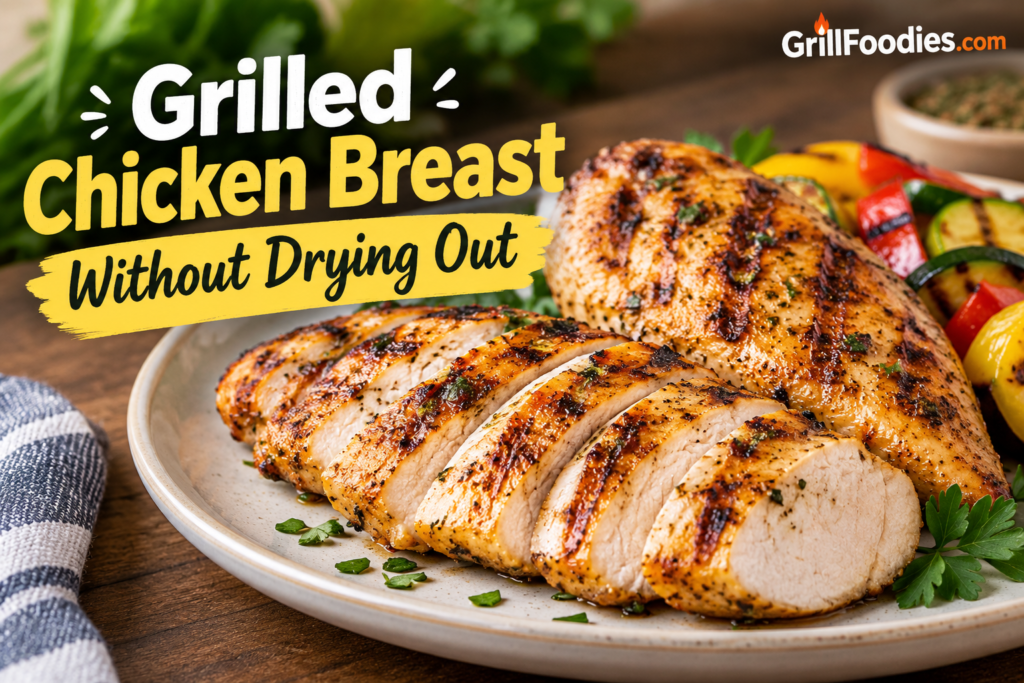
Grilled chicken breast is one of those meals that sounds incredibly simple until you end up with a piece of chicken that is dry, tough, and difficult to chew. The good news is that learning how to make grilled chicken breast without drying out is easier than it seems. With a few simple techniques, you can grill chicken that stays juicy inside while developing a deliciously browned exterior.
The secret isn’t complicated. Chicken breast is naturally lean, so it doesn’t have much fat to protect it from the heat. Cooking it too long, using excessively high heat, or starting with unevenly thick chicken breasts can quickly lead to dryness.
This recipe focuses on practical ways to keep chicken breast moist and tender without requiring complicated ingredients. Whether you’re preparing dinner for your family, meal prepping for the week, or simply looking for an easy grilled chicken recipe, these tips can make a noticeable difference.
Why Does Grilled Chicken Breast Dry Out?
Before learning how to prevent dry chicken, it helps to understand why it happens.
Chicken breast contains very little fat compared with chicken thighs. As it cooks, the muscle fibers tighten and push moisture out. If the chicken stays on the grill for too long, more moisture is lost, leaving you with a dry texture.
Several common mistakes can make this worse:
- Cooking chicken straight from an unevenly thick breast
- Using extremely high heat for the entire cooking time
- Overcooking the chicken
- Cutting into the chicken repeatedly while it cooks
- Skipping a short resting period
- Using very thick chicken breasts without flattening them
- Not adding enough moisture or oil to the surface
The biggest factor, however, is usually overcooking. Even a simple seasoning mixture can produce juicy chicken when the meat is cooked properly.
The Best Way to Grill Chicken Breast Without Drying Out
The easiest method is to first make the chicken an even thickness, season it well, cook it over properly heated grill grates, and remove it as soon as it reaches a safe internal temperature.
For this recipe, you’ll need:
Ingredients
- 2 boneless, skinless chicken breasts
- 1 tablespoon olive oil
- 1 teaspoon paprika
- 1/2 teaspoon garlic powder
- 1/2 teaspoon onion powder
- 1/2 teaspoon salt
- 1/4 teaspoon black pepper
- 1/2 teaspoon dried Italian seasoning
- 1 teaspoon lemon juice
You can adjust the seasonings to your taste. The goal is to create flavorful chicken without covering up its natural taste.
Step 1: Choose the Right Chicken Breast
Start with fresh boneless, skinless chicken breasts that are similar in size.
Very large chicken breasts can be difficult to grill evenly. The outside may become overcooked before the thickest part reaches the proper temperature.
If your chicken breasts are thick on one end and thin on the other, don’t worry. You can easily fix this by gently pounding them to an even thickness.
An even piece of chicken cooks more consistently, which is one of the simplest ways to prevent dryness.
Step 2: Flatten the Chicken
Place each chicken breast between two pieces of plastic wrap or parchment paper. Using a meat mallet or rolling pin, gently pound the thicker sections until the breast is approximately the same thickness throughout.
You don’t need to make it extremely thin. Around 1/2 to 3/4 inch thick works well for grilling.
The purpose isn’t to smash the chicken. It’s simply to create an even surface so the thinner part doesn’t finish cooking long before the center.
This small step can make a big difference when you’re trying to make grilled chicken breast without drying out.
Step 3: Make a Simple Seasoning Mixture
Add the olive oil, paprika, garlic powder, onion powder, salt, black pepper, Italian seasoning, and lemon juice to a small bowl.
Mix everything together until it forms a loose seasoning paste.
The olive oil helps coat the chicken and contributes to browning, while the spices provide plenty of flavor. Lemon juice adds brightness and balances the savory seasoning.
You don’t need an elaborate marinade to make juicy grilled chicken. A simple seasoning mixture can work beautifully when the chicken is cooked correctly.
Step 4: Season the Chicken
Pat the chicken breasts dry with paper towels. Then rub the seasoning mixture evenly over both sides.
Make sure the seasoning reaches the edges of the chicken.
Allow the chicken to sit for about 10 to 15 minutes while you prepare the grill. This gives the seasoning a little time to settle into the surface.
If you have more time, you can refrigerate the seasoned chicken for a few hours. Just keep it covered and refrigerated until you’re ready to cook.
Step 5: Preheat the Grill
Preheat your grill before adding the chicken.
A properly heated grill helps the outside of the chicken brown quickly while the inside cooks evenly. Clean the grates and lightly oil them if necessary to reduce sticking.
You don’t want the grill to be so hot that the chicken burns before the center cooks. Medium-high heat is generally a good starting point for boneless chicken breasts.
The exact cooking time will depend on the thickness of the chicken, the type of grill you’re using, and how hot your grill runs.
Step 6: Place the Chicken on the Grill
Put the chicken breasts on the preheated grill.
Let them cook without constantly moving them around. After several minutes, gently turn the chicken and continue cooking on the other side.
Avoid pressing down on the chicken with a spatula. Although it may seem like a good way to create grill marks, pressing the meat can force flavorful juices out.
Instead, let the chicken cook undisturbed.
How Long Should You Grill Chicken Breast?
There isn’t one exact cooking time that works for every chicken breast.
A thinner breast may cook relatively quickly, while a thicker piece can take significantly longer.
As a general guide, evenly flattened chicken breasts around 1/2 to 3/4 inch thick may take roughly 5 to 7 minutes per side over medium-high heat.
However, temperature is more important than time.
Use an instant-read meat thermometer to check the thickest part of the chicken. Chicken should reach a safe internal temperature of 165°F (74°C).
Insert the thermometer from the side if possible so the tip reaches the center of the thickest section.
This is much more reliable than cutting the chicken open to see whether it looks done.
Don’t Overcook the Chicken
If you’re wondering how to make grilled chicken breast without drying out, this is probably the most important tip.
Chicken breast doesn’t become better because it stays on the grill longer. Once it has reached a safe temperature, continuing to cook it simply increases the chance of losing moisture.
Keep a thermometer nearby and check the chicken as it gets close to being done.
Because cooking conditions vary, use temperature as your guide rather than blindly following a cooking time.
Let the Chicken Rest
Once the chicken reaches the appropriate internal temperature, remove it from the grill and place it on a clean plate or cutting board.
Let it rest for about 5 minutes before slicing.
Resting gives the juices time to redistribute throughout the meat. If you immediately cut into piping-hot chicken, some of those juices can run onto the plate.
A short rest helps the chicken remain moist and tender when you finally slice it.
Why Flattening Chicken Helps Prevent Dryness
One of the biggest problems with chicken breasts is their uneven shape.
The thick end takes longer to cook than the thin end. By the time the thickest section is finished, the thinner portion may have spent several extra minutes exposed to heat.
Flattening creates a more uniform piece of meat.
That means the entire chicken breast can reach the proper temperature at roughly the same time.
It’s a simple technique, but it’s particularly useful for anyone who has struggled with dry grilled chicken.
Should You Marinate Chicken Breast?
You don’t have to marinate chicken breast, but a marinade can add flavor and moisture.
For a quick marinade, combine olive oil, lemon juice, garlic, salt, black pepper, and your favorite herbs. Place the chicken in the mixture and refrigerate it for a few hours.
Avoid marinating chicken in a very acidic mixture for an excessively long time. Ingredients such as lemon juice can change the texture of the meat if used heavily or left for too long.
For a quick weeknight dinner, even 20 to 30 minutes of seasoning time can be useful.
A Simple Alternative to Marinating
If you don’t have time to marinate, don’t skip grilled chicken altogether.
Simply coat the chicken with olive oil and season it generously with salt, pepper, garlic powder, and paprika.
The combination of proper thickness, controlled heat, and careful cooking is more important than having a complicated marinade.
That’s why this recipe works well when you want a quick meal without planning several hours ahead.
How to Keep Chicken Juicy on the Grill
Here are some of the most useful tips for keeping grilled chicken breast moist:
1. Don’t start with ice-cold chicken
You don’t need to leave chicken sitting out for a long time, but allowing it to sit briefly while you prepare the grill can help with more even cooking.
Always follow safe food-handling practices and don’t leave raw chicken at room temperature for extended periods.
2. Pound thick chicken breasts evenly
This prevents one section from becoming dry while another is still cooking.
3. Use enough oil
A light coating of oil helps the seasoning stick and encourages browning.
4. Preheat your grill
A hot grill creates better browning and helps prevent the chicken from sticking.
5. Don’t constantly flip the chicken
Turn it when necessary, but avoid repeatedly moving it around.
6. Don’t press the meat
Pressing chicken can push moisture out.
7. Use a meat thermometer
This is the most dependable way to know when the chicken is ready.
8. Let it rest
Give the chicken several minutes before slicing.
What Temperature Should the Grill Be?
Medium-high heat is generally a useful range for grilled chicken breast.
If the grill is too cool, the chicken may take longer to cook and can become dry before developing good browning.
If the grill is extremely hot, the outside can burn while the center remains undercooked.
The ideal approach is controlled heat. If your grill has multiple burners, you can also create a hotter direct-heat area and a cooler zone. This gives you more control if the chicken begins browning too quickly.
What If Your Chicken Is Very Thick?
For very thick chicken breasts, you have a few options.
You can butterfly them by slicing horizontally through the center, leaving one side attached, and opening the breast like a book.
Another option is to pound the chicken until it has an even thickness.
You can also start the chicken over direct heat for browning and then move it to a cooler area of the grill to finish cooking.
The goal is always the same: allow the center to cook without leaving the exterior exposed to excessive heat for too long.
How to Tell If Grilled Chicken Is Done
The safest and most reliable method is to use a food thermometer.
Insert it into the thickest part of the chicken. The internal temperature should reach 165°F (74°C).
Don’t rely only on color. Chicken can appear white before it has reached the appropriate temperature, and the appearance can vary depending on the cooking method.
Likewise, clear juices aren’t a substitute for checking the internal temperature.
A thermometer takes the guesswork out of grilling.
Common Mistakes to Avoid
Cooking by Time Alone
Recipes often give estimated cooking times, but chicken breasts aren’t all the same size. Your grill may also cook hotter or cooler than another grill.
Use the cooking time as a starting point, not a guarantee.
Using Too Much Heat
Very high heat may create attractive grill marks quickly, but it can also dry out the outside.
Skipping the Resting Period
Cutting immediately into grilled chicken can release juices before they have a chance to redistribute.
Cutting the Chicken Repeatedly
Every time you cut into the chicken, you lose juices and make it harder to judge the remaining cooking time.
Using Uneven Pieces
If one part of the breast is twice as thick as another, it will be much harder to cook evenly.
What to Serve With Grilled Chicken Breast
Juicy grilled chicken is incredibly versatile.
Serve it with a simple green salad, roasted vegetables, grilled corn, rice, mashed potatoes, or a fresh cucumber and tomato salad.
You can also slice the chicken and add it to wraps, sandwiches, grain bowls, pasta, or salads.
For a light dinner, pair the chicken with steamed vegetables and a squeeze of fresh lemon.
For something more filling, serve it alongside rice and roasted potatoes.
How to Store Leftover Grilled Chicken
If you have leftovers, allow them to cool appropriately and store them in an airtight container in the refrigerator.
Use refrigerated cooked chicken within a safe timeframe according to standard food-safety guidance.
When reheating, avoid overheating the chicken because this can make it dry.
A microwave can work well when you add a small amount of moisture, such as a spoonful of broth or water, and cover the chicken while reheating.
You can also slice cold grilled chicken and use it in salads or sandwiches.
Easy Ways to Use Leftover Grilled Chicken
One of the best things about grilled chicken breast is how many meals you can create from it.
Try using leftovers in:
- Chicken wraps
- Chicken Caesar salad
- Chicken and rice bowls
- Chicken sandwiches
- Quesadillas
- Chicken pasta
- Tacos
- Grain bowls
- Chicken and vegetable salads
This makes grilled chicken especially useful for meal preparation.
Frequently Asked Questions
How do you grill chicken breast without drying it out?
Start by making the chicken an even thickness. Coat it lightly with oil, season it well, and grill over controlled medium-high heat. Most importantly, use a thermometer and avoid cooking the chicken beyond the safe internal temperature.
Should I oil chicken breast before grilling?
Yes. A light coating of oil helps the seasonings stick, encourages browning, and can help reduce sticking on the grill.
Should I grill chicken breast on high heat?
Extremely high heat isn’t necessary. Medium-high heat is usually easier to control and helps the chicken brown without burning the outside before the center is cooked.
How long should chicken breast rest after grilling?
About 5 minutes is a good starting point. This gives the juices some time to redistribute before you slice the chicken.
Why is my grilled chicken breast always dry?
The most common reason is overcooking. Unevenly thick chicken, excessively high heat, and skipping the resting period can also contribute to dryness.
Can I make grilled chicken breast without a marinade?
Absolutely. A simple mixture of olive oil, salt, pepper, garlic powder, paprika, and herbs can provide plenty of flavor.
Can I grill frozen chicken breast?
It’s generally better to thaw chicken safely before grilling because frozen chicken cooks unevenly and makes it more difficult to control the cooking process.
Final Tips for Perfect Grilled Chicken Breast
Making grilled chicken breast without drying out doesn’t require a complicated recipe. The most important thing is controlling the cooking process.
Start with evenly thick chicken breasts. Season them with a simple combination of oil and spices. Preheat the grill, cook the chicken without constantly moving or pressing it, and check the internal temperature with a thermometer.
Once the chicken reaches 165°F (74°C), remove it from the grill and let it rest for several minutes.
The result should be tender, flavorful chicken with a nicely browned exterior and a juicy center.
Once you get comfortable with these basic techniques, grilled chicken breast becomes one of the easiest proteins to prepare. You can change the seasonings, serve it with different sides, or use the leftovers in completely new meals.
The key is simple: even thickness, controlled heat, accurate temperature, and a little patience. Those four habits can help you enjoy juicy grilled chicken instead of the dry, tough chicken that so many home cooks have experienced.