

Smoky Baked Beans with Bacon
Every barbecue needs a dish that can sit on the table, stay warm, and keep people coming back with a spoon long after the main course is gone. Baked beans are that dish. They are sweet and savoury at the same time, soft and rich, with a smoky depth that makes them taste like they took all day, even when they didn’t. And when you lay bacon across the top and let it crisp in the oven, you get the salty crunch that turns a good side into the one everyone asks about.
There are two kinds of baked beans in the world. There are the ones that come straight from a can, heated up and served as they are, and there are the ones someone actually took the time to build. The difference is not subtle. Canned beans on their own are fine, but they are one-note. They need help. They need onion softened in bacon fat, a little brown sugar and molasses, mustard for sharpness, and time in the oven for the sauce to thicken and the flavours to settle into each other. That is what this recipe does. It starts with a shortcut, canned beans, and turns them into something that tastes homemade, because the sauce around them is homemade.
I make these beans for cookouts, potlucks, and any evening when the grill is already going and I want a side that takes care of itself. Once they are in the oven, there is almost nothing to do except check on them now and then and enjoy the smell. They are forgiving, too. If they need ten more minutes, they will be fine. If someone is late, they will hold, warm, on the table. And they are one of the few sides that actually taste better the next day, after the sauce has had a night to soak into the beans. That makes them a rare thing at a barbecue: a dish you can make ahead without losing anything.
This version leans smoky rather than just sweet. Too many baked beans are all sugar, and after two spoonfuls you are done. Here the sweetness is balanced by smoked paprika, a little chipotle, and the saltiness of the bacon. The sauce is thick enough to coat a spoon, not watery, and the beans hold their shape instead of turning to mush. It is the kind of side that works next to ribs and chicken, but also next to a simple burger, because it brings its own depth to the plate.
Why This Recipe Works
The first thing to understand about baked beans is that the sauce matters more than the beans. The beans themselves are mild. They are a vehicle. What you taste is the sauce, and the sauce needs time. When you bake beans slowly, the liquid reduces, the sugars caramelise slightly, and the flavours that started out separate, the sharpness of the mustard, the sweetness of the molasses, the smokiness of the paprika, start to taste like one thing. That is why a quick simmer on the stove never quite matches an hour in the oven. The oven gives you time and even heat, and the surface of the beans gets a chance to darken and thicken.
The second thing is the bacon. Bacon does three jobs here. It provides fat, and that fat is where you cook the onion and garlic, so the whole dish starts with a smoky, savoury base. It provides salt, which keeps the sweetness in check. And when you lay some of the bacon on top, it crisps in the oven’s dry heat and gives you a contrast to the soft beans underneath. If you stir all the bacon into the beans, you lose that crunch. Keeping some on top is a small choice that makes a real difference.
The third thing is balance. A good baked bean sauce should be sweet, but not so sweet that it tastes like dessert. It should be smoky, but not so smoky that you can’t taste anything else. It should have a little tang, from mustard and a splash of vinegar, to keep it bright. This recipe uses brown sugar and molasses for sweetness, tomato paste and ketchup for body, Dijon mustard and apple cider vinegar for tang, and smoked paprika and chipotle for smoke and heat. None of them dominates. They work together, and you can adjust them to your taste. Like it sweeter, add a spoonful more brown sugar. Like it hotter, add more chipotle. The recipe is a starting point, not a rule.
Ingredients You’ll Need
For eight servings, you will need eight slices of thick-cut bacon, cut into half-inch pieces, plus two extra slices left whole for the top. Thick-cut bacon holds up better than thin bacon, which can disappear into the sauce. You will also need one medium yellow onion, finely diced, and three cloves of garlic, minced. The onion needs to be diced small so it softens fully and melts into the sauce rather than staying in crunchy chunks.
For the beans, use three cans, fifteen ounces each, of navy beans or great northern beans, drained and rinsed. Navy beans are the classic choice because they are small, creamy, and hold their shape. Great northern beans are a little larger and work just as well. If you prefer pinto beans, they will work too, though they are softer and the texture will be a little different. Don’t use kidney beans here. They are too firm and too large for this sauce, and the dish won’t have the same soft, spoonable feel.
For the sauce, you will need a third of a cup of brown sugar, two tablespoons of molasses, a third of a cup of ketchup, two tablespoons of tomato paste, a tablespoon of Dijon mustard, a tablespoon of apple cider vinegar, a tablespoon of Worcestershire sauce, a teaspoon of smoked paprika, half a teaspoon of chipotle powder or a minced chipotle in adobo, and half a teaspoon of black pepper. The molasses is what gives baked beans their deep, dark colour and their slightly bitter edge, which keeps the brown sugar from making the dish too sweet. If you don’t have molasses, you can use an extra tablespoon of brown sugar and a teaspoon of dark honey, but the flavour won’t be quite as deep.
You will also need half a cup of water or low-sodium chicken stock to loosen the sauce, and salt to taste at the end. Hold back on the salt until the beans have baked, because the bacon and the Worcestershire sauce already bring salt, and the sauce concentrates as it cooks. Taste at the end and adjust. A pinch of salt at the finish is better than too much at the start.
Equipment You’ll Need
A large oven-safe skillet or a Dutch oven is the best pan for this recipe, because you can cook the bacon and onion in it on the stove, stir in the beans and sauce, and move the whole thing straight into the oven. If you don’t have one, use a regular skillet for the stove work and transfer everything to a nine-by-thirteen baking dish. A baking dish works well, especially for a crowd, because it gives the beans a wide surface, which helps the top darken and the sauce thicken.
You will also need a wooden spoon, a can opener, a colander for rinsing the beans, and a sheet of foil. The foil matters. You bake the beans covered for the first part of the cook, so they steam and the sauce soaks in, and uncovered for the last part, so the top can thicken and the bacon can crisp. Without the foil, the top dries out before the inside is ready. With it, you get both: soft beans underneath and a dark, sticky top.
How to Make Smoky Baked Beans with Bacon
Heat the oven to 325 degrees Fahrenheit. A lower, slower oven is better for baked beans than a hot one. At 325, the sauce bubbles gently, the beans soften without breaking apart, and the flavours have time to come together. A hotter oven will dry out the edges and leave the centre watery. Put a rack in the middle of the oven so the dish cooks evenly.
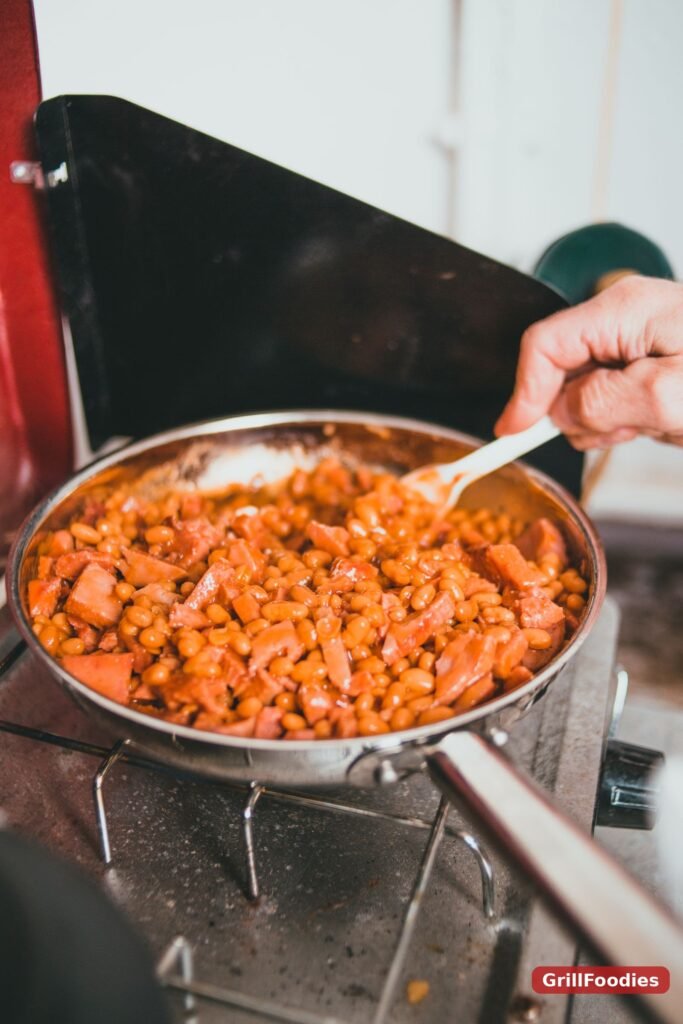
Cook the bacon in a large oven-safe skillet or Dutch oven over medium heat. Stir it now and then so it cooks evenly, and let it go for six to eight minutes, until it is crisp and the fat has rendered. Use a slotted spoon to lift the bacon out and set it on a plate lined with paper towel. Leave about two tablespoons of the bacon fat in the pan and pour off the rest. That fat is gold. It is where the flavour starts, and you don’t want to waste it, but you also don’t want the beans swimming in grease.
Add the diced onion to the hot bacon fat and cook for five minutes, stirring now and then, until it is soft and translucent and starting to turn golden at the edges. Add the garlic and cook for another minute, just until you can smell it. Garlic burns fast, so don’t walk away. If it starts to brown too quickly, turn the heat down. Once the onion and garlic are ready, stir in the tomato paste and cook for one minute more. This step matters. Cooking the tomato paste in the fat takes away its raw, tinny taste and gives the sauce a deeper, richer base.
Now build the sauce. Stir in the brown sugar, molasses, ketchup, Dijon mustard, apple cider vinegar, Worcestershire sauce, smoked paprika, chipotle, and black pepper. Add the water or stock and stir until everything is combined. Let the sauce simmer for two to three minutes. It will look loose at this point, and that is fine. It thickens in the oven. Taste it. It should be sweet, smoky, and tangy, with a little heat at the back. Adjust the sugar, vinegar, or chipotle now, before the beans go in, because once they are in, it is harder to fix the balance.
Add the drained beans and about two-thirds of the cooked bacon to the sauce. Stir gently so you don’t break the beans. Lay the two whole slices of bacon across the top. If you are using a baking dish, transfer everything now and lay the bacon on top there. Cover the dish tightly with foil and put it in the oven. Bake covered for forty-five minutes, then remove the foil and bake for another thirty to forty-five minutes, until the sauce is thick and bubbling and the bacon on top is crisp and dark at the edges. The beans should look glossy, not watery, and a spoon dragged through them should leave a trail that fills in slowly.
Let the beans rest for ten minutes before serving. This is not just about temperature. As they rest, the sauce thickens a little more and the flavours settle. Sprinkle the remaining bacon over the top if you saved any, or crumble the crisp bacon from the top over the beans. Serve warm, straight from the dish, with a large spoon so people can help themselves.
Tips for the Best Baked Beans
Don’t skip rinsing the beans. The liquid in the can is starchy and salty, and it will make the sauce cloudy and too salty. Rinse them well in a colander and let them drain for a minute before they go into the pan. It is a small step, but it makes the finished dish cleaner and lets the sauce you made shine through.
Don’t rush the bake. Baked beans need time. If you pull them out after thirty minutes, the sauce will still be thin and the flavours will taste separate, like sugar and mustard sitting next to each other rather than blended. Give them the full hour and a half. If the sauce still looks loose after the uncovered bake, give it another fifteen minutes. The beans won’t suffer. They are very forgiving, and a little extra time in the oven only makes them better.
Watch the bacon on top. Bacon goes from crisp to burnt quickly in a hot oven, especially the thin ends. If it is darkening too fast, lay a small piece of foil loosely over the top for the last ten minutes. It will still crisp, but it won’t burn. And if you are using a glass baking dish, remember that glass holds heat longer than metal, so the beans will keep cooking for a few minutes after they come out. Pull them a touch earlier if you are using glass.
Make them ahead when you can. These beans taste better the next day. The sauce soaks into the beans overnight, and the flavours deepen. Make them the day before a cookout, cool them, and keep them in the fridge. Reheat them covered in a 325-degree oven for twenty-five to thirty minutes, or in a slow cooker on low for two hours, adding a splash of water if they look dry. They will taste like you made them that morning, only better.
Serving Ideas
Baked beans belong next to barbecue, and they are at home on any plate that has something smoky on it. They are a natural partner for grilled BBQ chicken breast with smoky rub, where the sweet beans balance the rub’s spice. They are just as good with ribs, pulled pork, or burgers, and they are one of the few sides that can hold their own next to a rich, fatty cut of meat without disappearing.
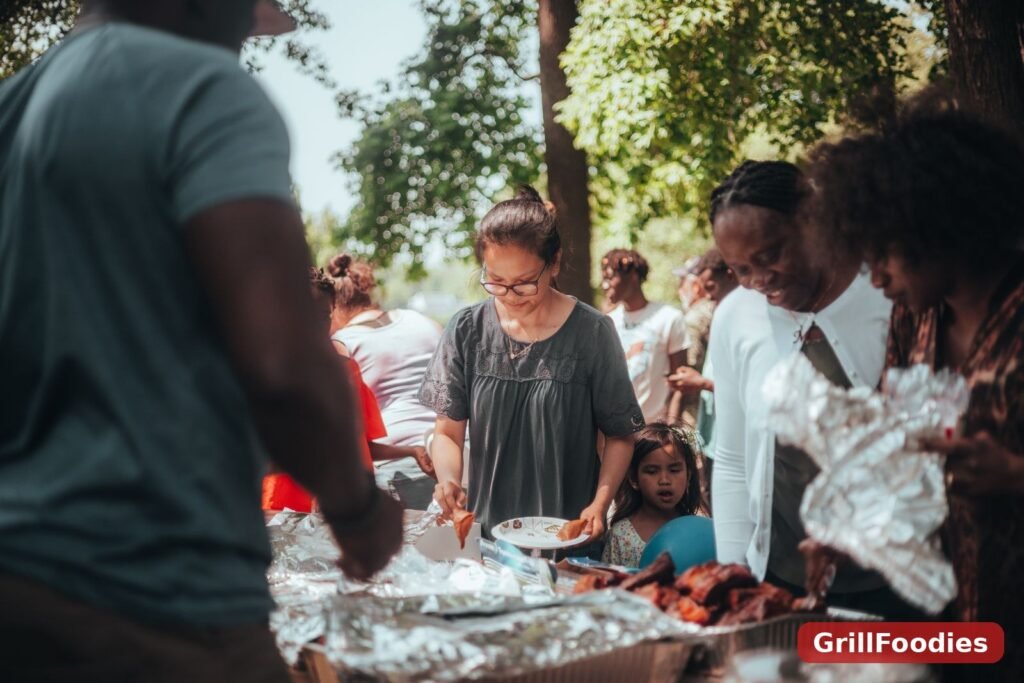
At a cookout, serve them in the dish they baked in, set on a trivet in the middle of the table, with a large spoon and a stack of small bowls nearby. People will help themselves, and the dish will empty faster than you expect. They are also good at a potluck, because they travel well and stay warm for a long time. If you are taking them somewhere, bake them in a disposable foil pan, cover tightly, and wrap the whole pan in a towel to keep it warm on the drive.
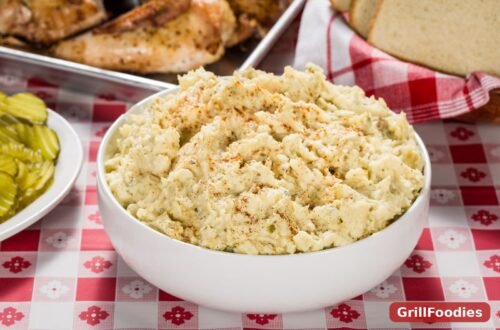
For a full barbecue plate, pair the beans with creamy potato salad with dill and a plate of honey chipotle grilled chicken wings. The cool, creamy potato salad and the sweet, smoky beans balance the heat of the wings, and the plate feels complete without needing anything else. A simple coleslaw or a green salad on the side adds freshness, and cornbread is always welcome for scooping up the sauce. One-pan BBQ chicken and potatoes is another easy main that shares the same smoky, comforting flavours and makes a weeknight version of the same meal.
Storage and Leftovers
Leftover baked beans keep in the fridge for four to five days in a sealed container. They reheat well in a saucepan over low heat, with a splash of water to loosen the sauce, or in the microwave in short bursts, stirring between each one. They also freeze well for up to three months. Freeze them in portions, so you can thaw just what you need, and reheat them gently on the stove. The texture will be slightly softer after freezing, but the flavour will still be good.
Leftover beans are useful beyond the side dish. Spoon them over toast with a fried egg for breakfast. Use them as a filling for a baked potato, with a little grated cheese on top. Stir them into a pot of chilli for extra body. Or mash them lightly and spread them on a burger bun as a sweet, smoky sauce. They are one of those leftovers that doesn’t feel like a leftover, because they are good in so many different ways.
Frequently Asked Questions
Can I make baked beans without bacon?
Yes. Leave out the bacon and cook the onion in two tablespoons of olive oil or butter instead. Add a teaspoon of liquid smoke or an extra half teaspoon of smoked paprika to keep the smoky flavour. The beans will be a little less rich, but they will still be good, and they will be suitable for vegetarians. If you want the salty crunch on top, sprinkle toasted breadcrumbs mixed with a little smoked paprika over the beans for the last ten minutes of baking.
Can I use dried beans instead of canned?
Yes, but you need to cook them first. Soak a pound of dried navy beans overnight, then simmer them in fresh water for forty-five minutes to an hour, until they are tender but not falling apart. Drain them and use them in place of the canned beans. Don’t use the soaking water, and don’t add salt until the beans are tender, because salt can keep dried beans firm. Dried beans give you a slightly firmer texture and a cleaner flavour, but they add a day of planning, so canned beans are the practical choice for most cookouts.
Why are my baked beans too sweet?
Most baked beans are too sweet because the recipe leans on sugar without enough tang or salt to balance it. If yours taste too sweet, stir in a tablespoon of apple cider vinegar and a pinch of salt, and let them bake for another fifteen minutes. The vinegar brightens the sauce and cuts the sweetness without adding more flavour of its own. Next time, start with a little less brown sugar, taste the sauce before the beans go in, and add more only if you need it. Remember that the sauce concentrates as it bakes, so it will taste sweeter at the end than it does at the start.
Can I make these beans in a slow cooker?
Yes. Cook the bacon and onion on the stove as described, then transfer everything to a slow cooker and cook on low for four to five hours, or on high for two to three hours. Leave the lid slightly ajar for the last hour so the sauce can thicken. The bacon on top won’t crisp in a slow cooker, so cook it separately in a skillet and crumble it over the beans before serving. Slow cooker beans are a good option when the oven is busy with something else.
How do I keep baked beans warm at a cookout?
Baked beans hold heat well because they are dense and saucy. Keep them in the dish they baked in, covered with foil, and set the dish on a trivet. They will stay warm for an hour or more. For longer, transfer them to a slow cooker on the warm setting, with the lid on, and stir them every half hour. Check the food safety guidance from the USDA on keeping food at a safe temperature, and BBC Good Food has more barbecue side ideas if you are planning a full cookout menu.



One Comment
Pingback: