

Smoky BBQ Chicken Thighs with Bourbon Glaze
There is a particular smell that tells you summer is actually happening, and it is not sunscreen or cut grass. It is chicken thighs hitting a hot grill, the skin starting to crisp, and a little smoke curling up while the glaze you brushed on five minutes ago turns sticky and dark at the edges. These smoky BBQ chicken thighs with bourbon glaze are the reason I keep a bottle of bourbon in the kitchen that nobody is allowed to drink straight. Well, almost nobody.
I have grilled a lot of chicken over the years, and thighs are the cut I reach for when I actually care how dinner turns out. Breasts get all the attention, but they dry out if you look at them wrong. Thighs forgive you. They stay juicy even if the grill runs a little hot, even if you get distracted by a conversation, even if the kids need something right in the middle of cooking. The dark meat has enough fat to baste itself from the inside, which means you get tender meat and crispy skin without babysitting a thermometer every thirty seconds. Add a bourbon glaze that caramelises instead of burning, and you have the kind of dinner people ask about before they have even finished eating.
This recipe serves four, takes about forty-five minutes from lighting the grill to sitting down, and most of that time the chicken is just doing its thing under a closed lid. The glaze comes together in one small saucepan while the grill heats, and it uses ingredients you probably already have. Nothing fancy, nothing you need to order online, just good technique and a little patience at the end, which is where most grilled chicken goes wrong.
Why Chicken Thighs Are Built for the Grill
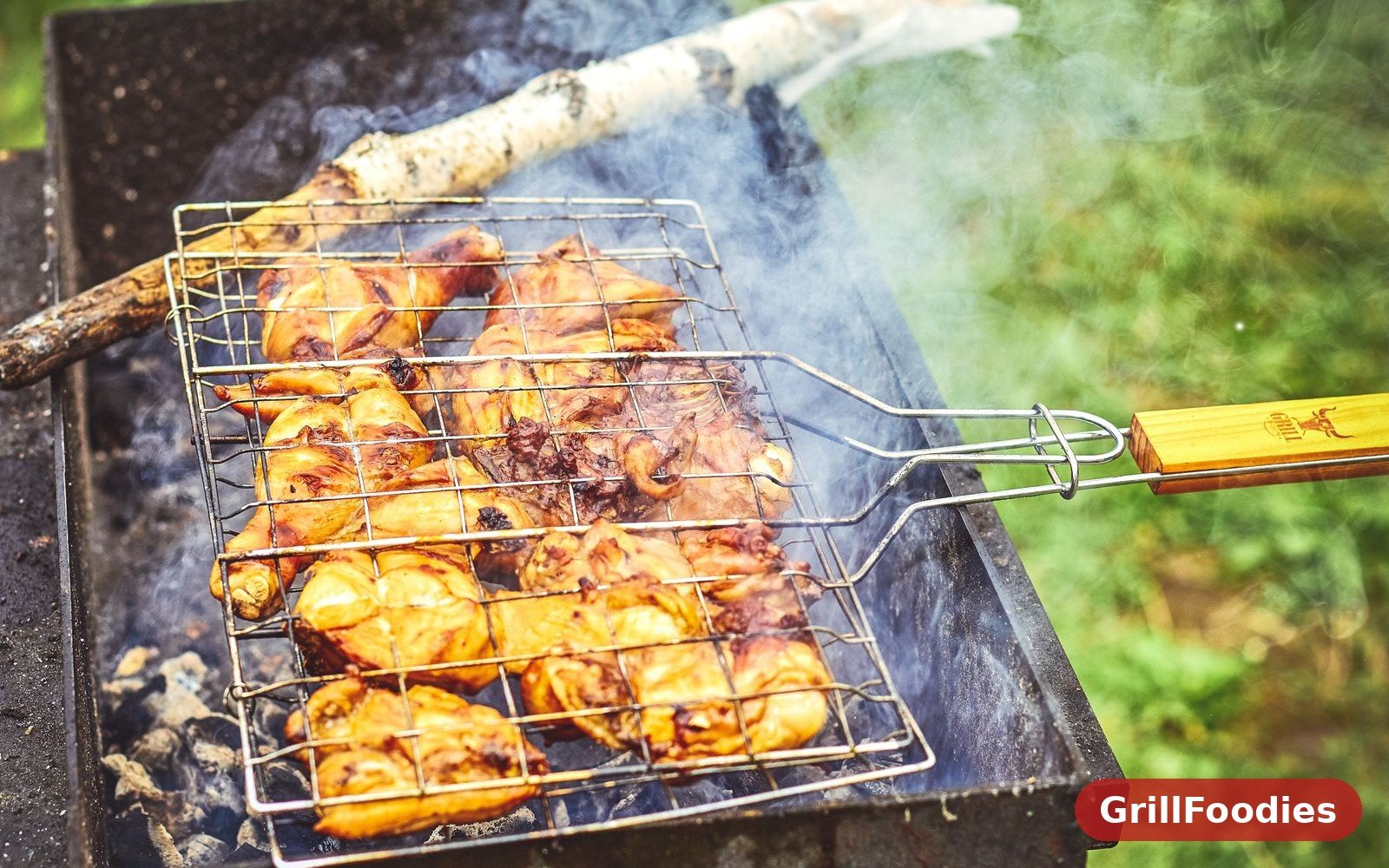
Before we get to the glaze, it is worth understanding why thighs behave so differently from breasts on a grill, because once you know it you will stop fighting your chicken and start working with it. A chicken breast is lean, which sounds healthy and virtuous, but lean means there is almost no margin for error. A few degrees past done and the meat squeezes out its moisture and turns chalky. A thigh, on the other hand, carries its fat in and around the meat, and that fat melts slowly as it cooks, keeping everything moist even as the outside gets properly charred.
Bone-in, skin-on thighs are my preference for this recipe, and that is not just tradition talking. The bone slows the cooking down near the centre, which sounds like a drawback until you realise it is actually what lets the skin get deeply browned without the meat drying out. The skin, meanwhile, is doing two jobs at once. It protects the meat from direct flame, and it renders its own fat onto the grill, which is where a good part of that smoky flavour comes from. If you have only ever grilled boneless skinless thighs, this recipe will still work, and I will tell you how to adjust the timing below, but if you can get bone-in skin-on, do it. The difference is real, and you will taste it in the first bite.
There is also a practical argument. Thighs are usually cheaper than breasts, sometimes by a lot, and they feed a crowd without a second mortgage. Eight thighs, a bottle of barbecue sauce you already like, a splash of bourbon, and you have dinner for a family of four with leftovers for tomorrow’s sandwiches. That is the kind of cooking I want more of in my life.
The Bourbon Glaze: What It Is and Why It Works
Let us clear something up right away, because it is the question everyone asks. No, the finished chicken will not taste like a glass of bourbon, and no, it will not get anyone tipsy. The alcohol cooks off in the saucepan and again on the grill, and what stays behind is the interesting part: the caramel, vanilla, and oak notes that bourbon picks up from the barrel. Those flavours are made for barbecue. They sit right next to the smokiness and the sweetness of the sauce instead of fighting it.
The glaze itself is simple. Your favourite barbecue sauce is the base, and you are not going to ruin it by adding to it. Bourbon goes in, along with brown sugar for extra stickiness, a spoonful of Dijon mustard for a little sharpness, garlic, and a pinch of smoked paprika to tie the whole thing back to the grill. You simmer it for five minutes, and that is it. The simmer matters, though. It takes the raw edge off the bourbon and thickens everything just enough that it clings to the chicken instead of running off into the fire. A thin glaze drips and burns. A glaze with a little body coats, bubbles, and turns into that lacquered finish you see in barbecue restaurants.
One thing I learned the hard way: do not brush the glaze on too early. Sugar burns, and bourbon glaze has plenty of sugar in it. If you paint it on at the start, you will spend twenty minutes watching it turn black while the chicken underneath is still cooking. The glaze goes on in the last eight to ten minutes only, in two thin coats, and you let the heat do the rest. That is the whole secret, and it is the difference between sticky and scorched.
Ingredients
For the chicken and the rub, you will need eight bone-in, skin-on chicken thighs, about two and a half pounds in total. Try to pick thighs that are roughly the same size so they finish at the same time. You will also need two tablespoons of olive oil, a teaspoon of kosher salt, a teaspoon of black pepper, a teaspoon of smoked paprika, a teaspoon of garlic powder, and half a teaspoon of onion powder. That is the whole rub. It is deliberately simple, because the glaze is bringing most of the flavour and the rub just needs to season the meat and help the skin crisp.
For the bourbon glaze, gather one cup of your favourite barbecue sauce, a quarter cup of bourbon, two tablespoons of brown sugar, a tablespoon of Dijon mustard, two cloves of garlic, finely minced or pressed, and half a teaspoon of smoked paprika. A little apple cider vinegar, about a teaspoon, is optional, but I like what it does. It cuts the sweetness just enough that the glaze tastes balanced instead of like candy. If your barbecue sauce is already on the tangy side, you can skip it.
On the question of which bourbon to use, my honest answer is: the one you already have. There is no need to open anything expensive for a glaze. A solid, affordable bottle like Evan Williams, Wild Turkey 101, or whatever your house bourbon happens to be is perfect. Save the good stuff for drinking, and let the everyday bottle do the cooking. The flavour difference between a ten-dollar bourbon and a forty-dollar bourbon disappears almost completely once it has been simmered with barbecue sauce and brushed over a smoky grill.
How to Make Smoky BBQ Chicken Thighs with Bourbon Glaze
Start by getting the chicken out of the fridge about twenty minutes before you plan to grill. Cold chicken straight from the fridge hits a hot grill and the outside cooks much faster than the inside, which is how you end up with burnt skin and meat that is still pink near the bone. Twenty minutes on the counter takes the chill off and gives you a much more even cook. While the chicken rests, pat the skin dry with paper towels. This is a small step and it is also the most important one for crispy skin. Wet skin steams. Dry skin crisps. Press the towels on firmly and do not be shy about it.
Rub the thighs all over with the olive oil, then sprinkle the salt, pepper, smoked paprika, garlic powder, and onion powder over both sides. Get the seasoning under the skin too if you can, just lift the edge of the skin gently with your fingers and work a little of the rub underneath. It takes an extra minute and it seasons the meat itself rather than just the outside, which matters more than it sounds like it should. Once the chicken is seasoned, set it aside while you make the glaze.
Put the barbecue sauce, bourbon, brown sugar, Dijon, garlic, and smoked paprika in a small saucepan over medium heat. Stir it together and bring it to a gentle simmer, not a rolling boil. Let it bubble quietly for about five minutes, stirring now and then, until it has thickened slightly and coats the back of a spoon. You will smell the bourbon soften and round out as it cooks. Take it off the heat and set it aside. It will thicken a little more as it cools, which is exactly what you want. If you are making it ahead, it keeps in the fridge for a week in a jar, and it is also very good on ribs and grilled pork chops.
Now set up the grill for two-zone cooking, which is the single best technique to learn for grilling chicken. On a charcoal grill, push the coals to one side so you have a hot side and a cool side. On a gas grill, turn one or two burners to medium-high and leave the other side off or on low. You want the hot side around 400 to 450 degrees Fahrenheit, and the cooler side somewhere around 300 to 325. Oil the grates well with a folded paper towel dipped in oil, held with tongs. Clean, oiled grates are the difference between chicken that lifts off easily and chicken skin stuck to the grill while you pretend it was intentional.
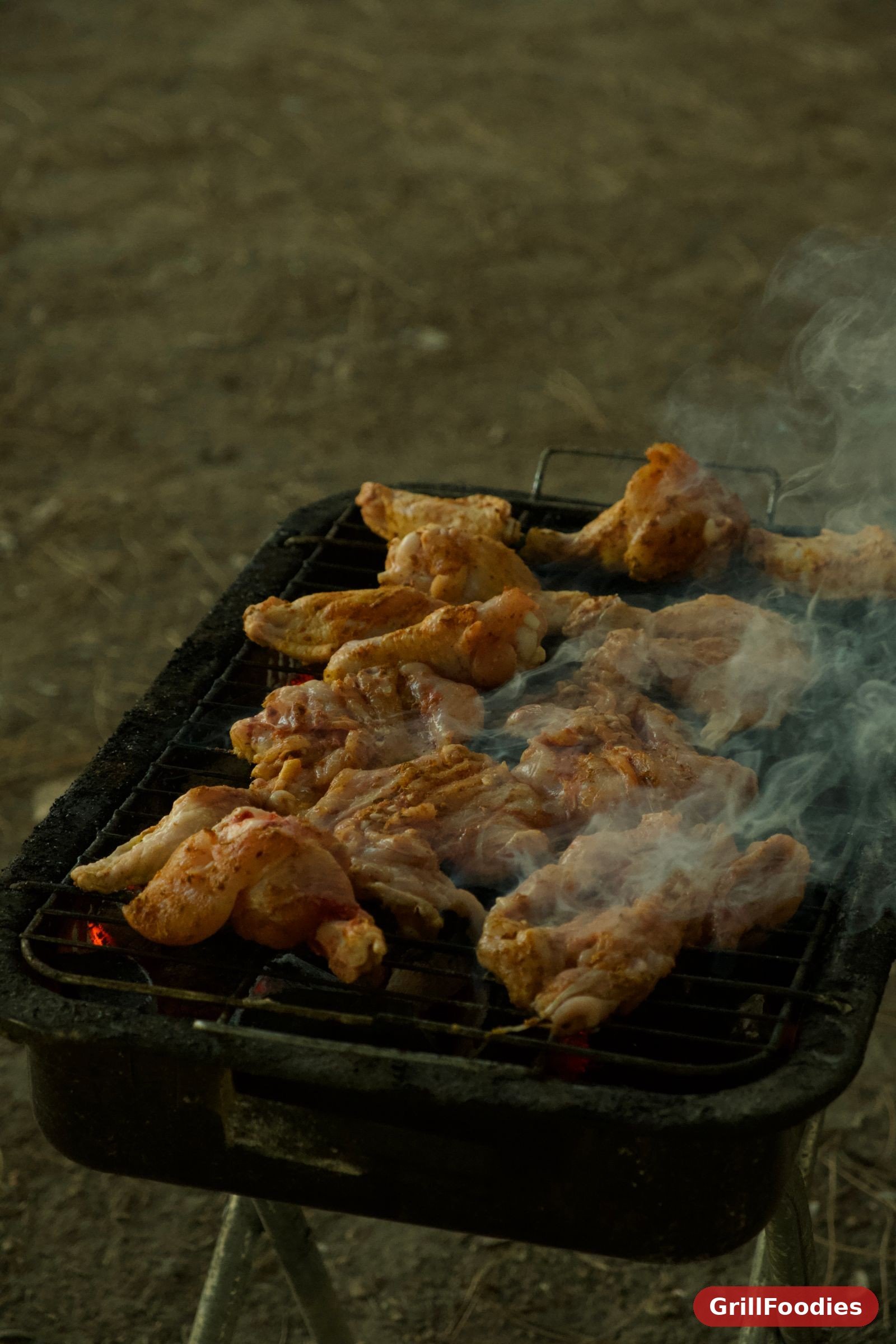
Place the thighs skin-side down on the hot side of the grill and close the lid. Leave them alone for five to six minutes. I know it is tempting to move them around and check, but every time you lift the lid you lose heat, and every time you move the chicken you interrupt the sear. Let the skin make proper contact with the grates. After five or six minutes, the skin should be golden and starting to crisp, and the thighs should release easily when you lift them with tongs. If they stick, give them another minute. They will tell you when they are ready.
Flip the thighs and move them to the cooler side of the grill, skin-side up now. Close the lid and let them cook for twenty to twenty-five minutes. This is the indirect part, and it is where thighs really shine, because the gentle heat cooks them through without drying them out. You can use this time to get the sides ready, set the table, or just stand by the grill with a drink and enjoy the fact that dinner is basically taking care of itself.
After about twenty minutes, start checking the temperature. You want the thickest part of the thigh, without touching the bone, to read 165 degrees Fahrenheit, which is the safe minimum internal temperature for chicken. Thighs are forgiving, and many grillers actually prefer them a little past that, around 175 to 180 degrees, because the extra time breaks down more connective tissue and the meat gets even more tender. The skin protects it from drying out. I usually pull mine around 170 to 175, and they are always juicy. An instant-read thermometer is worth every penny here, because guessing is how good chicken goes wrong.
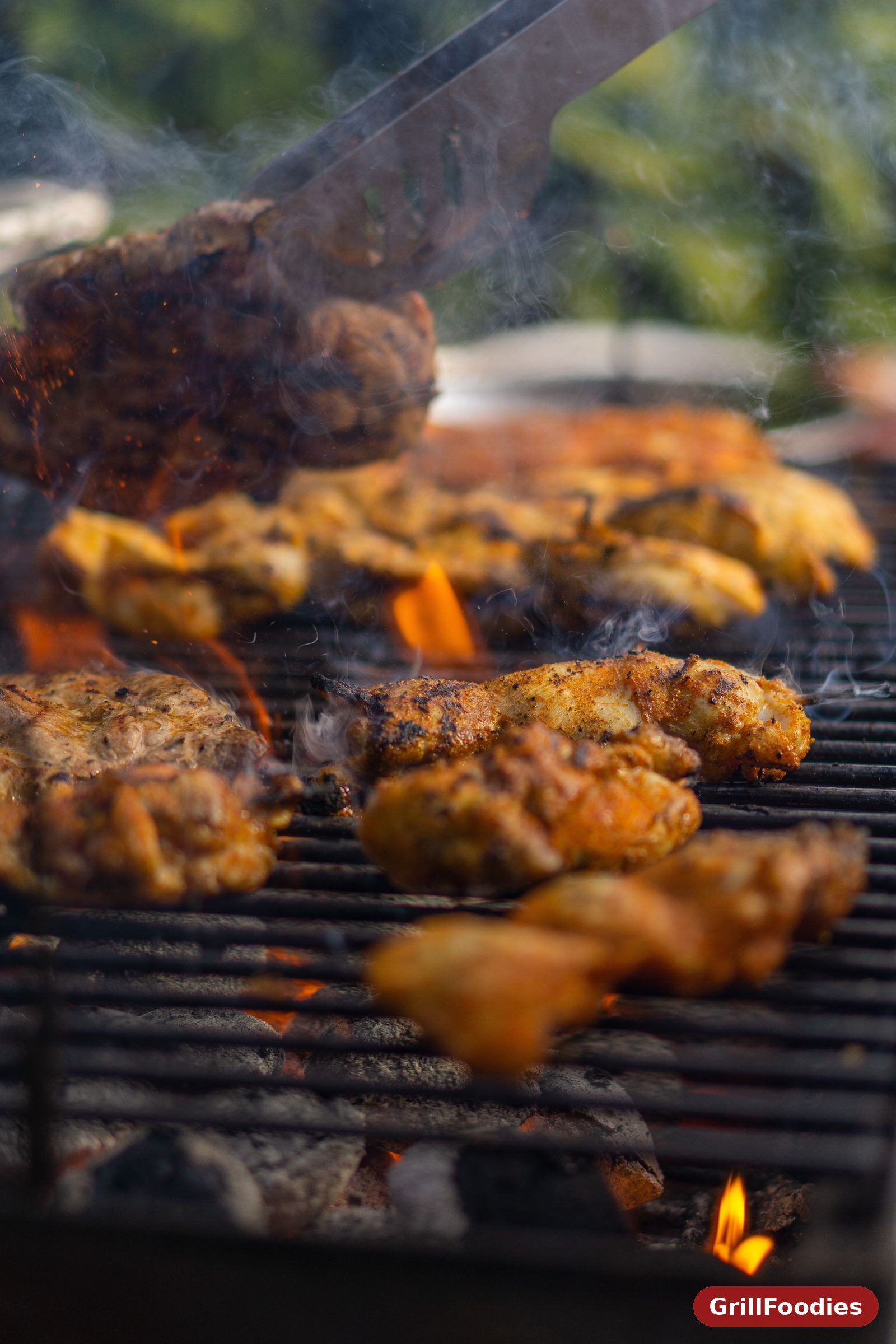
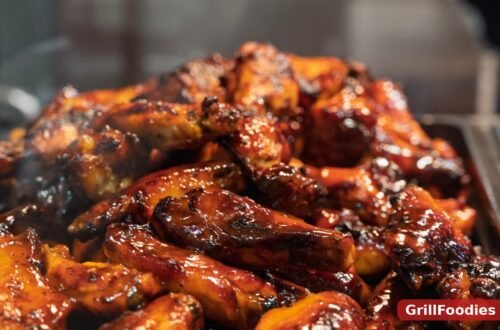
Now the glaze. When the thighs are about five degrees below your target temperature, brush a thin coat of bourbon glaze over the skin side and close the lid for three minutes. Then flip the thighs, glaze the other side, and give them another three minutes. You want two thin coats, not one thick one, and you want the glaze to bubble and tighten up on the surface. Watch them closely in these last few minutes, because this is when the sugar can go from caramelised to burnt in a hurry. If a flare-up starts, slide the thighs to the cooler side for a moment. The glaze should look glossy and dark amber, not black.
Take the thighs off the grill and let them rest for five to ten minutes before serving. I know, I know. Everything smells incredible and everyone is hungry. Rest anyway. The juices need a few minutes to settle back into the meat, and if you cut into a thigh straight off the grill, those juices run out onto the plate instead of staying where they belong. Tent the thighs loosely with foil and use the time to warm the remaining glaze in the saucepan for serving at the table. That little bowl of extra glaze on the table is a nice touch, and people will use it.
Getting the Grill Right
Two-zone cooking deserves a bit more explanation, because it is the technique that makes this whole recipe work, and it is also the answer to most grilling problems in general. The idea is simple: one side of your grill is hot for searing, and the other side is cooler for finishing. Chicken starts over the heat to get colour and crisp skin, then moves to the cool side to finish cooking gently. If the skin starts browning too fast, you move the chicken. If a flare-up happens, you move the chicken. The cool side is your safety net, and once you have cooked this way you will wonder why you ever cooked everything over a single blast of heat. If you want a fuller walkthrough of the setup, this guide to grilling chicken thighs with two-zone heat covers the burner layout and timing in detail.
Charcoal or gas does not matter nearly as much as people argue about online. Charcoal gives you a little more smoke and a slightly deeper flavour, and if you want to lean into that, a handful of soaked wood chips tossed on the coals, hickory or applewood, adds a lovely layer to these thighs. Gas gives you control, which is nothing to be ashamed of. The glaze and the technique matter more than the fuel. Use the grill you have, set it up in two zones, and you will be fine.
One more practical note. If your thighs are boneless and skinless, the timing changes. They cook faster, usually ten to fifteen minutes total, and they dry out more easily, so keep them on the cooler side for most of the cook and glaze them in the last three or four minutes only. The flavour will still be very good, but you will miss the crispy skin, and honestly, the crispy skin is half the point of this recipe.
What to Serve With Bourbon-Glazed Thighs
These thighs are rich, smoky, and a little sweet, so the best sides are the ones that push back with something fresh, tangy, or creamy. A crunchy coleslaw is the classic move, and it works because the vinegar in the slaw cuts right through the richness of the glaze. Cornbread is another natural partner, especially if you are leaning into the bourbon and barbecue theme. Grilled corn on the cob, brushed with a little butter and salt, needs almost no effort since the grill is already hot, and it is what I usually throw on during the last ten minutes while the chicken finishes.
If you want a proper plate that feels like a summer cookout, my vote is the thighs with a scoop of creamy potato salad, a pile of coleslaw, and a piece of cornbread to mop up the glaze. That is a plate people remember. For something lighter, a simple green salad with a sharp vinaigrette and some grilled vegetables does the job beautifully. The chicken is the star here, and the sides just need to stay out of its way while giving you something to balance each bite.
Drinks are easy too. An ice-cold beer, a bourbon and lemonade if you want to echo the glaze, or just a big glass of iced tea. Nothing complicated, nothing that needs a recipe of its own. This is a backyard dinner, and it should feel like one.
Leftovers, Storage, and the Next Day
If you have leftovers, and that is a big if, they keep well in the fridge for three to four days in a sealed container. The glaze actually helps here, because it seals the surface a little and the meat stays moist when you reheat it. To reheat, use a 350-degree oven for ten to twelve minutes, loosely covered with foil, until warmed through. The microwave works in a pinch, but it softens the skin, so if crispy skin matters to you, the oven is the way.
The best use of leftover thighs, in my opinion, is not reheating them as thighs at all. Shred the meat, toss it with a little extra glaze or barbecue sauce, and pile it into a sandwich with coleslaw, or wrap it in a warm tortilla with pickled onions. It also makes an excellent topping for a quick rice bowl the next day, with some sliced cucumber and a drizzle of the remaining glaze. If you have any of our grilled chicken thighs without barbecue sauce in the fridge at the same time, the bourbon-glazed ones win the sandwich contest every single time, and I will not be taking questions on that.
Common Mistakes to Avoid
The first mistake is glazing too early, and I have already talked about it, but it is worth repeating because it is the one that ruins more barbecue chicken than anything else. Sugar burns. Wait until the last eight to ten minutes. The second mistake is cooking over one big blast of heat the whole time. Chicken cooked only over direct heat burns on the outside before the inside is done, and that is how you end up with blackened skin and raw meat near the bone. Two zones. Always two zones for thighs.
The third mistake is skipping the thermometer. I used to cook by feel and by time, and I was wrong more often than I admitted. An instant-read thermometer costs less than the chicken you will ruin without one, and it takes three seconds to use. The fourth mistake is not letting the chicken rest. Five minutes. That is all it takes, and the difference in juiciness is real.
And finally, the mistake nobody warns you about: making exactly eight thighs. Double the recipe. Seriously. Every time I make eight, someone asks if there is more, and every time I make sixteen, there are still no leftovers. Chicken thighs are cheap, the grill has room, and the leftovers, if you somehow get any, are wonderful. Plan for more than you think you need.
Frequently Asked Questions
Can I use boneless skinless thighs for this recipe?
Yes, and the flavour of the glaze will still be great, but you will need to change the timing. Boneless skinless thighs cook in about ten to fifteen minutes total over medium heat, and they dry out faster than bone-in thighs, so keep them mostly on the cooler side of the grill and brush the glaze on only in the last three or four minutes. The crispy skin is the part you lose, and it is a real loss, so if you have the choice, go bone-in and skin-on.
Does the alcohol in the bourbon cook off completely?
Almost all of it does. The glaze simmers for five minutes in the saucepan, which removes most of the alcohol, and then it cooks again on the hot grill, which takes care of the rest. What remains is the flavour of the bourbon, the caramel and vanilla notes from the barrel, not the alcohol itself. If you would rather skip bourbon entirely, you can replace it with apple juice and a splash of apple cider vinegar. The glaze will be a little sweeter and less complex, but it will still be very good.
Can I make the bourbon glaze ahead of time?
Yes, and it is actually a good idea. The glaze keeps in a sealed jar in the fridge for up to a week, and the flavours settle and deepen overnight. Warm it gently in a small saucepan before brushing it on, because cold glaze does not spread evenly and it cools the chicken down. If it thickens too much in the fridge, a tablespoon of water stirred in while warming brings it right back.
What if I do not have a grill?
You can still make this recipe, and it will still be good. Use a cast iron skillet on the stove over medium-high heat, skin-side down, for about six minutes until the skin is browned and crisp, then transfer the skillet to a 400-degree oven for twenty to twenty-five minutes until the thighs reach temperature. Brush on the glaze in the last eight minutes, just like on the grill. You will miss the smoke, but a pinch of extra smoked paprika in the rub helps make up for it. If you want more ideas in this style, our smoky rub grilled chicken breast works beautifully in a skillet too.
How do I keep the glaze from burning on the grill?
Two things, and both of them matter. First, only glaze in the last eight to ten minutes of cooking, when the chicken is nearly done. Second, keep the heat moderate while the glaze is on, and watch the thighs the whole time. If you see the glaze going from dark amber toward black, or if a flare-up starts, slide the thighs to the cooler side of the grill for a minute. Two thin coats are better than one thick coat, because a thick coat drips into the fire and burns. Thin, patient, and watchful is the whole method.
What is the best bourbon for a glaze?
The one you already own. Seriously. There is no reason to open an expensive bottle for a sauce that gets simmered and grilled. A reliable, affordable bourbon is perfect, because the cooking process keeps the caramel and vanilla notes and loses the subtleties you would be paying extra for. The only bourbon to avoid is anything flavoured, like honey or cinnamon bourbon, because it will push the glaze too sweet and throw the balance off.
Can I use this glaze on other meats?
Absolutely. This glaze is excellent on grilled pork chops, ribs, and even grilled salmon, though for salmon you would brush it on in the last two or three minutes only, because fish cooks much faster. It also works on wings, and if you like wings with a bit of heat, our honey chipotle grilled chicken wings use a similar sweet-heat idea with a different balance. The glaze is a workhorse, so make a double batch and keep the extra jar in the fridge. You will find uses for it all week.
Why are my chicken thighs still pink near the bone?
A little pink near the bone in a fully cooked thigh is normal and safe, especially in younger chickens, because the bone marrow can tint the meat. What matters is the temperature, not the colour. If your thermometer reads 165 degrees Fahrenheit or higher in the thickest part of the meat, the chicken is done, even if it looks a bit pink near the bone. If you are unsure, check a second spot with the thermometer. And if you want a gentler, citrusy version of grilled thighs for comparison, our grilled lemon garlic chicken thighs use the same two-zone method and the same temperature rule.
Final Thoughts
There are recipes that impress people because they are complicated, and then there are recipes that impress people because they are just done right. This is the second kind. Smoky BBQ chicken thighs with bourbon glaze do not need fancy equipment or rare ingredients. They need bone-in thighs, a hot grill set up in two zones, a glaze that goes on late, and five minutes of rest at the end. That is the whole list, and it is enough.
Make them this weekend. Make twice as many as you think you need. Stand by the grill for a few minutes while the glaze bubbles and darkens, and take a second to enjoy the smell, because that is half the pleasure of cooking outside. Then sit down, put the bowl of extra glaze on the table, and watch how quickly the plate empties. Some recipes are worth the effort because they are impressive. This one is worth it because it is honest, forgiving, and quietly spectacular, and those are the recipes that end up in regular rotation.


You May Also Like
Grilled Jerk Chicken with Mango Salsa
Honey Chipotle Grilled Chicken Wings
