

Air Fryer Smoky Eggplant Fries with Garlic Dip
There is a particular kind of snack that disappears before you have even finished setting the table. You put the plate down, turn around to grab the dip, and by the time you sit back down, half of it is gone. That is exactly what happens with these air fryer smoky eggplant fries. They are crisp on the outside, soft and almost creamy in the middle, dusted with smoked paprika, and they come with a garlic dip that people will ask you about. I have made them for game nights, for a quick side next to grilled chicken, and once — honestly — just for myself, standing at the kitchen counter, because I could not wait for dinner.
Eggplant gets a bad reputation, and most of it is unfair. People remember a soggy, bitter slice from years ago and decide the vegetable is not for them. But eggplant is really a blank canvas. It takes on whatever seasoning you give it, and when you cook it the right way, the texture is wonderful — that soft interior is the whole point. The air fryer is the best tool for the job because it gives you the crunch of frying with a fraction of the oil, and it does it in about fifteen minutes. No big pot of oil, no greasy kitchen, no standing over a stove flipping pieces one by one.
What makes this version work is a small pile of decisions that each do a little something. Salting the eggplant first pulls out moisture so the coating actually sticks and crisps instead of steaming off. A three-step coating — flour, egg, then a seasoned breadcrumb and Parmesan mix — builds a crust that holds up. Smoked paprika and a little garlic powder go in the crumbs themselves, so the smokiness is in every bite, not just sprinkled on top. And the dip is not an afterthought. A quick garlic yogurt dip, made while the fries cook, cools everything down and gives the plate a reason to keep going back for one more.
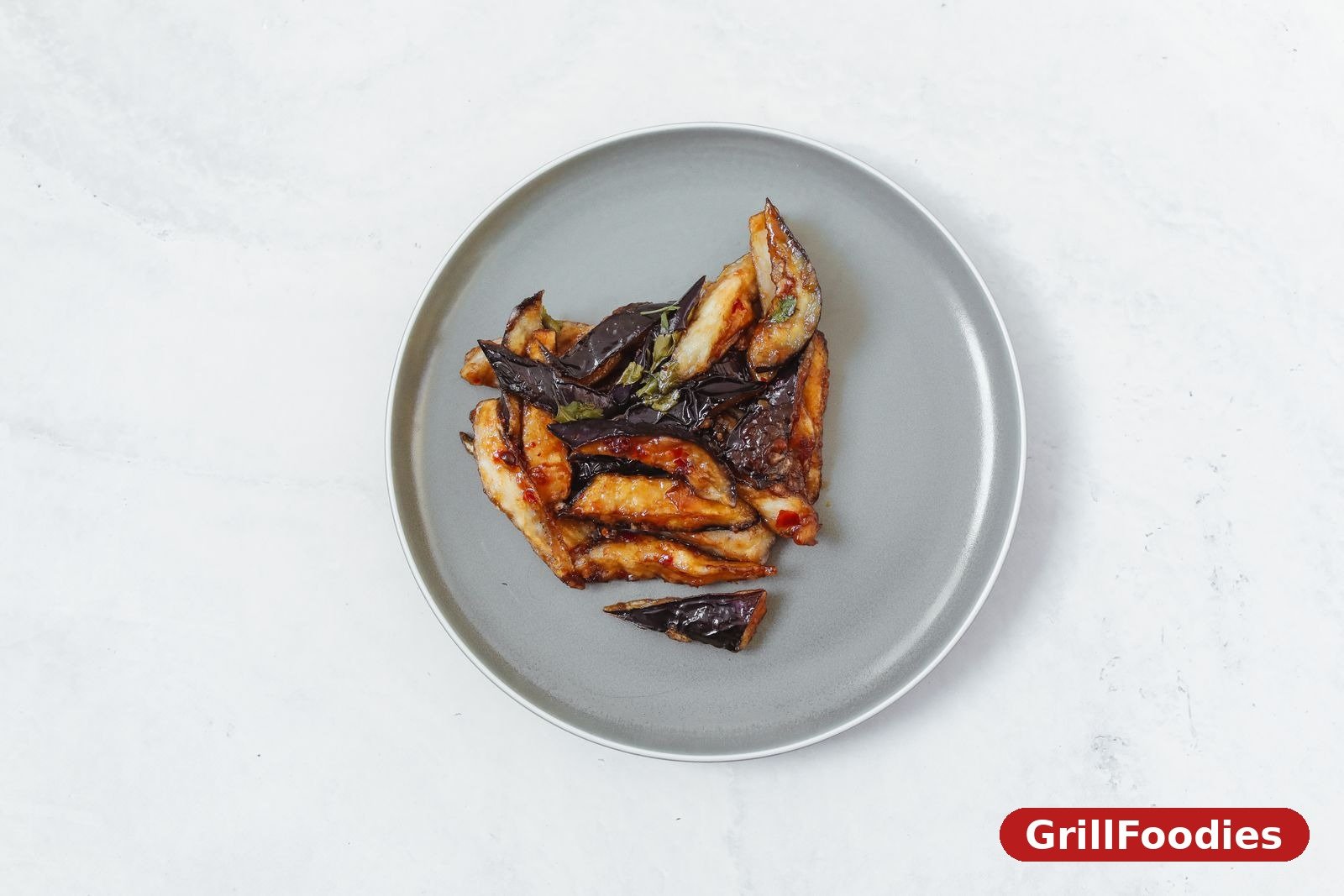
Why Eggplant Fries Work So Well in the Air Fryer
Frying eggplant in a pan is a commitment. The vegetable drinks oil like a sponge, the pan needs constant attention, and the second batch is never quite as good as the first because the oil temperature has dropped. The air fryer fixes all of that. Hot air circulates around every piece, so the coating dries and crisps evenly, and you use about a tablespoon of oil for a whole batch. The fries come out golden, they stay crisp for a good while on the plate, and the kitchen stays clean.
There is also the question of texture. Eggplant is mostly water, which is why it can turn soggy so easily. The air fryer is good at driving surface moisture off fast, and that is what creates the contrast that makes a fry satisfying: a crunchy outside and a soft, almost custardy inside. If you have tried oven-baked eggplant fries and found them a bit limp, the air fryer is the upgrade. It runs hotter and the air moves faster, and you can taste the difference.
These fries are also genuinely useful as a recipe. They work as a snack, as a side dish, as a party appetizer, and as a way to use up an eggplant that has been sitting in the fridge for three days. They are vegetarian, they are easy to make gluten-free by swapping the breadcrumbs, and kids tend to like them far more than they like the word “eggplant” — call them fries and let the plate do the convincing.
Ingredients You Will Need
Nothing here is hard to find, and most of it is probably already in your kitchen. The list is short on purpose. When a recipe has twenty ingredients, half of them are doing nothing. These are all doing something.
- 2 medium eggplants — look for ones that feel heavy for their size, with smooth, shiny skin and no soft spots. Globe eggplants are perfect for fries; long thin ones work too, just cut them a little shorter.
- 1 teaspoon fine sea salt — for drawing moisture out of the eggplant before coating.
- 1/2 cup all-purpose flour — the first layer, and the one that helps the egg stick.
- 2 large eggs — beaten with a splash of water. This is the glue.
- 1 cup panko breadcrumbs — panko is the difference between crisp and soggy here. Regular breadcrumbs work, but panko gives you those jagged, crunchy edges.
- 1/2 cup finely grated Parmesan — it goes into the crumb mix and crisps up beautifully. Use the real stuff if you can; the pre-grated kind in a tub is fine too.
- 1 1/2 teaspoons smoked paprika — the signature flavour. Sweet paprika is a fine substitute, but smoked is what gives the fries their campfire edge.
- 1 teaspoon garlic powder
- 1/2 teaspoon onion powder
- 1/2 teaspoon black pepper
- Olive oil spray — a light coating over the fries before they go in the basket.
For the garlic dip, you need plain Greek yogurt, a clove or two of garlic, lemon juice, a pinch of salt, and a drizzle of olive oil. That is it. It takes two minutes, it keeps in the fridge for a couple of days, and it is the kind of thing you will start putting on other things too — grilled zucchini with Parmesan is a good next candidate.
The Garlic Dip: Make It First
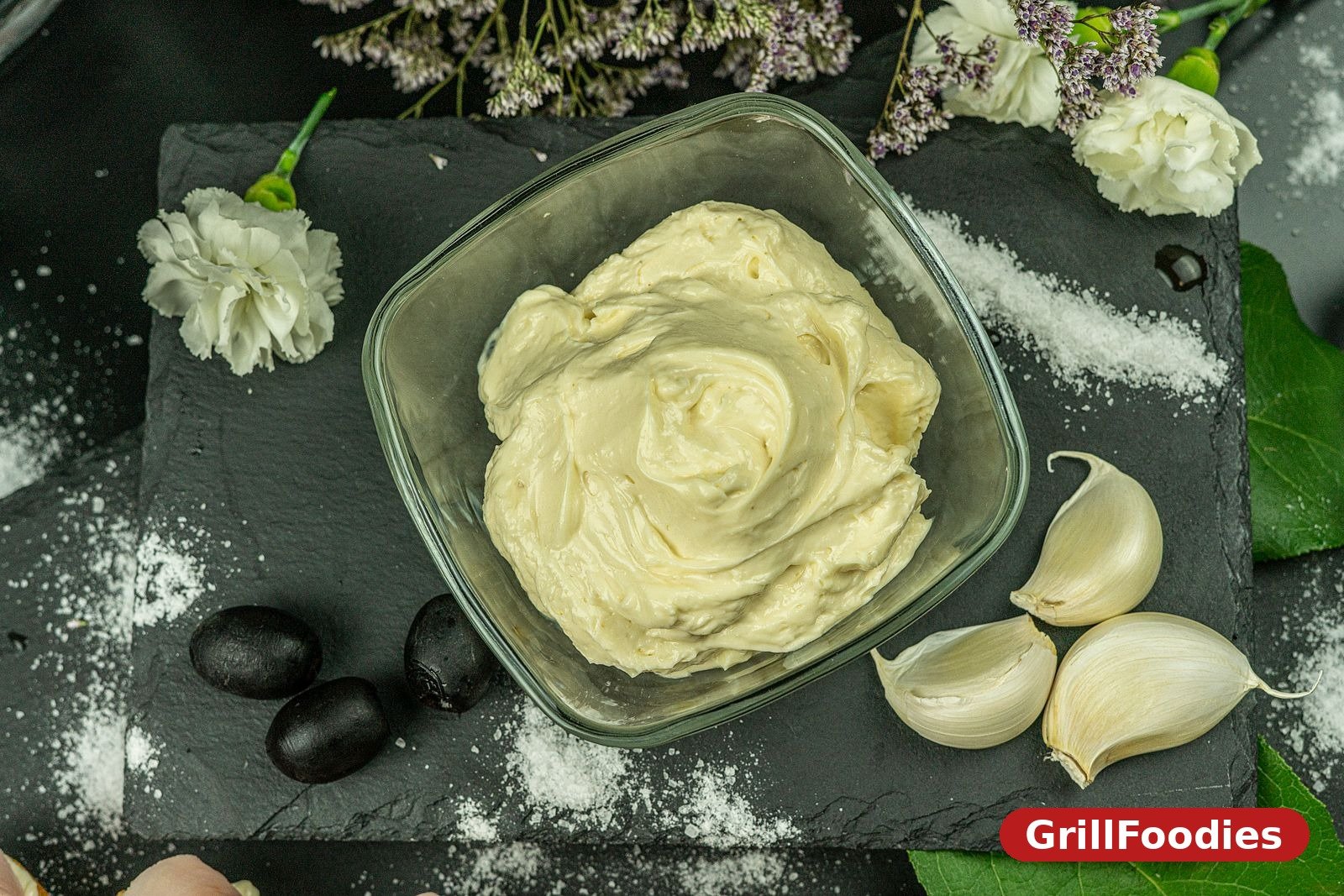
Start with the dip, because it gets better if it sits for ten minutes while the fries cook. Stir together one cup of plain Greek yogurt, one small clove of garlic, very finely grated or pressed, a tablespoon of lemon juice, a pinch of salt, and a teaspoon of olive oil. Taste it. It should be bright, garlicky, and a little tangy. If you like heat, a pinch of chilli flakes is welcome. If you like it looser, add a teaspoon of water at a time until it drips off a spoon the way you want.
Some people prefer a mayo-based dip, and that works too — swap half the yogurt for mayonnaise and you get something richer, closer to an aioli. But the yogurt version is lighter, it keeps the fries from feeling heavy, and the tang plays nicely against the smoky crumbs. Either way, make it before you start coating the eggplant. The fries are best eaten hot, and you do not want to be mincing garlic while they are getting cold on the plate.
How to Cut Eggplant for Fries
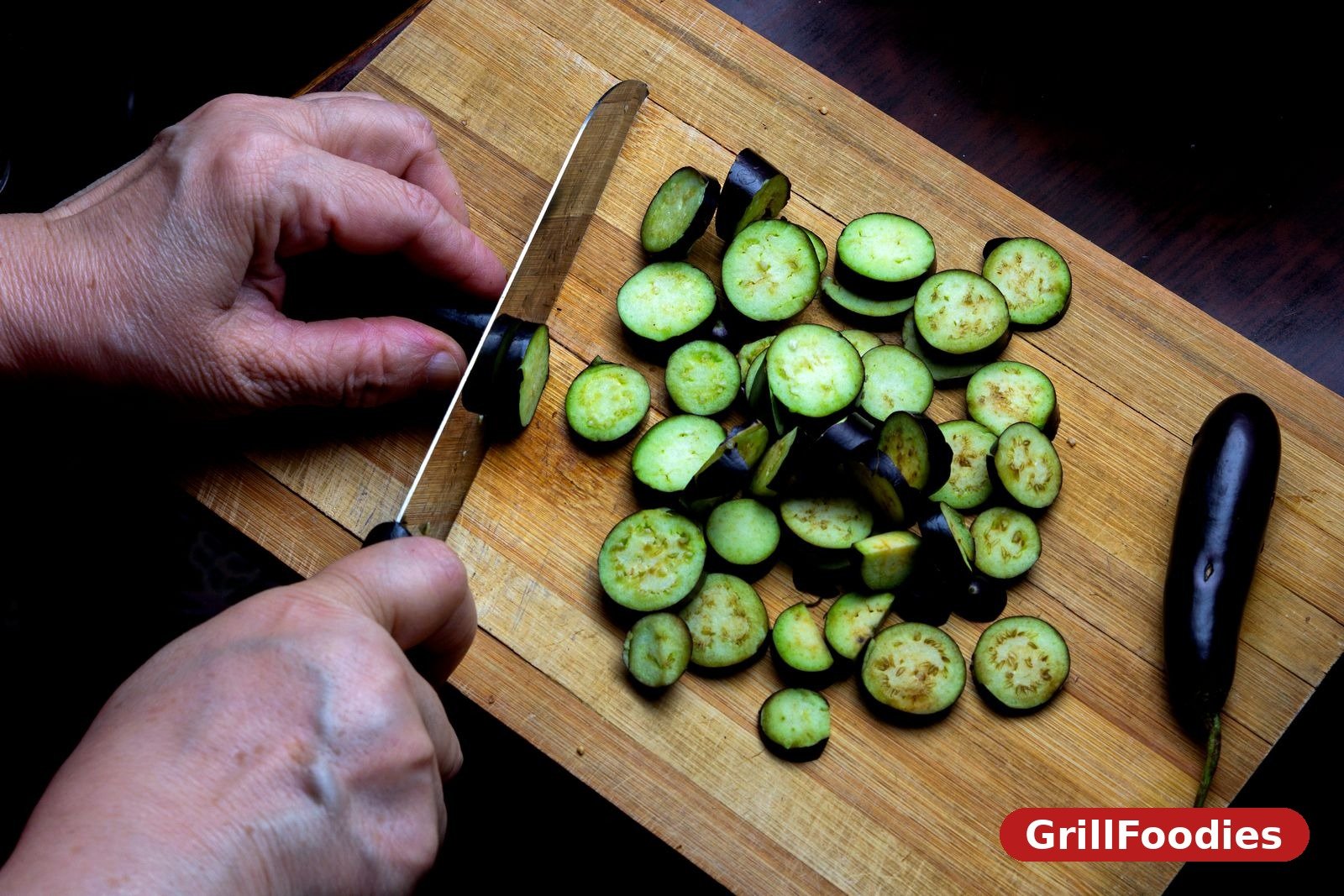
Cutting is the step people rush, and it is the step that decides whether your fries cook evenly. Trim off the top and the bottom of each eggplant. If the skin is thick or a little tough, you can peel it, but I usually leave it on — it helps the fries hold their shape, and it goes pleasantly chewy-crisp in the air fryer. Slice the eggplant into rounds about an inch thick, then cut each round into sticks roughly the size of a thick French fry: about three inches long and half an inch wide.
Try to keep them close to the same size. That is the whole secret. If half your sticks are thin and half are fat, the thin ones will burn before the fat ones are cooked through. A little variation is fine — this is a home kitchen, not a factory — but aim for roughly even and your batch will come out evenly golden.
Salting: The Step Worth Doing
Put the cut sticks in a colander, toss them with the teaspoon of salt, and leave them for twenty minutes. You will see beads of water form on the surface, and a little puddle underneath. That is moisture leaving the eggplant, and it is exactly what you want. Pat the sticks dry with a clean kitchen towel or paper towels, pressing gently. Do not rinse them — you want the surface dry, not wet again.
Is salting strictly necessary? You can skip it and the fries will still be decent. But salting is the difference between decent and really good. Without it, the coating can slide off in damp patches, and the inside can steam instead of roast. Twenty minutes is not long — it is exactly the time it takes to make the dip, set up your coating station, and preheat the air fryer. And if you are short on time, even ten minutes helps. If you want to know more about why eggplant behaves this way, the nutritional side is interesting too: eggplant is low in calories and a good source of fibre and antioxidants, and Healthline has a clear rundown of eggplant’s benefits if you are curious.
Setting Up the Coating Station
You need three shallow bowls or plates, lined up in a row. First bowl: the flour. Second bowl: the beaten eggs with a tablespoon of water whisked in. Third bowl: the panko, Parmesan, smoked paprika, garlic powder, onion powder, and black pepper, mixed together with a fork until the colour is even.
Work with one hand for the wet bowl and one hand for the dry bowls if you can — it keeps your fingers from turning into breaded clubs. Dredge a stick in flour and shake off the excess. Dip it in egg, let the extra drip off for a second. Then roll it in the crumb mix, pressing gently so the crumbs stick. Set it on a tray or a cutting board and move on. It takes a few minutes to coat a whole batch, and it is the kind of quiet, repetitive kitchen work that is oddly satisfying once you get into a rhythm.
Cooking the Fries in the Air Fryer
Preheat the air fryer to 400°F (200°C) for three minutes. A hot basket matters — the fries should sizzle the moment they land. Lightly spray or brush the basket with oil so nothing sticks, then lay the fries in a single layer with a little space between them. This is the most important rule of air frying anything: do not crowd the basket. Air needs to move around each piece. If they are piled on top of each other, the ones in the middle will steam. Cook in two batches if you have to; it is worth it.
Spray the tops of the fries lightly with olive oil spray. This is what helps the crumbs turn properly golden instead of pale and dry. Cook for twelve to fifteen minutes, flipping the fries halfway through, until they are deep golden brown and crisp at the edges. Every air fryer runs a little differently — some are hotter, some have a smaller basket — so start checking at twelve minutes. You are looking for colour and sound: they should look toasted and feel firm when you nudge them with tongs.
Move the first batch to a wire rack while the second batch cooks, rather than piling them on a plate. A rack lets air get underneath and keeps the bottoms crisp. Sprinkle a little flaky salt over the hot fries as soon as they come out, while the surface is still slightly tacky — the salt sticks better that way. Then serve them right away with the garlic dip in the middle of the plate.
Tips That Actually Make a Difference
The difference between good eggplant fries and great ones is mostly small things. First, keep the fries in a single layer, always. If your basket is small, do three batches instead of two. Second, do not skip the oil spray. Without it, the panko stays pale and a little powdery; with it, the crumbs fry up golden and crunchy. Third, flip them once, gently, at the halfway mark. Tongs are better than shaking the basket here, because shaking can knock the coating off.
Fourth, serve them fast. These are at their best in the first ten minutes out of the air fryer. They will still be good after twenty minutes, but the crust softens as it sits, and the magic of the contrast fades. If you are making them for guests, time it so the fries come out just as people sit down. And fifth, do not be shy with the smoked paprika. It is the flavour that makes people ask what is in these. A full teaspoon and a half sounds like a lot in the bowl, but spread across a whole batch of fries it is just right.
Variations Worth Trying
Once you have the base recipe down, it is easy to play with it. For a spicier version, add half a teaspoon of cayenne or a teaspoon of chilli flakes to the crumb mix, and stir a little hot sauce into the dip. For an Italian-leaning version, swap the smoked paprika for Italian seasoning and add a tablespoon of finely chopped fresh basil to the dip. For a gluten-free batch, use gluten-free panko — it crisps up just as well — and swap the flour for rice flour or a gluten-free blend.
You can also change the cheese. Pecorino Romano gives a sharper, saltier crust. A little nutritional yeast stirred into the crumbs makes a good dairy-free version with a cheesy flavour. And if you like things extra crunchy, mix a couple of tablespoons of crushed cornflakes into the panko. It sounds odd and it works beautifully.
The same method works for other vegetables too. Zucchini sticks, sweet potato fries, and even thick-cut mushroom slices all take well to this exact coating and timing. If you enjoy cooking in the air fryer, the method is worth learning once and reusing often — air fryer roasted corn ribs use the same idea of hot air and a good seasoning, and they are a great thing to put on the table next to these fries.
What to Serve Them With
These fries are happy next to almost anything grilled. They are a natural side for a barbecue plate — smoky flavours love smoky company — and they work particularly well with smoky air fryer chicken legs, where the dip can do double duty for both. They are also good with burgers, with grilled fish, or as part of a spread of small plates with hummus, olives, and flatbread.
As a main course for a light dinner, a big plate of these fries with the garlic dip and a simple salad is genuinely enough. Add some crusty bread and you have a meal that feels generous without being heavy. For parties, make a double batch and set out two dips — the garlic yogurt and a spicy mayo — and let people argue about which one is better. Both sides of that argument are correct.
Storing and Reheating Leftovers
Leftovers keep in the fridge for two to three days in a sealed container, with the dip stored separately. They will soften in the fridge — that is unavoidable — but they come back well. Reheat them in the air fryer at 375°F (190°C) for three to four minutes and they crisp up again surprisingly well. The microwave will make them soggy, so avoid it if you can. If you are reheating from the fridge, let them sit at room temperature for five minutes first so they heat evenly.
Can you freeze them? You can, after cooking, laid out on a tray until solid and then bagged. Reheat from frozen in the air fryer at 380°F for about six minutes. They will not be quite as crisp as fresh, but they are still very good, and having a bag of them in the freezer is the kind of thing future-you will be grateful for on a busy night.
One thing worth noting if you track nutrition: eggplant is mostly water and very low in calories, so the numbers here come mostly from the coating and the dip. The USDA FoodData Central database is a handy place to check the exact values for the ingredients you use, especially if you swap in gluten-free crumbs or a different cheese and want to know how the numbers change.
Frequently Asked Questions
Do I have to salt the eggplant first?
You do not have to, but it helps a lot. Salting pulls water out of the flesh, which keeps the coating crisp and stops the inside from steaming. If you are short on time, ten minutes is better than none, and make sure to pat the sticks dry either way.
Why did my fries come out soggy?
The usual reason is a crowded basket. When the fries are piled up, hot air cannot reach every surface and the pieces steam instead of crisping. Cook in a single layer with space between the sticks, and do a second batch if needed. The other common cause is skipping the oil spray — a light coat on the crumbs is what lets them fry up golden.
Can I make these without eggs?
Yes. Brush the flour-dusted sticks with a little milk, or use a thin batter of flour and water, and then roll them in the crumbs. The coating may be slightly less sturdy, so press the crumbs on firmly and handle the fries gently when flipping. A flax egg also works if that is what you have.
What is the best eggplant to use for fries?
Globe eggplants — the big, dark purple ones — are the easiest to cut into even sticks and hold up well in the air fryer. Long, thin eggplants work too; just cut the sticks a bit shorter. Pick ones that feel heavy for their size with smooth, shiny skin, and avoid any with soft spots or brown patches.
Can I bake these in the oven instead?
You can. Use a wire rack set on a baking sheet so air gets underneath, bake at 425°F (220°C) for about twenty to twenty-five minutes, flipping once. They will be good, though not quite as crisp as the air fryer version — the oven moves air more slowly. If your oven has a convection setting, use it; it gets you closer.
How do I keep the coating from falling off?
Three things: pat the eggplant dry after salting, shake off the extra flour before the egg dip, and press the crumbs on with your fingers rather than just rolling the stick through them. Letting the coated sticks rest for five minutes before cooking also helps the coating set.
What else can I dip these in?
Besides the garlic yogurt dip, they are great with marinara sauce, a spicy mayo, ranch, or a simple tahini and lemon drizzle. If you like heat, a chipotle mayo is a natural match for the smoked paprika in the crumbs. For a lighter option, a squeeze of lemon and a sprinkle of flaky salt is honestly enough.
Are air fryer eggplant fries healthy?
They are a lighter take on fries, for sure. Eggplant itself is low in calories and a good source of fibre, the air fryer uses very little oil, and the yogurt dip is lighter than a mayo-based one. The Parmesan and breadcrumbs add some richness, but as snacks and sides go, these are one of the better options — and they actually taste like a treat, which is the point.
A Snack Worth Making Twice
The test of any snack recipe is whether you make it again the next week. These pass that test easily. They are quick, they use ordinary ingredients, they are forgiving once you know the few things that matter — salt the eggplant, keep the basket uncrowded, spray the crumbs, serve them hot — and they disappear fast enough that you will probably want to double the batch next time. They sit happily alongside Cajun chicken tenders on a game-night table, they make a plain grilled dinner feel like more of an occasion, and they turn an eggplant you were not sure what to do with into the best thing on the plate. Make the dip first, get the fries in the air fryer, and do not be surprised when the plate is empty before you have even sat down.



One Comment
Pingback: