

Grilled Pound Cake with Berries and Cream
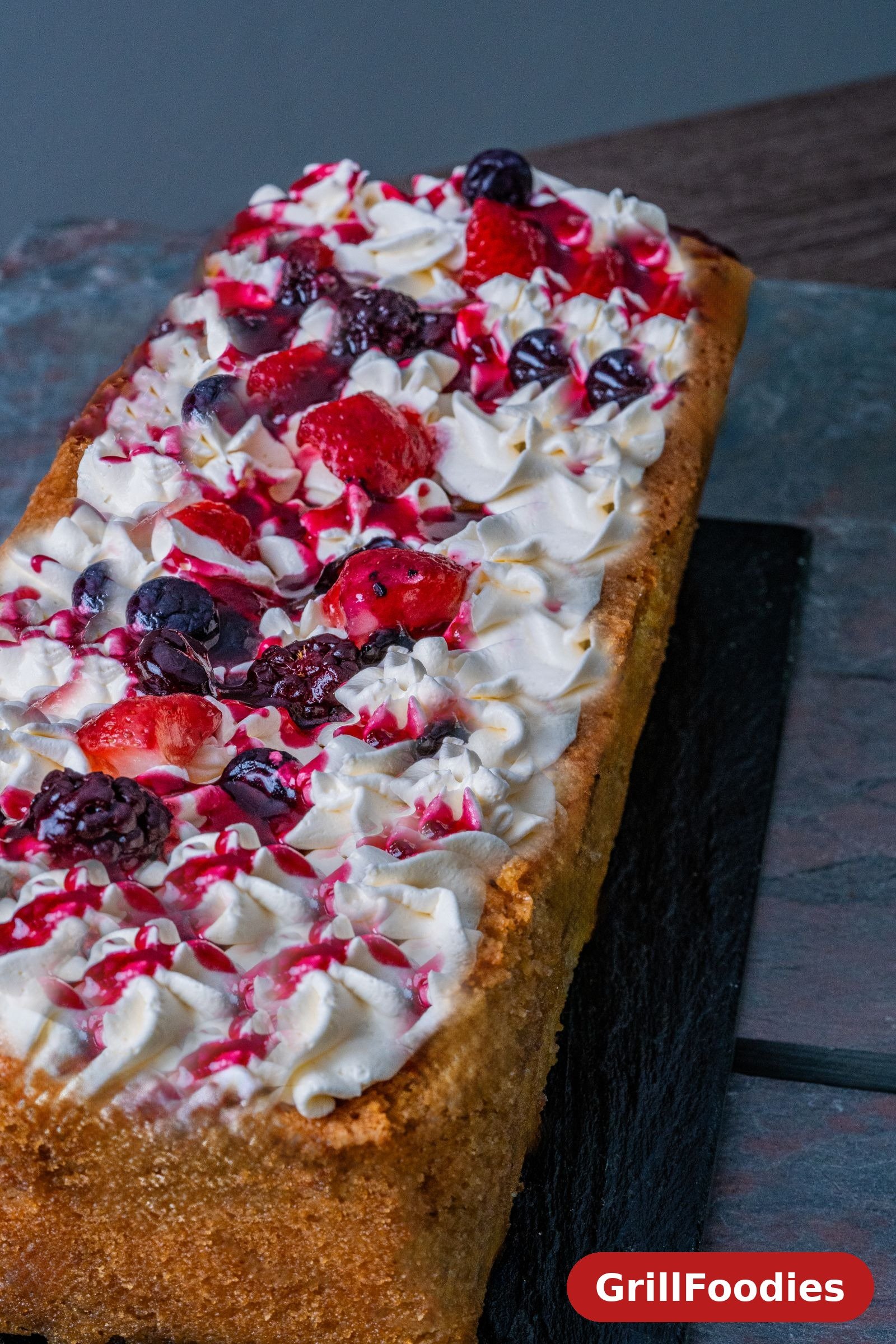
Some desserts ask a lot of you. They want a water bath, a candy thermometer, a chilled bowl, and a level of patience you simply do not have on a Tuesday night in July. This is not one of those desserts. Grilled pound cake with berries and cream asks for about twenty minutes, a loaf of pound cake, whatever berries look good at the store, and a grill that is already hot from dinner. What it gives back is wildly out of proportion to the effort: warm, buttery slices with crisp caramelized edges, soft middles, juicy berries that have gone just soft enough to make their own sauce, and cold cream melting slowly over the top.
I first made this by accident, which is how most of my best grill desserts happen. We had people over for burgers, and someone had brought a pound cake that nobody touched because everyone was full. It sat on the counter all evening, and by the time the grill was cooling down I did the thing you do when you are standing around a grill with cake and nothing to lose: I sliced it thick, buttered it, and put it on the grates. Two minutes later it came off golden and smelling like a bakery had collided with a campfire, and the same people who had ignored the cake an hour earlier were standing around the grill eating it off paper plates with their fingers. That was years ago. I have made it at nearly every cookout since, and I have never once had leftovers.
The reason it works so well is that pound cake was practically built for the grill. It is dense and sturdy where most cakes are delicate, so it holds together on hot grates instead of crumbling. It has a high butter content, which means it browns beautifully and picks up a toasty, almost nutty flavor from the heat. And its tight, fine crumb soaks up just enough berry juice to turn soft and jammy at the edges without falling apart. You are not fighting the cake. You are letting the grill do what it does best to something that can take it.
Why the Grill Changes Pound Cake Completely
A slice of pound cake from the loaf is good. Nobody is arguing with that. But a slice of pound cake off the grill is a different dessert entirely, and the difference is all in what the heat does to butter and sugar. When a buttered slice hits a hot grate, the sugars on the surface caramelize. The edges crisp. The outside gets a thin, golden crust with the faintest hint of smoke, while the inside stays soft and warm. It is the same transformation that makes grilled bread better than plain bread, except pound cake brings its own richness to the party, so the result tastes more like a pastry than a piece of toast.
There is also a practical argument, and on a hot evening it matters. Baking a dessert means turning the oven on for an hour when the house is already warm. Grilling dessert means the grill is already hot from dinner, the kitchen stays cool, and the whole thing is done before anyone has finished clearing the table. I have grilled this cake while the chicken rested, while the burgers were being eaten, and once, memorably, while the rain was starting and everyone was pretending it was not. It takes about four minutes of actual attention. The rest is just standing there with tongs, which is where you wanted to be anyway.
And then there is the smoke. It is subtle, not overwhelming — a whisper of char around the edges that makes the sweetness of the berries taste brighter and the cream taste richer. If you have ever wondered why grilled fruit tastes better than raw fruit, it is the same effect. Heat concentrates flavor, and a little caramelization makes sweet things taste more like themselves.
The Cake: Store-Bought or Homemade
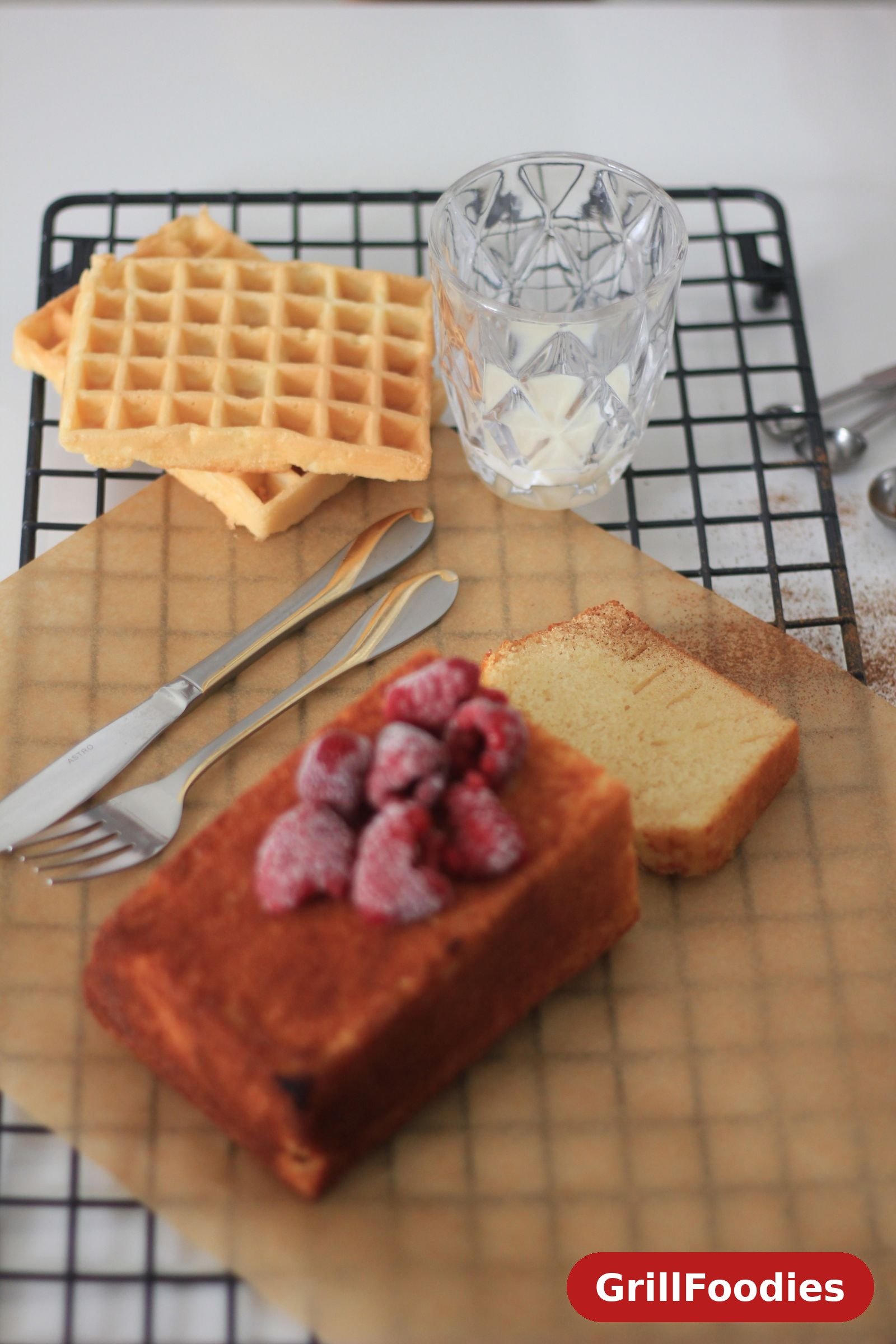
Let us get the honest question out of the way first. Should you bake the pound cake yourself? If you have a good recipe and a free afternoon, absolutely — a homemade pound cake, slightly warm from the oven and left to rest overnight, is the best version of this dessert. Pound cake actually improves with a day of rest; the crumb sets, the flavor deepens, and it slices cleaner. King Arthur Baking’s original pound cake is the recipe I hand people when they ask, because it is reliable and it explains the creaming step properly, which is where most pound cakes succeed or fail.
But here is the thing I want to be straight about: a store-bought pound cake works beautifully here, and I use one most of the time. The grill is forgiving in a way the oven is not. Once the cake is sliced, buttered, and caramelizing on the grates, nobody can tell whether it came from your oven or the bakery aisle, and nobody is asking. What matters is the quality of the loaf. Buy the best one you can find — a bakery pound cake, or one of the good frozen ones from the freezer section, fully thawed. Avoid the very cheapest, driest loaves, the ones that taste like sweetened packing foam. If the cake is dry before it hits the grill, it will be dry after.
Whatever cake you use, slice it thick. Three-quarters of an inch to an inch is right. Thin slices dry out and can fall through the grates; thick slices hold their structure, stay soft inside, and give you a proper crust. And slice it cold or at room temperature, never warm — a warm loaf tears under the knife. If you baked it yourself, let it cool completely, then wrap it and wait until the next day if you can stand it. If you bought it, just unwrap it and slice.
The Berries: What to Buy and How to Treat Them
The berries are the other half of this dessert, and they deserve the same care as the cake. Strawberries, blueberries, raspberries, and blackberries all work, and a mix is better than any single berry on its own. Strawberries bring sweetness and body, blueberries bring little bursts of juice, raspberries bring tartness, and blackberries bring a deep, winey flavor that plays beautifully against the butter. Buy what looks good and smells like something. A berry that smells like nothing will taste like nothing, and no amount of sugar fixes that.
Wash them properly, and wash them at the last minute rather than hours ahead. The FDA’s produce safety guidance is simple and worth following: rinse berries under cool running water, rub them gently, dry them with a clean towel, and do not use soap or commercial produce wash. Rinse them just before you use them, because wet berries stored in the fridge go soft and moldy fast. Hull the strawberries and slice them, halve the big ones, leave the small berries whole. Pick over the raspberries and blackberries for any soft or moldy ones and throw those out.
Then macerate them, which is a fancy word for a very simple thing: toss the berries with a spoonful or two of sugar and a squeeze of lemon juice, and let them sit for fifteen to twenty minutes. The sugar draws the juices out of the berries, and those juices become a sauce — no cooking required. The lemon keeps the flavor bright and stops the berries from tasting flat. Taste before you serve. If the berries are perfectly ripe, you might need barely any sugar at all. If they are a little underripe, a touch more sugar and ten extra minutes will sort them out. This is a dessert that rewards tasting as you go, and the berries are where it happens.
The Cream: Keep It Simple
For the cream, I whip heavy cream with a spoonful of powdered sugar and a splash of vanilla, and I stop whipping while it is still soft — the kind of soft that barely holds a peak and slides slowly off a spoon. Stiff whipped cream looks impressive in a photograph and fights you on the plate. Soft cream drapes over the warm cake, melts a little at the edges, and mixes with the berry juices into something that is not quite sauce and not quite cream, and is better than either.
If you do not want to whip cream, do not. A spoonful of good vanilla ice cream is just as good, and on a hot night it might be better — the cold ice cream against the warm cake is one of those contrasts that makes people close their eyes for a second. Greek yogurt, lightly sweetened, works too, and its tang is lovely with the berries. Mascarpone, loosened with a little cream, is the richest option, and worth it if this is a dinner party rather than a Tuesday. But plain whipped cream is the classic for a reason, and it takes three minutes.
One practical note: whip the cream before you grill, and keep it in the fridge until serving. Warm cake and cold cream is the whole point of the dessert, and if the cream sits out on a hot evening it will slump into a puddle before anyone gets a plate. Make it, cover it, chill it. It will hold for an hour or two without any trouble.
Ingredients
For the grilled pound cake
- 1 pound cake loaf (about 16 ounces), store-bought or homemade, completely cool
- 4 tablespoons unsalted butter, melted
- 1 tablespoon granulated sugar (optional, for extra caramelization)
- 1/2 teaspoon ground cinnamon (optional)
For the berries
- 1 pound mixed berries (strawberries, blueberries, raspberries, blackberries)
- 2 tablespoons granulated sugar, plus more to taste
- 1 tablespoon fresh lemon juice
- 1 teaspoon lemon zest
For the cream
- 1 cup heavy cream, cold
- 2 tablespoons powdered sugar
- 1 teaspoon vanilla extract
- Pinch of salt
How to Grill Pound Cake, Step by Step
Start the berries first, because they need time to sit. Hull and slice the strawberries, pick over the raspberries and blackberries, and rinse the blueberries. Toss everything in a bowl with the sugar, lemon juice, and lemon zest. Stir gently — raspberries bruise if you are rough with them — and set the bowl aside at room temperature for fifteen to twenty minutes. You will see the juices start to pool at the bottom of the bowl. That is the sauce forming, and it is exactly what you want.
While the berries macerate, whip the cream. Pour the cold heavy cream into a cold bowl, add the powdered sugar, vanilla, and salt, and whip with a whisk or a hand mixer until soft peaks form. You are looking for the stage where the cream holds its shape for a second and then relaxes. Stop there. Cover the bowl and put it in the fridge.
Now slice the cake. Use a long serrated knife and a gentle sawing motion, and cut slices about three-quarters of an inch thick. You should get eight to ten slices from a standard loaf. Brush both sides of each slice generously with melted butter. If you like, stir the tablespoon of sugar and the cinnamon into the melted butter first — the sugar helps the surface caramelize and the cinnamon adds a warm note that suits the berries. Do not be shy with the butter. It is what browns the cake and keeps it from sticking.
Heat the grill to medium, about 350 to 400 degrees, and clean the grates well. A dirty grate will stick to the cake and leave bitter black marks instead of clean golden ones. Brush the grates lightly with oil, or rub them with a folded paper towel dipped in oil and held with tongs. Lay the slices directly on the grates, leaving a little space between them. Close the lid and grill for two to three minutes. Do not move them. The cake needs uninterrupted contact with the grate to develop those dark, even grill marks.
When you lift a corner and see golden-brown marks, flip the slices with a thin spatula or tongs. Grill the second side for another two minutes. The cake is done when both sides are golden and crisp at the edges and the middle is warm all the way through. Pull the slices off the grill and serve them immediately, while they are still warm. Warm cake, cool berries, cold cream — that temperature contrast is the whole dessert.
To serve, set a warm slice on each plate, spoon a generous pile of berries and their juices over the top, and add a dollop of cream. Serve it right away, while the cream is still holding its shape and the cake is still warm enough to melt the edges of it. Nobody needs a fork and knife speech. Just hand out plates and step back.
Tips That Actually Matter
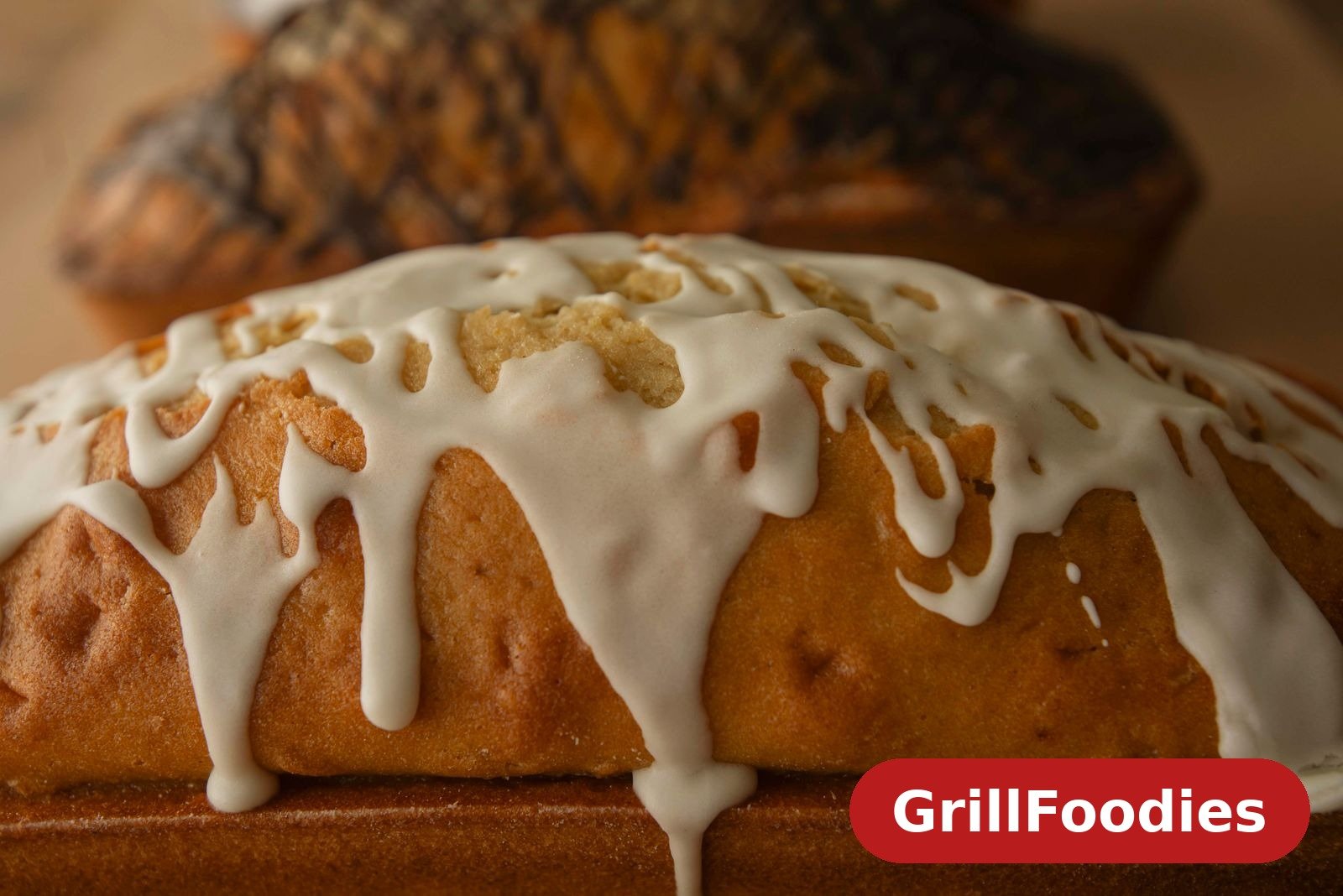
Keep the grill at medium, not high. A screaming-hot grill will scorch the outside of the cake before the inside warms through, and burnt sugar tastes bitter, not caramelized. Medium heat gives you golden marks and a warm middle in the same two minutes. If your grill runs hot, use indirect heat, or hold the slices a little further from the coals. You are toasting cake, not searing a steak.
Butter is your insurance against sticking. A dry slice of cake will glue itself to a hot grate, and prying it off tears the surface. Brush the cake, oil the grates, and do not try to move a slice before it has had time to form a crust. Once the surface caramelizes, it releases on its own. If a slice resists when you lift a corner, give it another thirty seconds.
Do not grill the berries. I know it is tempting — everything else is on the grill, why not the berries? Because macerated berries are already perfect, and grilled berries turn to jam and slide off the cake. The heat you want on the berries comes from the warm cake underneath them, not from the grates. Let the berries stay cool and let the cake do the warming.
Cut the cake the same thickness every time. Uneven slices cook unevenly, and the thin ones will burn while the thick ones are still warming up. A serrated knife and a steady hand are worth more here than any gadget. If your slices come out uneven anyway, put the thick ones on first and add the thin ones a minute later.
Variations Worth Trying
Once you have the basic version down, this dessert is a template, not a rule. Swap the berries for grilled peaches — grilled peaches with vanilla ice cream is already a favorite on this site, and the two desserts share the same logic. Try grilled pineapple instead of berries for a sharper, more tropical version; the method in our grilled pineapple with cinnamon sugar works perfectly spooned over a warm slice of pound cake.
Change the flavor of the cake itself. A lemon pound cake with blueberries and lemon zest is bright and perfect for spring. A chocolate pound cake with raspberries and cream is the version I make when I want the dessert to feel a little more serious. A little bourbon or rum in the macerating berries — a tablespoon, no more — turns it into an adults-only dessert that disappears even faster.
And if you are cooking for a crowd, this scales beautifully. A single loaf feeds eight. Two loaves feed a party, and you can grill the slices in batches while people are still eating dinner. Keep the finished slices warm in a low oven or tented in foil while you grill the next batch, and let people build their own plates. It is the rare dessert that gets better when everyone serves themselves, because everyone piles on exactly the berries and cream they want.
If you love this kind of quick grill dessert, our grilled banana splits with chocolate sauce use the same idea — fruit, heat, and something cold on top — and they are just as easy. And if the evening is more of a campfire night than a grill night, campfire s’mores dip with graham crackers is the dessert I reach for when there are kids around and nobody wants to wait for anything.
What to Serve With It
Honestly, this dessert does not need anything else. But if you are building a whole cookout menu around it, it follows grilled food beautifully because it uses the same grill and the same relaxed pace. Serve it after burgers, grilled chicken, or anything smoky — the sweetness lands better after something savory, and the berries taste brighter after a salty main course.
For drinks, keep it simple. Iced tea with lemon, lemonade, or a cold glass of milk for the kids. If the adults want something more, a lightly sweet white wine or a glass of prosecco works, and coffee is never wrong with pound cake, grilled or not. What you do not need is another dessert on the table. This one is enough, and it is better when it is the only sweet thing anyone is thinking about.
Storing Leftovers
Store the three parts separately. The grilled cake, once cooled, keeps wrapped in plastic or foil at room temperature for a day, or in the fridge for three days. The berries keep in a covered container in the fridge for two days, though the raspberries will soften fastest. The whipped cream keeps in the fridge for a day, and you can re-whip it briefly if it slumps.
To reheat leftover cake, put it back on a medium grill for a minute a side, or in a dry skillet over medium heat. Do not microwave it — the microwave makes the crust soggy and the crumb rubbery, and it undoes everything the grill did. Assembled plates do not keep, so only build as many as you are serving. The separate parts keep fine. The finished dessert does not, and that is exactly as it should be.
Frequently Asked Questions
Can I grill pound cake on a gas grill?
Yes, and most of the time I do. A gas grill gives you steady medium heat, which is exactly what you want. Preheat it to about 350 to 400 degrees, clean the grates, oil them lightly, and grill the buttered slices for two to three minutes per side. A charcoal grill works too and adds a little more smoke flavor — just let the coals burn down to an even medium heat rather than grilling over fresh, roaring coals.
Will the cake fall apart on the grill?
Not if you slice it thick and handle it gently. Pound cake is one of the sturdiest cakes there is, which is why it grills so well. Cut slices at least three-quarters of an inch thick, butter them well, and use a thin spatula or tongs to flip them. If a slice feels fragile, slide the spatula fully underneath it before lifting. Very thin slices and warm, freshly baked cake are the two things that cause trouble — slice it cold, slice it thick, and you will be fine.
Can I make this ahead of time?
Mostly, yes. Bake or buy the pound cake a day or two ahead — it actually slices better after a day of rest. Macerate the berries up to four hours ahead and keep them covered in the fridge, and whip the cream up to a few hours ahead and keep it chilled. But grill the cake at the last minute. Grilled pound cake is best in the ten minutes after it comes off the grates, while it is still warm and crisp, and it loses that magic as it sits.
What berries work best?
A mix is best: strawberries for sweetness and body, blueberries for juice, raspberries for tartness, and blackberries for depth. If you can only find one kind, strawberries are the safest single choice, and blueberries are the easiest. Frozen berries work in a pinch — thaw them completely, drain off most of the liquid, and macerate them the same way — but fresh berries are noticeably better here, because the dessert is so simple that the quality of each part shows.
Can I use a grill pan indoors?
Yes. A cast iron grill pan over medium heat does a very good job, and it is how I make this in the winter. Butter the slices the same way, heat the pan until a drop of water sizzles, and grill for two to three minutes per side. You will get the same caramelized crust and the same grill marks. Open a window or turn on the fan, because the butter will smoke a little, and that is normal.
How do I keep the cream from melting too fast?
Serve the cream cold and the cake warm, not hot. Let the grilled slices rest for a minute after they come off the grill so they are warm rather than steaming, then add the berries and the cream. Whip the cream to soft peaks rather than stiff ones — soft cream drapes and melts slowly, while stiff cream holds its shape and then collapses all at once. And if it is a very hot evening, keep the bowl of cream in the fridge until the moment you plate.


You May Also Like
No-Bake Chocolate Cheesecake Cups

Grilled Peaches with Vanilla Ice Cream