
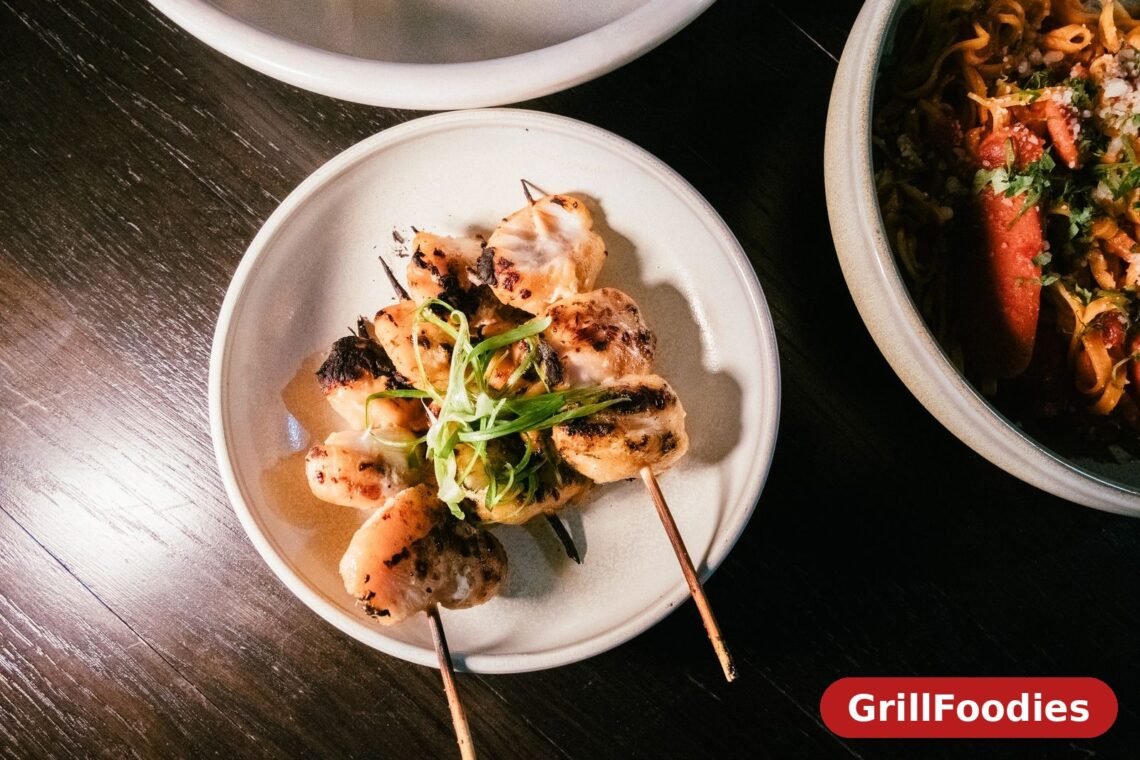
Grilled Honey Mustard Chicken Skewers
Some dinners announce themselves before you even sit down. The smell of honey caramelizing on a hot grill, the faint hiss as the glaze hits the grates, the first skewer coming off with those dark, sticky edges — honey mustard chicken skewers are that kind of dinner. They are the thing I make when I want something that feels like a proper barbecue but does not ask me to spend the whole afternoon tending a fire. Thirty minutes, one bowl for the marinade, and a plate of chicken that somehow tastes like it took a lot more effort than it did.
I started making these on weeknights when the plan was supposed to be something simpler and the grill was already hot for something else. A jar of Dijon, the last of the honey, a little vinegar to cut the sweetness — it was a pantry raid more than a recipe. But the first batch disappeared so fast that it became a regular, and over the years I have kept refining the small things: how long the chicken sits in the marinade, when the extra glaze goes on, how hot the grill really needs to be. The version below is the one I have settled on, and it is the one friends now ask for by name.
What makes these skewers work is a balance that is easy to get wrong. Honey mustard can be too sweet, too sharp, or too thin to stay on the chicken. Get the ratio right and it does three jobs at once: the honey caramelizes into a sticky glaze, the mustard brings a tangy bite that keeps the sweetness in check, and the vinegar and garlic give the whole thing enough depth that it tastes like a sauce, not a shortcut. The chicken itself stays juicy because the pieces are cut small enough to cook quickly and the marinade does its work before the chicken ever meets the heat.
These are also the rare grill recipe that works for a crowd without turning the cook into a short-order station. You can thread the skewers an hour ahead, keep them in the fridge, and then the actual grilling takes about ten minutes. People can eat them straight off the skewer, standing around the grill, or you can slide the chicken off into a bowl and let everyone build their own plate. Either way, plan on making more than you think you need. They go fast.
Why Honey Mustard Works So Well on the Grill
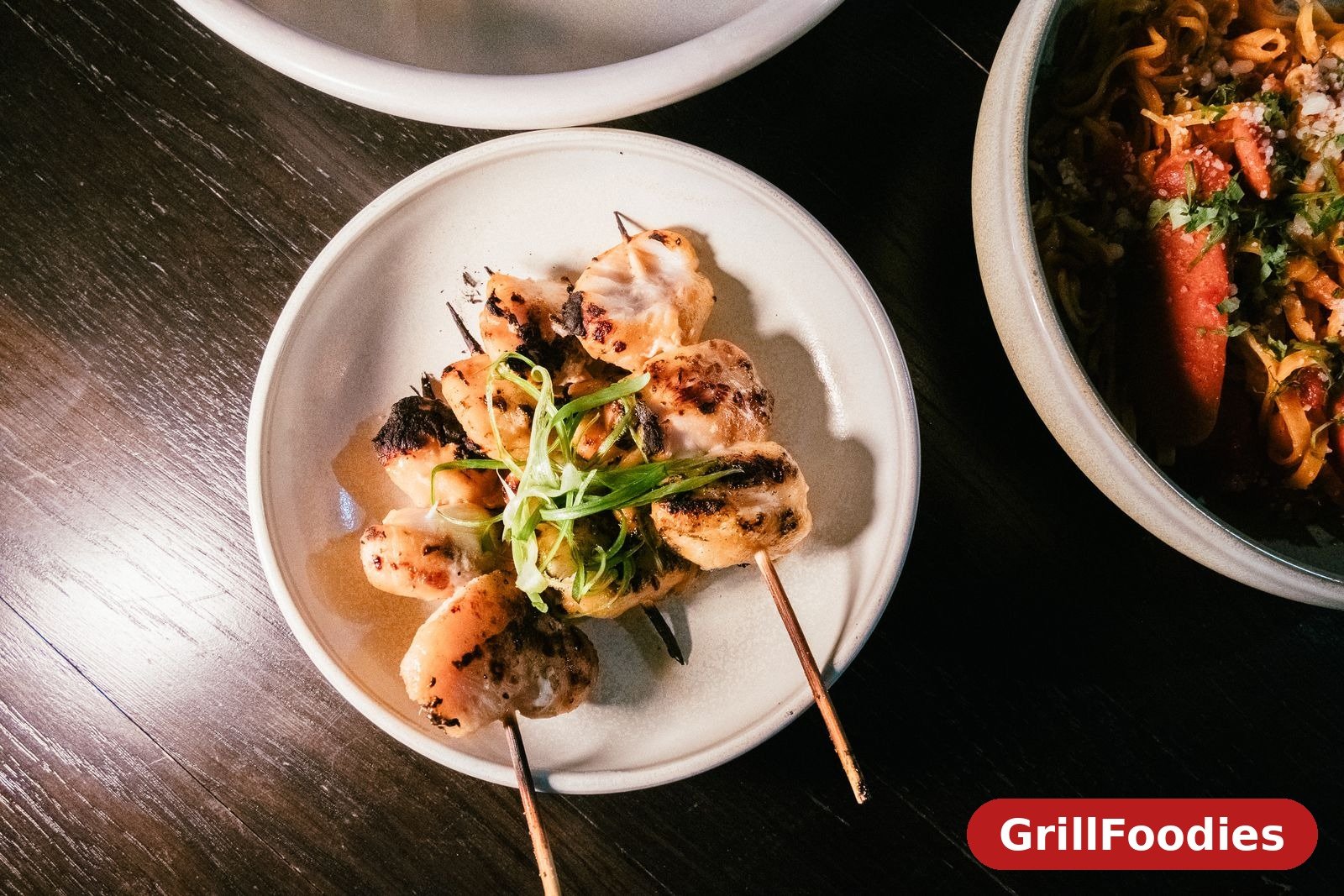
Honey and mustard have been paired for a long time, and for good reason: they cover each other’s weaknesses. Honey on its own is sweet and one-note, and it burns easily. Mustard on its own is sharp and can be harsh. Together, the mustard’s acidity and bite cut through the honey’s sweetness, and the honey rounds off the mustard’s edge. On a grill, that partnership gets even better, because the heat does something neither ingredient can do alone — it turns the honey into a glaze that clings to the chicken and browns at the edges.
The honey mustard you buy in a bottle is usually made for dipping, which means it is thinner and sweeter than what you want on a grill. A grilling sauce needs body. That is why this recipe uses whole grain or Dijon mustard rather than the smooth yellow kind, and why the honey is balanced with apple cider vinegar and a little soy sauce. The mustard seeds give the glaze texture, the vinegar keeps it bright, and the soy adds a salty, savory note that makes the chicken taste seasoned all the way through rather than just coated on the outside.
There is one thing to watch with any honey-based glaze: sugar burns. That is not a flaw, it is just physics, and it is the reason the glaze goes on in two stages in this recipe. The marinade that the chicken sits in has a modest amount of honey, enough to flavor the meat without turning the grill into a smoke machine. The extra glaze — the thick, glossy coat that makes the skewers look like they came from a restaurant — is brushed on during the last couple of minutes, when the chicken is nearly done. That way you get the caramelized edges without the blackened, bitter ones.
The Ingredients
You do not need anything exotic here. Most of these are pantry staples, and the few fresh things are worth the trip. This makes about four servings, or eight skewers if you are using standard ten-inch skewers. Scale it up easily — the marinade doubles and triples without any adjustment.
- Chicken: 2 pounds boneless, skinless chicken thighs, cut into 1 1/2-inch pieces. Thighs are my first choice because they stay juicy on a hot grill and forgive a minute or two of extra cooking. Breasts work too, but cut them the same size and watch them more closely.
- Honey: 1/3 cup. Use a mild, runny honey. A strongly flavored honey like buckwheat will overpower the mustard, so save that for toast.
- Dijon mustard: 1/4 cup. Dijon gives a clean, sharp tang. Whole grain mustard is a fine swap and adds a nice texture, but use a little less if you go that way since it is milder.
- Apple cider vinegar: 2 tablespoons. This is what keeps the glaze from being cloyingly sweet. White wine vinegar works in a pinch.
- Soy sauce: 1 tablespoon. It adds salt and a savory depth that makes the chicken taste seasoned through and through.
- Garlic: 3 cloves, finely minced or grated. Fresh garlic matters here — the powdered kind tastes flat in a marinade this simple.
- Olive oil: 2 tablespoons. It helps the marinade coat the chicken evenly and keeps the pieces from sticking to the grill.
- Smoked paprika: 1 teaspoon. This is the quiet background note that makes people ask what is in the sauce. It adds warmth and a hint of smoke without any heat.
- Black pepper: 1/2 teaspoon, freshly ground.
- Salt: 1/2 teaspoon, plus more to taste. Go easy at first — the soy sauce already brings salt.
- Skewers: 8 wooden or metal skewers. If you use wooden ones, soak them in water for at least 30 minutes so they do not catch fire on the grill.
- For serving: chopped fresh parsley or chives, and lemon wedges if you like a squeeze of brightness at the table.
A note on the chicken: thighs are genuinely better for skewers. The extra fat keeps them moist over high heat, and the flavor is richer. If your household insists on breast meat, that is fine — just pull the skewers off the grill the moment the chicken hits temperature, and do not leave them sitting on the hot grates while you fetch plates. Breast dries out fast, and there is no glaze in the world that fixes overcooked breast.
How to Make Grilled Honey Mustard Chicken Skewers
The whole process has three parts: the marinade, the threading, and the grilling. None of them is difficult, but the order matters. Start the marinade first, because the chicken needs at least twenty minutes in it, and that is also the time you need to soak the skewers and get the grill going.
Step 1: Mix the Marinade and Glaze
In a medium bowl, whisk together the honey, Dijon mustard, apple cider vinegar, soy sauce, garlic, olive oil, smoked paprika, black pepper, and salt. Whisk it properly — the honey and mustard need a good thirty seconds to come together into a smooth, thick sauce. It should coat the back of a spoon and fall off in a slow ribbon. Taste it. It should be sweet first, then tangy, with a little savory depth at the end. If it tastes flat, add another squeeze of vinegar. If it is too sharp, add another teaspoon of honey.
Now split the sauce. Pour about a third of it into a small bowl and set it aside — this is your finishing glaze, and it must never touch raw chicken. The remaining two-thirds stays in the big bowl for the marinade. This split is the most important step in the recipe. The glaze you brush on at the end has to be clean, and once a spoon has touched raw chicken, that sauce is done for serving.
Step 2: Marinate the Chicken
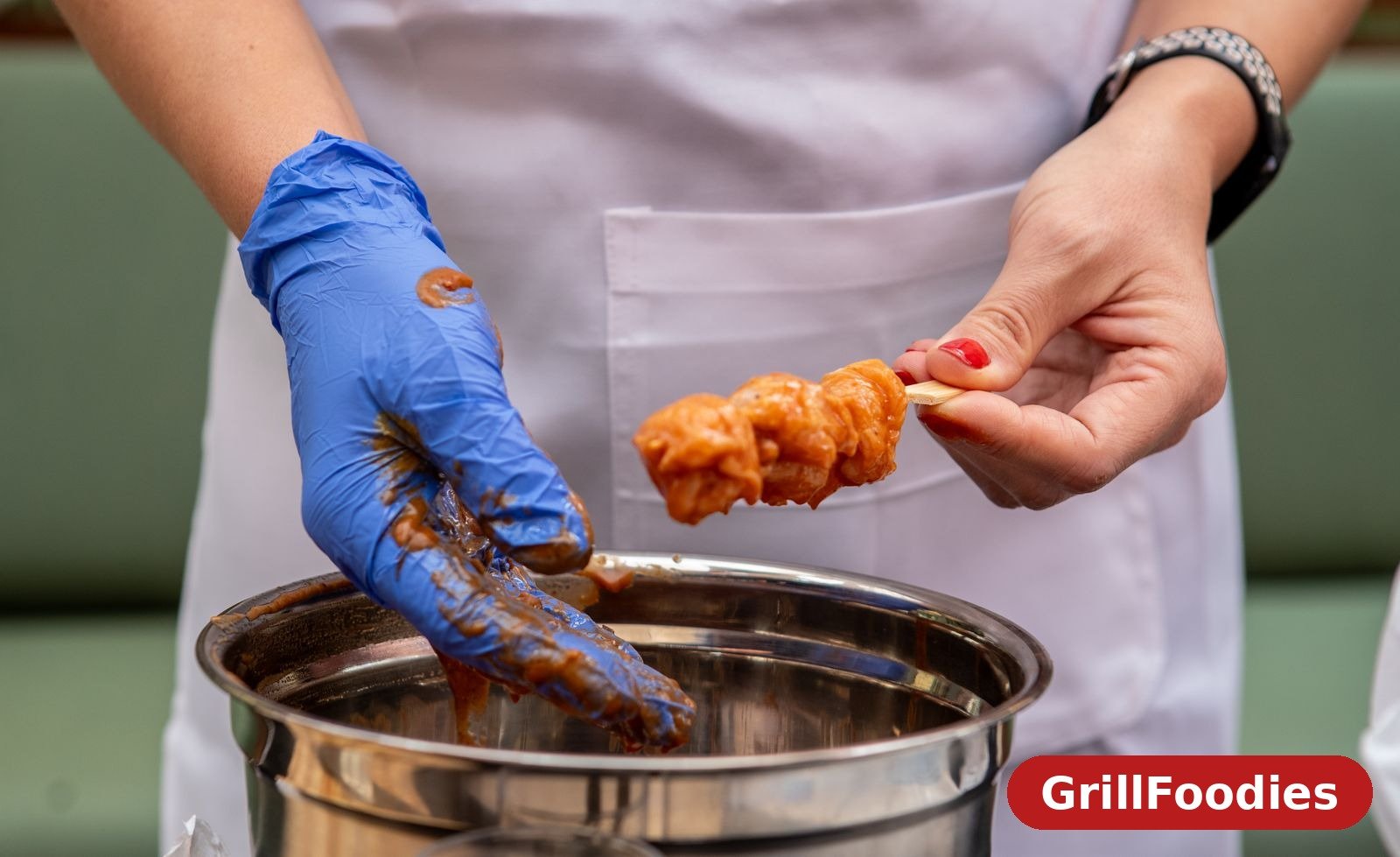
Add the chicken pieces to the big bowl and toss them until every piece is coated. Cover the bowl and put it in the fridge for at least 20 minutes and up to 4 hours. Twenty minutes is enough to get the flavor on the surface. Two hours is the sweet spot — the salt and acid have had time to work their way in, and the chicken tastes seasoned all the way through. Past four hours the vinegar starts to change the texture of the meat, so do not leave it overnight.
While the chicken marinates, soak your wooden skewers if you are using them, and get the grill ready. You want a medium-high heat, around 400 to 450 degrees Fahrenheit. If you are using charcoal, spread the coals in an even layer and let them burn until they are covered in gray ash. If you are using gas, preheat with the lid closed for ten minutes. Clean the grates with a brush and then oil them lightly with a folded paper towel dipped in oil, held with tongs. This step is worth doing — honey glaze sticks to dirty grates, and nobody wants to lose half a skewer to the grill.
Step 3: Thread the Skewers
Thread the chicken onto the skewers, about five or six pieces per skewer, leaving a small gap between pieces so the heat can circulate. Do not pack them tightly. Crowded skewers steam instead of grill, and you end up with pale chicken and no char. Leave a couple of inches of bare skewer at each end so you have somewhere to hold them and somewhere to grip with tongs.
If you want to add vegetables to the skewers, this is the moment. Bell pepper chunks, red onion wedges, and zucchini rounds all grill in about the same time as the chicken. Thread them between the chicken pieces. Just keep the pieces roughly the same size as the chicken so everything finishes together. A word of warning: the vegetables will pick up the glaze too, which is delicious, but they also release water, so the skewers may need an extra minute.
Step 4: Grill, Glaze, and Rest
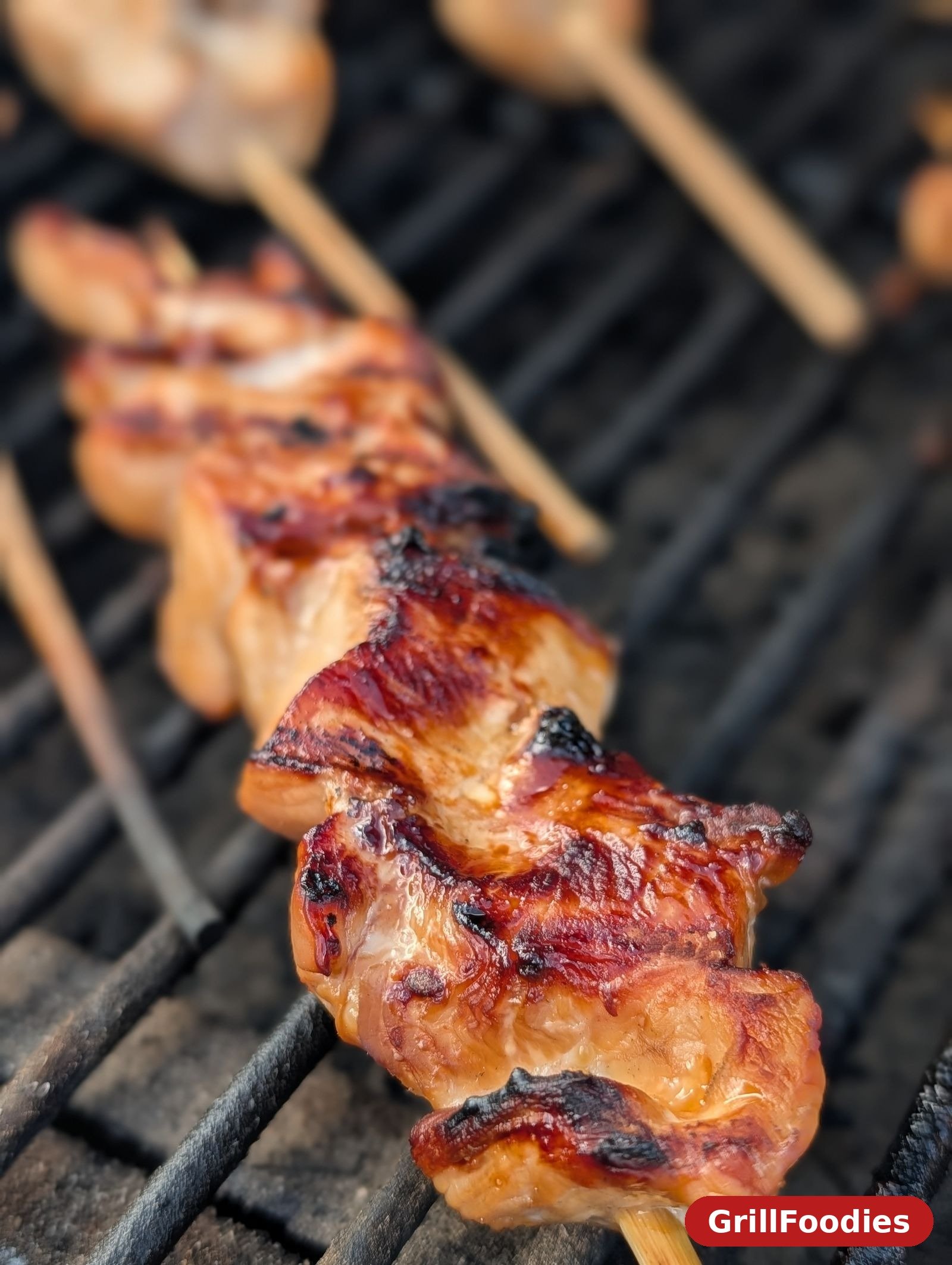
Place the skewers on the hot grill and close the lid. Cook for about 4 to 5 minutes on the first side without moving them. The chicken needs that undisturbed time to develop a proper sear and to release from the grates on its own. If you try to turn them too early, they will stick and tear. When the first side has good grill marks and the edges are starting to caramelize, turn them once.
After turning, brush the tops generously with the reserved finishing glaze. Cook for another 3 to 4 minutes, then brush again and turn once more if you like a thicker coat. The chicken is done when it reaches 165 degrees Fahrenheit in the thickest piece — the safe minimum temperature for chicken according to FoodSafety.gov — and the juices run clear. Total grilling time is usually 9 to 11 minutes.
Move the skewers to a clean plate and let them rest for 3 to 5 minutes. This matters more than it seems. The juices inside the chicken need a moment to settle, and if you cut into a skewer straight off the grill, those juices run out onto the plate instead of staying in the meat. While they rest, brush them once more with any remaining glaze, sprinkle with chopped parsley, and serve with lemon wedges.
Getting the Char Without Drying the Chicken Out
Char is flavor, but only up to a point. The dark, crispy edges on a skewer are caramelized honey and browned chicken, and they are the best part. The black, bitter coating you get when the grill is too hot or the glaze goes on too early is a different thing entirely. The difference between the two comes down to heat management and timing.
First, the heat. Medium-high is the right zone. If your grill is screaming hot, the outside of the chicken will burn before the inside is done, and the honey will go from golden to black in seconds. If the heat is too low, the chicken will cook through but never get those caramelized edges, and the glaze will stay pale and sticky instead of turning into a proper coating. You want to hear a steady sizzle when the skewers go on, not an angry roar and not silence.
Second, the glaze timing. The finishing glaze goes on late, in the last two or three minutes. If you brush it on at the start, the sugar has ten minutes over direct heat to burn, and it will. I have made that mistake, and the result was skewers that looked great in photos and tasted like campfire. Brush late, brush generously, and if you want an extra-thick coat, brush a second layer on during the rest — the residual heat will set it without burning it.
Third, the cut. Pieces that are too small dry out before they brown. Pieces that are too big stay raw in the middle while the outside overcooks. An inch and a half is the right size. It is big enough to stay juicy, small enough to cook through in about ten minutes, and it fits neatly on a skewer without spinning around when you turn it.
If you are using chicken breast, everything above applies twice over. Breast has less fat to protect it, so the margin between done and dry is smaller. Pull it off at 160 degrees and let carryover heat bring it to 165 while it rests. That five-degree difference is the difference between juicy and chalky. If you have ever wondered why your grilled chicken breast skewers come out dry while a restaurant’s stay moist, this is usually the reason. For a different take on keeping grilled chicken juicy, the approach in our grilled lemon garlic chicken thighs uses the same idea — thighs, quick cooking, and a rest before serving.
What to Serve With Them
These skewers are flexible. They work as a main dish, as part of a barbecue spread, or as an appetizer if you use shorter skewers and cut the pieces smaller. What you serve alongside depends on the occasion, but a few combinations have become regulars at my table.
For a weeknight dinner, I keep it simple: rice or flatbread, and a salad or a grilled vegetable. The skewers are rich and sweet, so something fresh and a little sharp on the side balances the plate. A cucumber salad with vinegar and dill, or a simple slaw, does the job. If you want the whole meal off the grill, thread some vegetables onto their own skewers — our grilled vegetable skewers with herb butter are a natural partner, and they cook in the same time as the chicken, so everything lands on the table together.
For a barbecue or a gathering, the skewers become one of several things on the table. They sit well next to burgers, ribs, and corn on the cob, and they are one of the first things to disappear because people can eat them standing up. Put out a bowl of extra honey mustard for dipping, a stack of napkins, and do not bother with plates for the first round — nobody will use them.
If you are feeding kids, these are an easy win. The sweetness is familiar, the chicken is in manageable pieces, and eating off a stick is fun in a way that a plate of chicken never is. Just pull the chicken off the skewer for younger children and cut it into smaller pieces, and keep an eye on the wooden skewer tips, which can splinter.
Variations Worth Trying
Once you have the base recipe down, it is easy to bend it in different directions. The honey mustard marinade is a foundation, not a finished product, and a few small changes give you a different dinner from the same method.
Spicy honey mustard. Add a tablespoon of hot sauce or a teaspoon of chili flakes to the marinade. The heat sits behind the sweetness rather than fighting it, and the result is closer to a Nashville-style glaze. If you like that sweet-heat combination, our honey chipotle grilled chicken wings use the same idea with chipotle for a smokier kick.
Herb and garlic. Add a tablespoon of chopped fresh rosemary or thyme to the marinade, and an extra clove of garlic. The herbs give the glaze a savory, almost roasted quality that works well if you are serving the skewers with potatoes or a grain salad.
Smoky and bold. Swap the smoked paprika for a teaspoon of chipotle powder and add a squeeze of lime juice to the glaze. This version is deeper and smokier, and it pairs well with corn, beans, and anything with a little char of its own. It is also the version I make when the skewers are going on the table next to something like our grilled jerk chicken with mango salsa — the two share a smoky backbone but taste completely different.
Oven or air fryer. No grill? No problem. Bake the skewers on a lined sheet pan at 425 degrees for about 18 to 20 minutes, brushing with glaze in the last five minutes. Or cook them in the air fryer at 400 degrees for 12 to 14 minutes, turning once. You will not get the same char, but the flavor is still there, and on a rainy evening that is a fair trade.
Storing and Reheating Leftovers
If you somehow have leftovers, they keep well. Slide the chicken off the skewers into an airtight container and refrigerate for up to three days. The glaze actually improves overnight as it soaks into the chicken, so cold honey mustard chicken straight from the fridge, sliced over a salad, is a perfectly good lunch.
To reheat, use the oven or the air fryer rather than the microwave. A 350-degree oven for about 8 minutes, or an air fryer at 350 for 4 to 5 minutes, warms the chicken through without drying it out. The microwave works in a pinch but it softens the glaze and makes the chicken rubbery, so save it for when you are in a hurry. A splash of water in the container before reheating helps keep the chicken moist.
You can also freeze the cooked chicken for up to two months. Thaw it overnight in the fridge and reheat as above. The texture will not be quite as good as fresh, but in a wrap or a grain bowl you will barely notice.
Frequently Asked Questions
Can I use chicken breast instead of thighs?
Yes, and it works fine as long as you watch the timing. Cut the breast into the same 1 1/2-inch pieces, marinate for the same time, and pull the skewers off the grill as soon as the thickest piece reaches 165 degrees. Breast dries out faster than thigh, so do not leave the skewers sitting on the grill while you set the table. If you are nervous about it, use a thermometer — it takes the guesswork out completely.
How long should I marinate the chicken?
At least 20 minutes, and ideally 1 to 2 hours. That is enough time for the salt, acid, and flavors to get into the meat. Do not go past 4 hours, because the vinegar in the marinade will start to break down the texture of the chicken and make the surface mushy. If you need to prep further ahead, mix the sauce and keep it separate from the chicken, then combine them two hours before you grill.
Do I have to soak wooden skewers?
Yes, if you are using wooden skewers over direct heat. Soak them in water for at least 30 minutes before threading. It does not make them fireproof, but it keeps the exposed ends from catching and burning while the chicken cooks. Metal skewers skip this step entirely, and they have the added advantage of conducting a little heat into the center of the chicken, which helps it cook evenly. Either works — just do not skip the soak if you go wooden.
Why is my honey mustard glaze burning on the grill?
Almost always because it went on too early or the grill was too hot. Honey is sugar, and sugar burns over direct high heat if it has enough time. Keep the grill at medium-high, not full blast, and brush the finishing glaze on only in the last two or three minutes of cooking. If the glaze is still burning, your grill may be running hotter than the dial says — move the skewers to a cooler spot or raise them a notch if your grill allows it.
Can I make these ahead for a party?
Absolutely. Thread the skewers up to a few hours ahead and keep them covered in the fridge. You can also mix the sauce a day ahead. When guests arrive, the grilling takes about ten minutes, so you are not stuck at the grill while everyone else is eating. If you want to be completely hands-off, grill them just before serving and keep them warm in a low oven, loosely covered with foil, for up to 20 minutes.
What is the best way to keep the chicken from sticking to the grill?
Three things: a clean grate, an oiled grate, and patience. Scrub the grates while the grill is hot, oil them lightly with a paper towel and tongs, and then do not move the skewers for the first four or five minutes. The chicken releases from the grate on its own once it has a proper sear. If you try to turn it early, it will stick and tear, and no amount of oil will fix that.
Can I use store-bought honey mustard instead of making the sauce?
You can, but the result will be different. Bottled honey mustard is made for dipping, so it is thinner and sweeter than a grilling sauce, and it tends to slide off the chicken instead of clinging to it. If you do use it, thicken it with a spoonful of Dijon and a pinch of smoked paprika, and still hold back a clean portion for the finishing glaze. Honestly, the homemade version takes three minutes to whisk together and tastes noticeably better, so it is worth the small effort.
Honey mustard chicken skewers are one of those recipes that earn a permanent place in the rotation not because they are impressive, but because they are reliable. The ingredients are simple, the method is forgiving, and the result is the kind of dinner that makes an ordinary Tuesday feel like a small occasion. Make them once, adjust the sweetness to your taste, and they will become one of your defaults too — the thing you reach for when the grill is hot, the evening is warm, and you want dinner to taste like summer without a lot of fuss.


You May Also Like
Smoky BBQ Chicken Thighs with Bourbon Glaze

Smoky Grilled Chicken Wings with Alabama White Sauce
