One-Pan Garlic Butter Shrimp and Vegetables
Some dinners feel like a treat even when they are quick, and this one-pan garlic butter shrimp and vegetables is one of them. The shrimp turn pink and juicy in a matter of minutes, the butter melts into a garlicky sauce with lemon and herbs, and the vegetables stay bright and just tender enough to have a bit of bite. It is light, it is fresh, and it tastes like something you would order in a restaurant, except you made it in one pan in about twenty-five minutes.
Shrimp is one of the fastest proteins you can cook, which makes it perfect for busy evenings, but it is also easy to overcook. That is why this recipe is built around timing. The vegetables go in first, because they need longer. The shrimp go in last, because they need only a few minutes. The garlic goes in at just the right moment, because burnt garlic tastes bitter and good garlic tastes wonderful. Get the order right and everything finishes at the same time, which is the whole point of a one-pan meal.
I like this dish in summer, when there are good peppers and courgettes around, but I make it all year. In winter I use frozen vegetables or whatever is in the fridge, and it still works. The butter sauce is forgiving like that. It coats whatever you put in the pan and makes it taste intentional. Serve it with bread to mop up the sauce, or with rice if you want something more filling, and you have a dinner that feels generous without being heavy.
If you have never cooked shrimp at home because you thought it was fiddly or expensive, this is a good place to start. Buy peeled, deveined shrimp, fresh or frozen, and most of the work is already done. The rest is chopping vegetables, melting butter, and paying attention for about ten minutes. That is all it takes.
Why You Will Love This Garlic Butter Shrimp
The first reason is speed. From the moment you start chopping to the moment you sit down to eat, this dinner takes about twenty-five minutes, and most of that is the vegetables cooking. The shrimp themselves need only three to four minutes. It is one of the fastest proper dinners I know, and it does not taste rushed.
The second reason is the sauce. Garlic butter is a simple thing, but when it is made well, with enough garlic, a squeeze of lemon, and a handful of herbs, it is the kind of sauce people remember. It is rich without being heavy, and it brings the shrimp and vegetables together in a way that a plain drizzle of oil never would. The lemon keeps it fresh, the herbs keep it bright, and the butter gives it body.
The third reason is how light it feels. This is not a heavy, creamy dish. It is shrimp and vegetables in a buttery sauce, and it leaves you feeling satisfied rather than weighed down. That makes it a good choice for a warm evening, for a lunch that needs to be quick, or for a dinner after a day when you have already eaten well and want something simpler.
It is also a flexible recipe. You can change the vegetables to suit the season or the contents of your fridge, you can add a little chilli if you like heat, and you can serve it in different ways depending on what you have. Once you know the method, you will find yourself making it with whatever is to hand, which is exactly what a good weeknight recipe should allow.
Ingredients You Will Need
Buy the best shrimp you can, and do not worry too much about size. Large shrimp are easier to handle and they look generous in the pan, but medium shrimp cook just as well and are often better value. If you buy frozen shrimp, defrost them in the fridge overnight, or in a bowl of cold water for twenty minutes, and pat them dry before you cook them. Wet shrimp steam instead of searing, and they will not get that lovely golden edge.
- 500 g large shrimp, peeled and deveined, tails on or off as you like
- 1 courgette, halved lengthways and sliced
- 1 red pepper, deseeded and sliced
- 1 yellow pepper, deseeded and sliced
- 150 g cherry tomatoes, halved
- 1 small red onion, sliced
- 4 tablespoons unsalted butter
- 5 cloves of garlic, finely chopped
- 1 tablespoon olive oil
- 1 teaspoon smoked paprika
- Half a teaspoon chilli flakes, optional
- Juice of 1 lemon, plus wedges to serve
- Salt and freshly ground black pepper, to taste
- A handful of fresh parsley, chopped
- A handful of fresh basil, torn, optional
A note on the butter: use unsalted butter if you can, because it lets you control the seasoning. Salted butter will work, but you will need to be more careful with the salt you add. The butter is the base of the sauce, so it is worth using a butter you like the taste of. A good olive oil for the first stage of cooking is also helpful, because butter alone can burn at a higher heat.
For the vegetables, choose ones that cook in roughly the same time. Peppers, courgette, and cherry tomatoes are a good combination because they soften at a similar pace and they bring different colours to the pan. If you want to add broccoli, cut it into small florets and add it a few minutes before the other vegetables. If you want to add mushrooms, slice them thinly and cook them until they release their moisture and start to colour.
How to Make One-Pan Garlic Butter Shrimp and Vegetables
Pat the shrimp dry with kitchen paper and season them with salt, pepper, and the smoked paprika. Heat the olive oil in a large skillet over a medium-high heat. When the oil is hot, add the shrimp in a single layer, leaving a little space between them. Cook for about ninety seconds on the first side, until they turn pink and start to curl, then turn them over and cook for another minute. They will not be fully cooked yet, and that is fine. Lift them out onto a plate and set them aside.
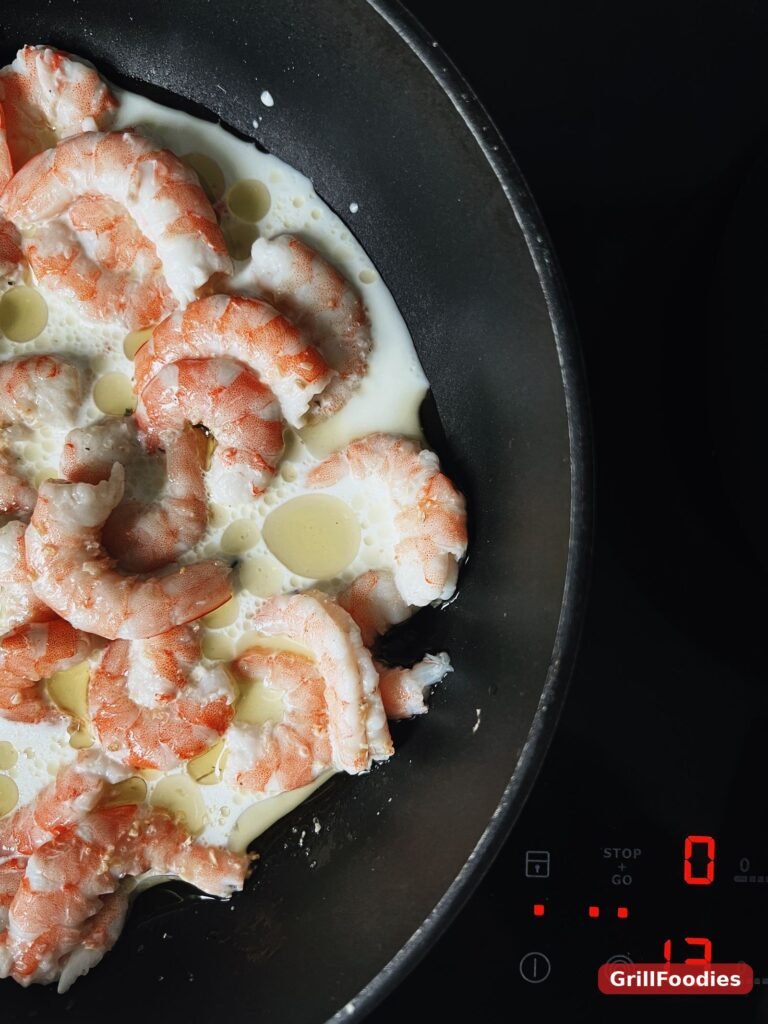
Turn the heat down to medium and add two tablespoons of the butter to the same pan. When it melts, add the onion and peppers and cook for four minutes, stirring occasionally, until they start to soften. Add the courgette and cook for another three minutes. The vegetables should be tender but still have a bit of bite. If they are cooking too fast, turn the heat down a little. You want them softened, not browned to a mush.
Add the remaining butter and the garlic to the pan, and cook for one minute, stirring constantly, until the garlic smells fragrant. Do not let it brown, because browned garlic tastes bitter. Add the cherry tomatoes and cook for two minutes until they start to soften and release their juices. Return the shrimp to the pan, along with any juices on the plate, and add the chilli flakes if you are using them. Cook for two more minutes, stirring gently, until the shrimp are cooked through, pink all the way, and coated in the garlic butter sauce.
Take the pan off the heat, squeeze over the lemon juice, and scatter over the parsley and basil. Taste and adjust the salt and pepper. Serve straight away, with lemon wedges and plenty of bread for the sauce. The shrimp should be juicy, the vegetables should be bright, and the sauce should be glossy and garlicky.
Tips for Perfect Shrimp Every Time
The most important thing with shrimp is not to overcook them. Shrimp go from perfectly cooked to rubbery in less than a minute, so watch them closely. They are done when they turn pink, curl into a loose C shape, and feel firm but not hard. If they curl into a tight O shape, they have gone too far. It is better to take them out a minute early, because they will keep cooking in the residual heat of the pan.
Pat the shrimp dry before you cook them. This is a small step that makes a big difference. Wet shrimp release water into the pan, which stops them browning and makes the sauce thin. Dry shrimp sear properly, get a little colour, and hold onto the seasoning better. Kitchen paper is all you need, and it takes less than a minute.
Do not cook the garlic for too long. Garlic burns quickly, especially in butter, and burnt garlic will spoil the whole sauce. Add it after the vegetables have softened, cook it for just a minute until it smells fragrant, and then move on to the next step. If you are nervous about it, you can add the garlic with the tomatoes, which will cool the pan slightly and give you a little more time.
Use a large pan. If the shrimp are crowded, they will steam instead of sear, and the vegetables will not have room to cook evenly. A pan that is at least 30 cm across is ideal for this quantity. If your pan is smaller, cook the shrimp in two batches. It takes an extra couple of minutes, but the result is much better than a crowded pan.
Easy Variations to Try
This recipe welcomes variation. If you like a little heat, add a finely chopped red chilli with the garlic, or increase the chilli flakes. If you prefer a milder dish, leave the chilli out altogether and add a pinch of sweet paprika instead. A spoonful of capers stirred in at the end adds a salty, briny note that suits shrimp very well, and a splash of white wine, added with the tomatoes, will give the sauce a little more depth.
You can change the vegetables to suit the season. In spring, try asparagus cut into short lengths and peas. In summer, sweetcorn and green beans are good. In autumn, butternut squash cut into small cubes works, though it needs a few more minutes to cook, so add it before the peppers. In winter, broccoli and mushrooms are reliable. The method stays the same, and the garlic butter sauce ties everything together.
For a heartier meal, serve the shrimp and vegetables over rice, pasta, or crusty bread. The sauce is good enough to deserve something to soak it up. If you want a lighter meal, serve it on its own with a green salad. If you want to make it feel more like a barbecue dish, cook the vegetables on a grill pan first to get char marks, then finish everything in the skillet with the garlic butter. That smoky note works beautifully with shrimp.
If you enjoy cooking vegetables this way, our guide to easy grilled vegetables for beginners is a useful next read, and our grilled vegetable skewers with herb butter use a similar herb butter idea in a different form. Both are good partners for this shrimp dish if you are building a bigger meal.
Serving Ideas
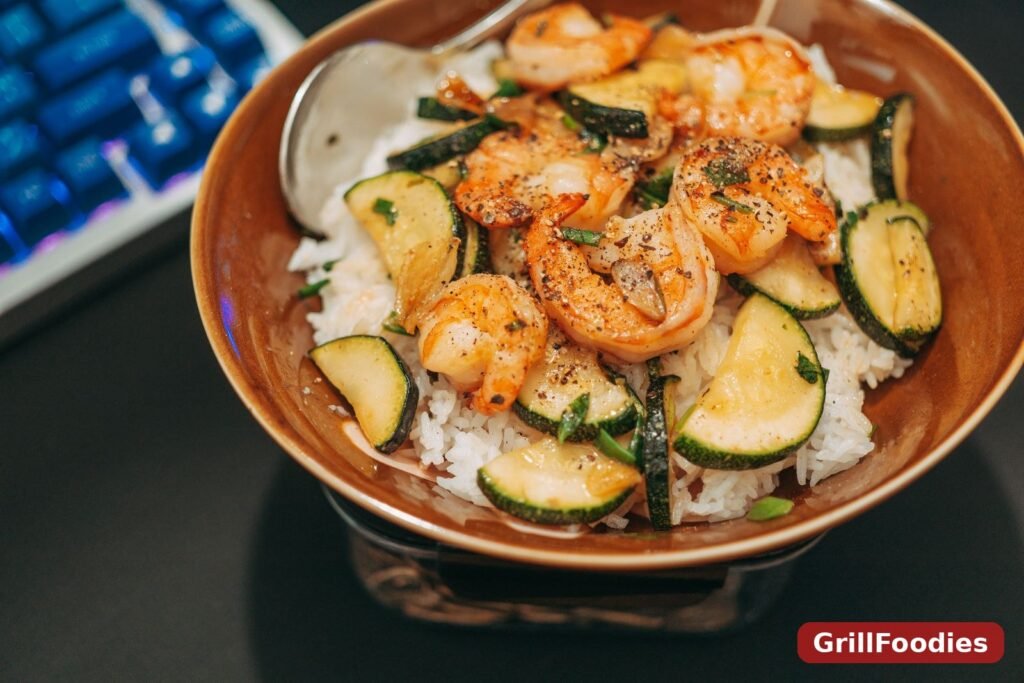
This dish is best served straight from the pan, while the butter sauce is still glossy and the shrimp are hot. Put the pan in the middle of the table on a heatproof mat, with a stack of plates, some bread, and a bowl of salad, and let people help themselves. It is a relaxed way to eat, and it suits the food.
Crusty bread is the most important accompaniment, because the garlic butter sauce is too good to leave in the pan. A baguette, torn into chunks, is ideal. If you want something more substantial, serve the shrimp over cooked rice, or toss them through pasta with a little extra lemon and parsley. A simple green salad with a lemon dressing is a good contrast, and a glass of white wine or sparkling water with lemon keeps the meal feeling fresh.
For a summer table, serve this alongside grilled zucchini with parmesan, which is light, savoury, and easy to make ahead. The two dishes share a similar spirit, simple vegetables cooked well, and they sit happily together. If you are feeding a crowd, double the recipe and cook it in two pans, because a single pan will be too crowded and the shrimp will not sear properly.
Leftovers are best eaten the next day in a salad or a wrap. Cold shrimp, sliced, with the vegetables and a little extra lemon, makes a good lunch. Do not reheat shrimp for too long, because they will go rubbery. Warm them gently, just until they are hot through, and they will still be good.
For more prawn ideas, the BBC Good Food prawn recipes collection has plenty of inspiration, from quick stir-fries to more elaborate dishes, and it is a useful place to look when you want to cook shrimp in a different way.
Storage and Reheating
Shrimp is best eaten fresh, but leftovers will keep in the fridge for up to two days in an airtight container. Cool them quickly, and do not leave them at room temperature for more than two hours. The vegetables will soften a little overnight, but they will still taste good, and the sauce will set in the fridge and melt again when you reheat it.
To reheat, warm the shrimp and vegetables gently in a pan over a low heat, with a splash of water or a small knob of butter, until they are just hot through. Do not boil them or cook them for more than a few minutes, because the shrimp will become tough. The microwave will work in short bursts, but the pan is gentler and gives you more control.
Do not freeze cooked shrimp if you can avoid it, because the texture suffers when it thaws. If you have raw shrimp left over, freeze those instead, in a sealed bag, for up to three months. Defrost them overnight in the fridge before you cook them, and pat them dry before they go into the pan.
Frequently Asked Questions
How do I know when shrimp are cooked?
Shrimp are cooked when they turn pink all the way through, curl into a loose C shape, and feel firm to the touch. This usually takes two to three minutes in a hot pan, depending on their size. If they are still grey or translucent in the middle, they need a little longer. If they have curled into a tight O shape, they are overcooked. The safe minimum internal temperatures chart lists 63°C as a guide for shrimp, though most cooks judge by colour and shape, and a quick check with a thermometer can give you confidence the first few times you make it.
Can I use frozen shrimp for this recipe?
Yes, frozen shrimp work very well, as long as you defrost them properly first. Defrost them overnight in the fridge, or in a bowl of cold water for twenty minutes, changing the water once. Do not defrost them in hot water or in the microwave, because they will start to cook unevenly. Once they are defrosted, pat them dry with kitchen paper and cook them as normal. Frozen shrimp are often better value than fresh, and they are a useful thing to keep in the freezer for a quick dinner.
What vegetables go best with garlic butter shrimp?
Peppers, courgette, cherry tomatoes, and onion are a good starting point because they cook quickly and bring colour to the pan. Broccoli, green beans, asparagus, mushrooms, and sweetcorn all work too, though some need a little longer to cook, so add them earlier. Avoid vegetables that need a long time, like whole carrots or potatoes, unless you cut them very small or cook them separately first. The aim is for everything to finish at the same time, with the vegetables tender but still bright.
Can I make this dish dairy-free?
Yes, you can swap the butter for olive oil or a dairy-free butter alternative. Olive oil will give you a lighter sauce that still tastes good with garlic and lemon, though it will not have the same richness as butter. If you use a dairy-free butter, choose one that melts well and does not have a strong flavour of its own. The rest of the recipe stays the same, and the shrimp and vegetables will still be delicious.
Can I cook this on the grill?
You can, with a little adaptation. Cook the vegetables in a grill basket or on skewers over medium heat, and cook the shrimp in a cast-iron skillet on the grill with the garlic butter. Combine them in the skillet at the end, toss them together, and finish with lemon and herbs. For another one-pan idea that works well on the grill, our one-pan smoky chicken and rice uses a similar approach of building flavour in the pan before the main ingredient goes back in, and it is a good next recipe to try if you like this style of cooking.


You May Also Like

One-Pan Cheesy BBQ Chicken Pasta

One-Pan Smoky Shrimp and Grits