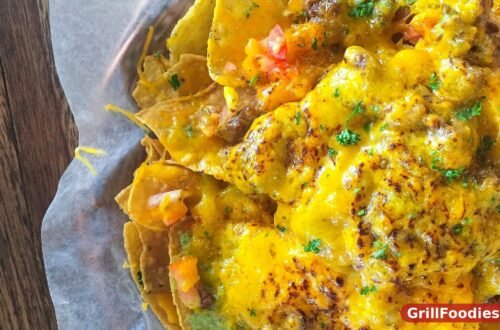

One-Pan Cheesy BBQ Chicken Pasta
There is a particular kind of comfort that only a pan of cheesy pasta can provide, and when you add smoky barbecue chicken to it, that comfort goes up a level. This one-pan cheesy BBQ chicken pasta is rich, filling, and unapologetically cosy. The pasta cooks in the same pan as the chicken and the sauce, so it absorbs all the flavour as it goes, and the cheese melts through at the end to make everything creamy and golden. It is the sort of dinner that makes people go quiet for a few minutes while they eat, and then ask for seconds.
I make this when I want something that will please everyone at the table without a lot of fuss. Children like it because it is cheesy and familiar. Adults like it because the barbecue sauce and smoked paprika give it a grown-up, smoky edge. It is also a practical dinner, because it uses one pan, it is ready in about forty minutes, and it uses ingredients that are easy to keep in the cupboard and fridge. If you have chicken, pasta, barbecue sauce, and cheese, you are most of the way there.
The method is simple, but it works because the pasta cooks in the sauce rather than in a separate pot of water. That is the key to the whole dish. Pasta cooked in water tastes of water until you add sauce to it. Pasta cooked in a seasoned, smoky sauce tastes of the sauce all the way through, and the starch it releases thickens the sauce at the same time. It is a small change in method that makes a big difference to the finished dish, and it saves you washing a second pan.
Serve it straight from the pan, with a green salad to cut through the richness, and you have a dinner that feels like a treat on a weeknight. It is also a good dish for feeding a crowd, because it scales up easily and it holds its heat well. Put it in the middle of the table, hand out bowls, and let everyone help themselves.
Why This Cheesy BBQ Chicken Pasta Works
The first reason it works is the balance of flavours. Barbecue sauce is sweet and smoky, cheese is salty and creamy, and chicken is savoury and mild. Together, they cover all the bases, and none of them overpowers the others. The smoked paprika and garlic add depth, the onion adds sweetness, and the cheese brings it all together into something that tastes richer than the sum of its parts.
The second reason is the texture. The pasta should be tender but not soft, with a little bite left in it. The chicken should be juicy and easy to cut with a fork. The sauce should be thick enough to coat the pasta, not thin and watery, and the cheese should be melted through, with a little extra on top that goes golden under the grill if you like. When all of those textures come together in one spoonful, it is deeply satisfying.
The third reason is how forgiving it is. If you add a little too much stock, you can cook it for a few minutes longer. If the sauce is too thick, you can add a splash of stock or milk. If you only have a different shape of pasta, use that. If you want to use leftover chicken, you can, and the cooking time will be even shorter. This is not a precise, delicate recipe. It is a robust, generous one, and it rewards a relaxed approach.
Ingredients You Will Need
You do not need anything unusual for this dish. The chicken, pasta, and cheese do most of the work, and the barbecue sauce provides the signature flavour. Choose a barbecue sauce you like, because its flavour will come through clearly. A smoky, slightly sweet sauce is ideal, but a honey barbecue sauce or a spicy one will both work, and they will give the dish a slightly different character.
- 500 g boneless, skinless chicken breasts or thighs, cut into bite-sized pieces
- 300 g penne, rigatoni, or fusilli pasta
- 1 onion, finely chopped
- 3 cloves of garlic, finely chopped
- 1 red pepper, deseeded and diced
- 120 ml barbecue sauce, plus a little extra to drizzle
- 400 g tinned chopped tomatoes
- 500 ml hot chicken stock
- 150 g grated cheddar cheese
- 50 g grated mozzarella cheese
- 2 tablespoons olive oil
- 1 teaspoon smoked paprika
- 1 teaspoon garlic powder
- Half a teaspoon dried oregano
- Salt and freshly ground black pepper, to taste
- Fresh parsley or spring onions, chopped, to finish
A note on the pasta: short shapes like penne, rigatoni, and fusilli are the best choice, because they hold the sauce well and they cook evenly in the pan. Long pasta like spaghetti will work, but it is harder to stir and it can clump together. If you use a different shape, check the cooking time on the packet and adjust the simmering time accordingly. Wholewheat pasta will need a few extra minutes and a little more liquid.
For the cheese, a mixture of cheddar and mozzarella is ideal. Cheddar brings flavour, mozzarella brings stretch and melt. If you only have one of them, use that, but the combination is better. Grate the cheese yourself if you can, because pre-grated cheese often contains anti-caking agents that stop it melting as smoothly. It is a small detail, but it makes a difference to the sauce.
How to Make One-Pan Cheesy BBQ Chicken Pasta
Season the chicken pieces with salt, pepper, smoked paprika, and garlic powder. Heat the olive oil in a large, deep skillet over a medium-high heat. Add the chicken in a single layer and cook for five to six minutes, turning it occasionally, until it is golden on the outside and almost cooked through. It does not need to be fully cooked at this stage, because it will finish cooking with the pasta. Lift the chicken out onto a plate and set it aside.
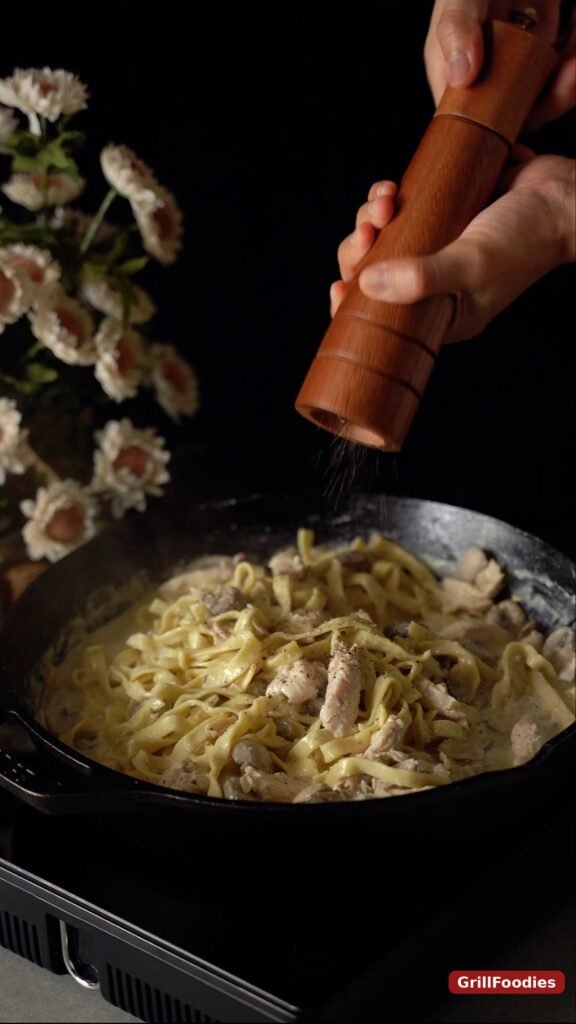
Turn the heat down to medium and add the onion and red pepper to the same pan. Cook for five minutes, stirring occasionally, until the onion softens and the pepper starts to colour. Add the garlic and cook for one minute until it smells fragrant. Stir in the barbecue sauce, the chopped tomatoes, and the oregano, and cook for two minutes until the sauce starts to bubble and thicken slightly. This is the base of the dish, and it should smell smoky and rich.
Add the pasta and the hot stock, and stir well so the pasta is covered. Bring the pan to a gentle simmer, then turn the heat down to low, put the lid on, and cook for 12 to 15 minutes, stirring every few minutes so the pasta does not stick to the bottom. The pasta should be almost tender and most of the liquid should have been absorbed. If the pan looks dry before the pasta is cooked, add a splash of stock or water and keep cooking.
Return the chicken to the pan, along with any juices on the plate, and stir it through the pasta. Sprinkle over the cheddar and mozzarella, put the lid back on, and cook for three to four minutes until the cheese has melted and the chicken is cooked through. If you like a golden top, you can put the pan under a hot grill for two minutes, but only if your pan is ovenproof and the handle is safe to use under the grill. Take the pan off the heat, let it rest for five minutes, then scatter over the parsley or spring onions and serve.
Tips for Creamy Pasta and Juicy Chicken
The most common mistake with one-pan pasta is not stirring it often enough. Pasta releases starch as it cooks, and that starch can stick to the bottom of the pan if it sits still for too long. Stir every three or four minutes, scraping the bottom of the pan gently, and you will avoid a burnt layer and get a smoother sauce. It is a small effort, but it makes a big difference.
The second tip is about the liquid. The pasta needs enough stock to cook, but not so much that the sauce ends up thin. Five hundred millilitres is a good starting point for 300 grams of pasta, but different pans lose different amounts of steam, so be prepared to adjust. If the sauce is too thin at the end, take the lid off and cook for a few minutes longer. If it is too thick, add a splash of stock or milk. The finished sauce should coat the pasta, not pool underneath it.
Do not add the cheese too early. Cheese added while the pasta is still cooking can go grainy or separate, especially if the heat is too high. Wait until the pasta is almost tender and the chicken is back in the pan, then add the cheese, turn the heat down low, and let it melt gently. The residual heat of the pan is enough, and the sauce will stay smooth and creamy.
Check the chicken with a thermometer if you are unsure. It should reach 74°C in the thickest part, and the USDA guidance on handling chicken safely is a useful reference for temperatures and storage. Letting the pan rest for five minutes before serving also helps, because the sauce thickens slightly as it cools and the flavours settle together.
Easy Variations to Try
This recipe is easy to adapt. If you like a little heat, add a teaspoon of chipotle paste with the barbecue sauce, or a pinch of chilli flakes with the garlic. If you prefer a milder dish, use a honey barbecue sauce and leave out the smoked paprika. A spoonful of cream cheese stirred in with the cheddar will make the sauce even creamier, and a handful of sweetcorn stirred in with the chicken adds sweetness and colour.
You can add vegetables without changing the method. Mushrooms, sliced thinly, can go in with the onion. Spinach, added at the end with the cheese, will wilt in a minute and add a fresh, green note. Broccoli florets, cut small, can go in with the pasta, though they will need the full cooking time. If you have leftover vegetables in the fridge, this is a good pan to use them up in, though it is best to add cooked vegetables at the end so they do not go soft.
For a different flavour, try using a different cheese. A smoked cheddar will deepen the barbecue character, and a little parmesan stirred in at the end will add a salty, savoury note. If you want to use leftover chicken, our guide to leftover grilled chicken recipes for dinner has ideas for using it well, and this pasta is a good home for it. Add the cooked chicken with the cheese, warm it through for a few minutes, and skip the first browning step altogether.
If you want a lighter version, use half the cheese and add a tin of drained butter beans with the pasta. They add creaminess and protein without the extra fat, and they make the dish even more filling. If you want a richer version, add a spoonful of cream with the cheese and a little extra barbecue sauce drizzled over the top when you serve it.
Serving Ideas
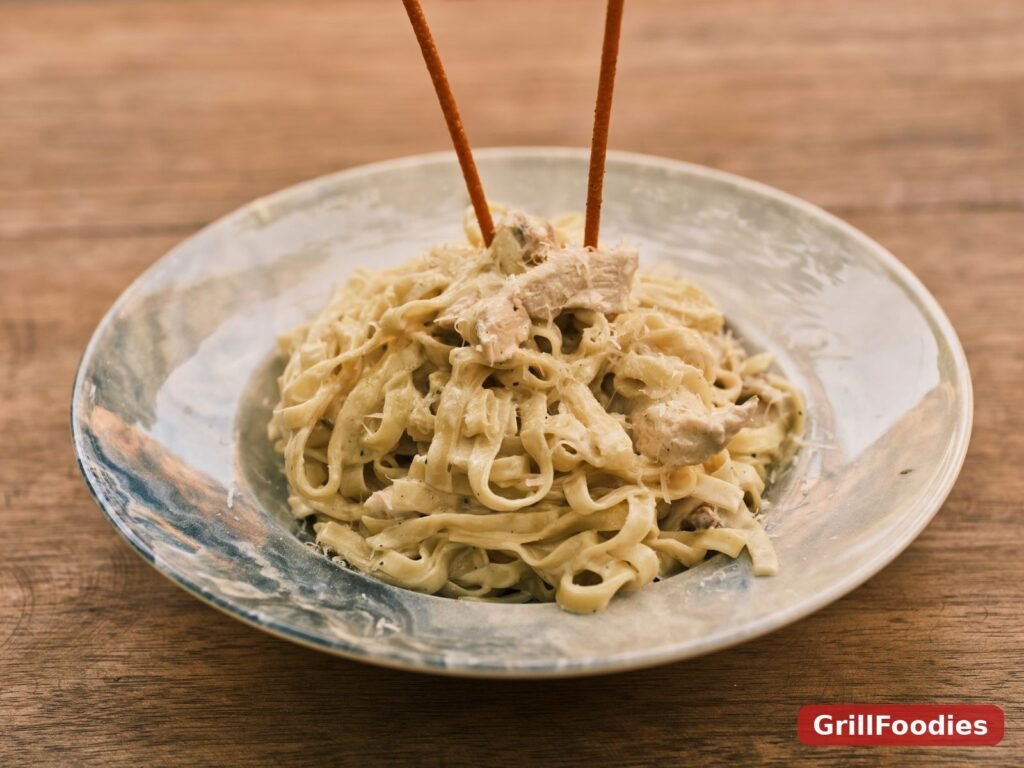
This is a complete meal on its own, but a simple salad makes it feel balanced. A green salad with a sharp vinaigrette cuts through the richness of the cheese, and a tomato and cucumber salad adds freshness. Garlic bread is a natural partner, and it is useful for mopping up the sauce. If you are serving this to children, a bowl of peas or sweetcorn on the side is an easy addition.
For a bigger table, serve it with a platter of grilled vegetables or a simple coleslaw. The smoky, cheesy pasta is rich, so something fresh and crunchy alongside it works well. A jug of iced tea or lemonade keeps the meal feeling relaxed, and a glass of red wine is not out of place if you are making this for adults on a Friday evening. Put the pan in the middle of the table, hand out bowls, and let people serve themselves. It stays hot, it looks generous, and it saves you plating up.
Leftovers are good the next day, though the pasta will absorb more sauce overnight and become a little softer. Reheat it gently in a pan with a splash of milk or stock, stirring until it is hot through, and add a little extra cheese on top if you like. It will not be quite as glossy as it was fresh, but it will still taste good, and it makes a useful packed lunch.
For more pasta inspiration, the BBC Good Food pasta recipes collection has plenty of ideas, from quick weeknight pastas to more elaborate dishes, and it is a good place to look when you want to try a different pasta in the same one-pan style.
Storage and Reheating
Cool the pasta quickly, then store it in an airtight container in the fridge for up to three days. The sauce will thicken as it cools, so add a splash of milk or stock when you reheat it to bring it back to a creamy consistency. Stir it well as it warms, and make sure it is piping hot all the way through before you serve it.
To reheat, warm it gently in a pan over a low heat, with a splash of milk or stock, stirring occasionally until it is hot through. The microwave will work in short bursts, stirring between each burst, but the pan is gentler and gives you more control over the sauce. Do not reheat it more than once, and do not leave it at room temperature for more than two hours.
You can freeze this pasta for up to two months, though the texture will be a little softer when it thaws. Defrost it overnight in the fridge, then reheat it as above, adding a little extra cheese or a splash of cream to refresh the sauce. It is a useful freezer meal for busy weeks, and it is much better than a takeaway on a night when you do not feel like cooking.
Frequently Asked Questions
Can I use leftover grilled chicken in this pasta?
Yes, and it is a very good use for it. Shred or dice the leftover chicken, add it to the pan with the cheese, and warm it through for three to four minutes until it is hot. Skip the first browning step, because the chicken is already cooked. If you want more ideas for using leftover chicken, our guide to leftover grilled chicken recipes is a useful read, and this pasta is one of the easiest ways to turn it into a new dinner rather than just reheating it.
What pasta shape is best for one-pan cooking?
Short shapes like penne, rigatoni, and fusilli are the best choice, because they cook evenly in the pan and they hold the sauce well. Rigatoni is particularly good, because the tubes trap the sauce inside. Avoid long pasta like spaghetti, which can clump together, and avoid very small pasta like orzo, which cooks too quickly and can go mushy. If you use a different shape, check the cooking time on the packet and adjust the simmering time accordingly.
How do I stop the pasta from sticking to the pan?
Stir the pasta every three to four minutes, especially in the first ten minutes when it is releasing the most starch. Make sure there is enough liquid in the pan, and use a large, heavy-based pan that spreads the heat evenly. A non-stick pan will help, but a well-seasoned cast-iron skillet or a good stainless steel pan will also work if you stir regularly. If the pasta does stick a little, do not scrape it aggressively, because you will break the pasta. Add a splash of stock, let it sit for a minute, and then stir gently.
Can I make this recipe without barbecue sauce?
You can, though it will be a different dish. If you do not have barbecue sauce, use a mixture of tomato paste, honey, smoked paprika, and a splash of vinegar to get a similar sweet and smoky flavour. Our guide to cooking grilled chicken without barbecue sauce has ideas for seasoning chicken when you do not want to use sauce, and some of those ideas carry over well to this pasta. The cheese and the chicken will still make it a satisfying dinner, even without the barbecue flavour.
Can I make this ahead of time?
You can prepare the chicken and vegetables ahead of time, and you can grate the cheese and keep it in the fridge, but it is best to cook the pasta fresh. Pasta that is cooked, stored, and reheated will be softer than pasta that is cooked and served straight away. If you need to save time, brown the chicken and soften the vegetables in the morning, keep them in the fridge, and then finish the dish in the evening by adding the tomatoes, stock, and pasta. For another one-pan dinner that is good to make ahead in parts, our one-pan smoky chicken and rice follows a similar pattern and is worth trying next.


You May Also Like
One-Pan Smoky Chicken Chili with Cornbread Topping
One-Pan Garlic Butter Shrimp and Vegetables