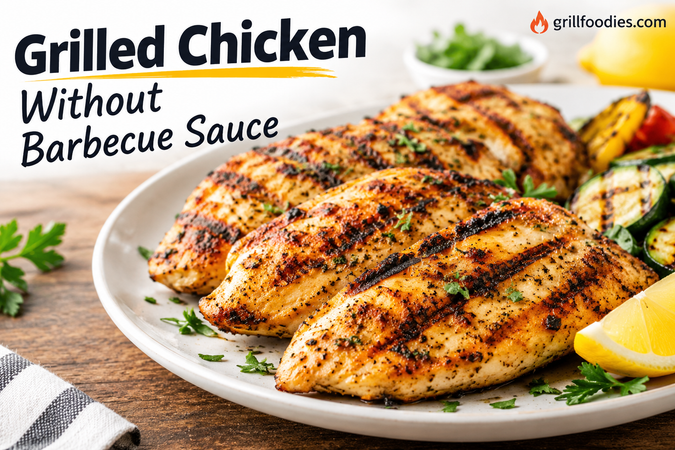
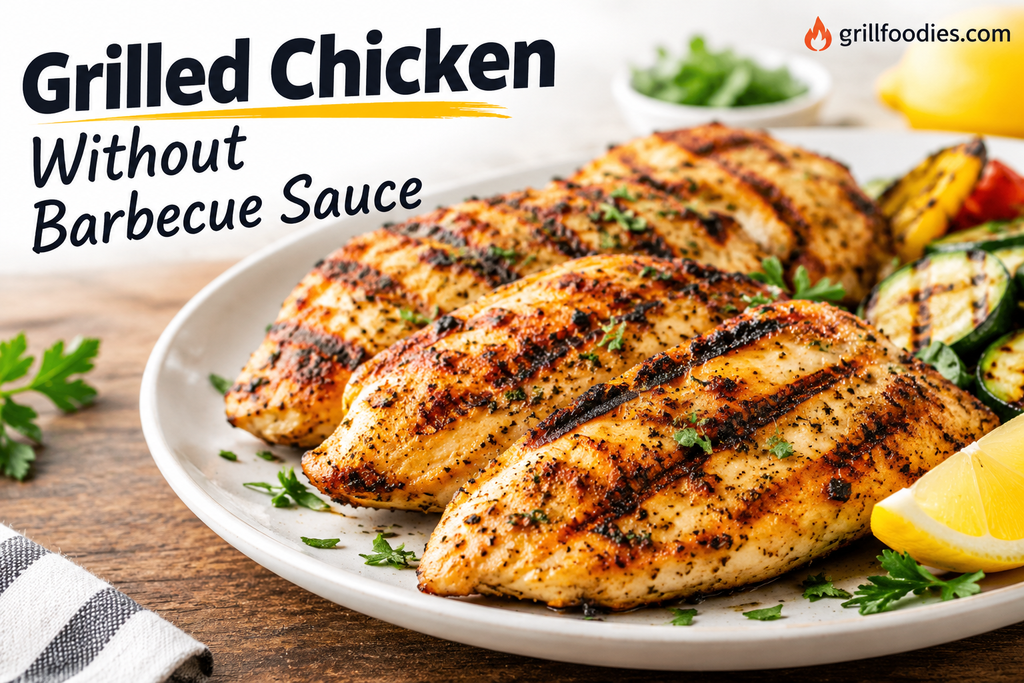
Grilled chicken is one of those meals that never really gets old. It is quick, filling, easy to customize, and works for everything from a simple weeknight dinner to a summer cookout. But what if you do not have barbecue sauce, or simply do not want the sweetness and heaviness that often comes with it?
This grilled chicken without barbecue sauce recipe is a simple answer. Instead of relying on bottled sauce, the chicken gets its flavor from everyday ingredients such as olive oil, garlic, lemon juice, paprika, salt, black pepper, and a few dried herbs. The result is juicy, flavorful chicken with lightly charred edges and plenty of natural grilled flavor.
You do not need a complicated marinade or a long ingredient list. In fact, this recipe is designed around simplicity. It is a great option when you want grilled chicken but prefer a lighter, savory flavor instead of traditional barbecue sauce.
Why Make Grilled Chicken Without Barbecue Sauce?
Barbecue sauce is delicious, but it is not the only way to make flavorful grilled chicken. Many people prefer chicken without barbecue sauce because they want to taste the seasoning, herbs, garlic, and smoky grilled meat itself.
Making grilled chicken without BBQ sauce also gives you more flexibility. You can use the chicken in salads, wraps, sandwiches, rice bowls, tacos, pasta, or simply serve it with vegetables and potatoes.
Another advantage is that you can control the sweetness. Most barbecue sauces contain sugar or another sweetener, while this recipe gets its flavor from savory seasonings and a little acidity from lemon juice.
It is also a convenient recipe for those moments when you open the refrigerator and realize there is no barbecue sauce available. You can still make delicious grilled chicken with basic pantry ingredients.
Ingredients You Will Need
For this easy grilled chicken recipe, you only need a handful of ingredients.
Chicken
Boneless, skinless chicken breasts are a convenient choice because they cook quickly. You can also use boneless chicken thighs if you prefer darker meat with a richer flavor.
Olive Oil
Olive oil helps coat the chicken and keeps the surface from becoming too dry. It also helps the seasonings stick to the meat.
Lemon Juice
Fresh lemon juice adds brightness and balances the savory seasonings. It also works especially well with grilled chicken.
Garlic
Fresh minced garlic gives the chicken a deeper savory flavor. Garlic powder can be used when fresh garlic is not available.
Paprika
Paprika adds color and a mild earthy flavor. Regular paprika works well, while smoked paprika can add a subtle smoky note.
Salt and Black Pepper
These two simple seasonings bring out the natural flavor of the chicken. Do not skip the salt, because properly seasoned chicken makes a noticeable difference.
Dried Herbs
Italian seasoning, oregano, thyme, or dried parsley can all work. Use whatever you already have in your pantry.
Simple Ingredient List
For about four servings, you can use:
- 4 boneless, skinless chicken breasts
- 2 tablespoons olive oil
- 1 tablespoon fresh lemon juice
- 2 cloves garlic, minced
- 1 teaspoon paprika
- 1 teaspoon dried oregano or Italian seasoning
- 1/2 teaspoon salt
- 1/2 teaspoon black pepper
- 1/4 teaspoon onion powder, optional
These measurements do not have to be followed rigidly. If you love garlic, add a little more. If you enjoy smoky flavors, use smoked paprika. The beauty of grilled chicken without barbecue sauce is that the seasoning can easily be adjusted to your taste.
How to Make Grilled Chicken Without Barbecue Sauce
1. Prepare the Chicken
If your chicken breasts are very thick, place them between two pieces of plastic wrap or parchment paper and gently pound them until they have a more even thickness.
This is an important step because thick chicken breasts can cook unevenly. A thinner, more uniform piece of chicken will cook more consistently and is less likely to become dry on the outside before the center is done.
Pat the chicken dry with paper towels before seasoning.
2. Make the Seasoning Mixture
In a small bowl, combine olive oil, lemon juice, minced garlic, paprika, dried oregano, salt, black pepper, and onion powder if using.
Stir everything together until well combined.
This simple mixture takes the place of barbecue sauce. It gives the chicken a savory, slightly tangy flavor while allowing the grill to create the caramelized edges and char that make grilled chicken so appealing.
3. Coat the Chicken
Place the chicken in a bowl or shallow dish. Pour the seasoning mixture over it and turn the chicken several times so every piece is coated.
For the best flavor, let the chicken sit for about 15 to 30 minutes before grilling. If you have more time, you can refrigerate it for a few hours.
You do not need to marinate the chicken overnight. The combination of lemon, garlic, oil, and spices can provide plenty of flavor in a relatively short time.
4. Preheat the Grill
Preheat your grill over medium to medium-high heat.
A properly heated grill is important for getting those attractive grill marks and lightly charred edges. If the grill is too cool, the chicken may stick and cook slowly. If it is extremely hot, the outside can burn before the inside is fully cooked.
Clean and lightly oil the grill grates if needed.
5. Grill the Chicken
Place the seasoned chicken on the hot grill.
Cook the chicken for several minutes on the first side, then turn it over and continue cooking until the chicken is thoroughly cooked.
The exact cooking time depends on the thickness of the chicken and the heat of your grill. Rather than relying only on time or appearance, use an instant-read thermometer to check the thickest part of the chicken.
Chicken should reach an internal temperature of 165°F (74°C) for safe consumption.
6. Let the Chicken Rest
Once the chicken is cooked, transfer it to a clean plate or cutting board.
Let it rest for about five minutes before slicing.
This short resting period allows the juices to settle, helping the chicken stay moist when you cut into it.
How to Keep Grilled Chicken Juicy
One of the biggest concerns with grilled chicken is dryness. Chicken breast is naturally lean, so it can become dry if it is overcooked.
The first trick is to choose pieces with an even thickness. Pounding thick chicken breasts slightly can make a big difference.
Second, do not cook the chicken longer than necessary. An instant-read thermometer is one of the easiest ways to avoid overcooking.
Third, allow the chicken to rest after grilling. Cutting into it immediately can cause some of the juices to escape.
Finally, do not be afraid to use a little oil in your seasoning mixture. It helps keep the surface flavorful and contributes to better browning.
Can You Make Grilled Chicken Without Marinade?
Yes. You can make grilled chicken without barbecue sauce and without a traditional marinade.
Simply coat the chicken with a small amount of oil and season it with salt, pepper, paprika, garlic powder, and your favorite herbs. Grill as usual.
A marinade can add extra flavor and moisture, but it is not absolutely necessary for good grilled chicken.
If you are short on time, a dry seasoning blend is often the easiest option.
Grilled Chicken Without BBQ Sauce Using Dry Seasoning
For an even faster version, combine:
- 1 teaspoon paprika
- 1/2 teaspoon garlic powder
- 1/2 teaspoon onion powder
- 1/2 teaspoon black pepper
- 1/2 teaspoon salt
- 1/2 teaspoon dried oregano
- A pinch of chili powder, optional
Rub the chicken lightly with olive oil and sprinkle the seasoning mixture over both sides.
Press the seasoning gently into the chicken so it sticks.
Then grill until the chicken reaches an internal temperature of 165°F (74°C).
This version is particularly useful when you want dinner on the table quickly.
Can You Use Chicken Thighs?
Absolutely. Chicken thighs are an excellent choice for grilling without barbecue sauce.
Because thighs contain more fat than chicken breasts, they tend to stay juicy and have a richer flavor. They also pair beautifully with garlic, lemon, paprika, and herbs.
Boneless chicken thighs are especially easy to grill because they cook relatively quickly. Bone-in thighs take longer, so make sure the thickest part reaches the recommended safe internal temperature.
You can use exactly the same seasoning mixture for chicken thighs.
How to Get Good Grill Marks
If you want classic grill marks, make sure the grill is properly preheated before adding the chicken.
Place the chicken directly on the grates and avoid moving it around too much during the first few minutes. Once the surface has browned and released naturally from the grates, you can turn it.
For a simple crosshatch pattern, rotate the chicken about 45 degrees after the first few minutes on one side, then flip it and repeat if desired.
You do not need barbecue sauce to get attractive, browned grilled chicken. Proper heat and good seasoning are enough.
What to Serve With Grilled Chicken Without Barbecue Sauce
This chicken is extremely versatile.
For a simple dinner, serve it with grilled vegetables, roasted potatoes, corn, or a fresh green salad.
For a lighter meal, slice the chicken and place it over lettuce with cucumber, tomatoes, red onion, and a simple lemon dressing.
You can also serve it with:
- Steamed rice
- Garlic potatoes
- Grilled zucchini
- Green beans
- Coleslaw
- Pasta salad
- Corn on the cob
- Roasted vegetables
- Warm pita bread
- Fresh cucumber salad
Because the chicken does not have a strong barbecue flavor, it works with many different side dishes.
How to Use Leftover Grilled Chicken
One of my favorite things about this recipe is how useful the leftovers are.
If you have extra chicken, allow it to cool and store it properly in the refrigerator. The next day, slice it and use it in a completely different meal.
You can turn leftover grilled chicken into a quick lunch by adding it to a tortilla with lettuce, tomato, cheese, and a little dressing.
It is also excellent in fried rice, pasta, salads, sandwiches, quesadillas, and rice bowls.
For a quick dinner, chop the leftover chicken and combine it with cooked rice and frozen vegetables in a skillet. Add a little soy sauce or your favorite seasoning for an easy meal.
Flavor Variations
Once you have the basic recipe down, there are many ways to change the flavor.
Lemon Herb Chicken
Increase the lemon juice slightly and use oregano, thyme, and parsley for a bright herb flavor.
Smoky Grilled Chicken
Use smoked paprika instead of regular paprika. A small amount of chili powder can also add extra depth.
Spicy Grilled Chicken
Add cayenne pepper or crushed red pepper flakes to the seasoning mixture.
Garlic Chicken
Use additional fresh garlic or combine fresh garlic with garlic powder for a stronger garlic flavor.
Mediterranean-Style Chicken
Use oregano, lemon, garlic, olive oil, and a little cumin. Serve the chicken with cucumber, tomato, rice, and warm flatbread.
Cajun-Inspired Chicken
Add paprika, garlic powder, onion powder, black pepper, oregano, and a small amount of cayenne.
These variations make it easy to enjoy the same basic recipe without feeling like you are eating the same dinner every time.
Tips for the Best Grilled Chicken Without Barbecue Sauce
Do not skip preheating the grill. A hot grill helps create better browning and grill marks.
Use evenly sized chicken pieces. This makes it easier for everything to finish cooking at approximately the same time.
Do not overcook the chicken. Check the internal temperature rather than guessing.
Season both sides. Chicken benefits from seasoning throughout the surface.
Let it rest. Give cooked chicken a few minutes before slicing.
Use fresh lemon when possible. Fresh lemon juice provides a brighter flavor than bottled juice.
Experiment with spices. Paprika, garlic, herbs, cumin, chili powder, and black pepper can all transform the basic recipe.
Can You Make This Recipe on a Gas Grill?
Yes. A gas grill works perfectly for this recipe.
Preheat the grill and cook the chicken over direct heat. If the chicken is browning too quickly, move it to a cooler area of the grill to finish cooking.
The important thing is to monitor the chicken rather than relying on a fixed cooking time.
Can You Make It on a Charcoal Grill?
Definitely. Charcoal adds a naturally smoky flavor, which is especially nice when you are making grilled chicken without barbecue sauce.
Because charcoal grills can have hotter and cooler areas, arrange the coals so you have some flexibility. You can sear the chicken over the hotter section and move it to a cooler area if it needs additional cooking.
Keep an eye on flare-ups, especially when using oil on the chicken.
Can You Make It Indoors?
If you do not have access to an outdoor grill, a grill pan or indoor electric grill can work.
Heat the grill pan over medium-high heat, lightly oil it, and cook the chicken until it reaches 165°F (74°C) internally.
You will not get exactly the same smoky flavor as an outdoor charcoal grill, but you can still get attractive grill marks and nicely browned chicken.
Frequently Asked Questions
What can I use instead of barbecue sauce on grilled chicken?
You can use a simple mixture of olive oil, lemon juice, garlic, paprika, salt, pepper, and herbs. You can also use a dry spice rub if you prefer not to use a marinade.
Is grilled chicken without barbecue sauce healthy?
Grilled chicken can be part of a balanced meal. This version does not rely on a sweet barbecue sauce, and you can control the amount of oil and salt used. What you serve alongside the chicken also affects the overall nutritional profile of the meal.
Can I grill chicken without oil?
Yes, although a small amount of oil can help prevent sticking and improve browning. If you prefer to avoid oil, make sure your grill is clean and properly heated.
How do I know when grilled chicken is done?
The most reliable method is to check the thickest part with an instant-read thermometer. Chicken should reach an internal temperature of 165°F (74°C).
Can I use frozen chicken?
For best results, thaw the chicken safely in the refrigerator before grilling. Starting with thawed chicken allows it to cook more evenly.
Can I prepare the chicken ahead of time?
Yes. You can season the raw chicken and keep it refrigerated until you are ready to grill, provided it is handled and stored safely. You can also grill the chicken ahead of time and use the cooked meat in meals throughout the next few days.
Final Thoughts
You really do not need barbecue sauce to make delicious grilled chicken. A few simple ingredients can create a meal that is savory, juicy, lightly smoky, and full of flavor.
This grilled chicken without barbecue sauce recipe is especially useful when you want something simple and versatile. The combination of garlic, lemon, paprika, herbs, and black pepper gives the chicken enough flavor to stand on its own, while still making it flexible enough for salads, sandwiches, wraps, rice bowls, and other meals.
Whether you are cooking on a gas grill, charcoal grill, or indoor grill pan, focus on even chicken pieces, proper seasoning, and cooking the meat to a safe internal temperature. Once you have the basic method, you can easily change the seasonings to suit your taste.
The next time you reach for the refrigerator and realize there is no barbecue sauce, do not worry. You may already have everything you need for a flavorful grilled chicken dinner right in your kitchen.