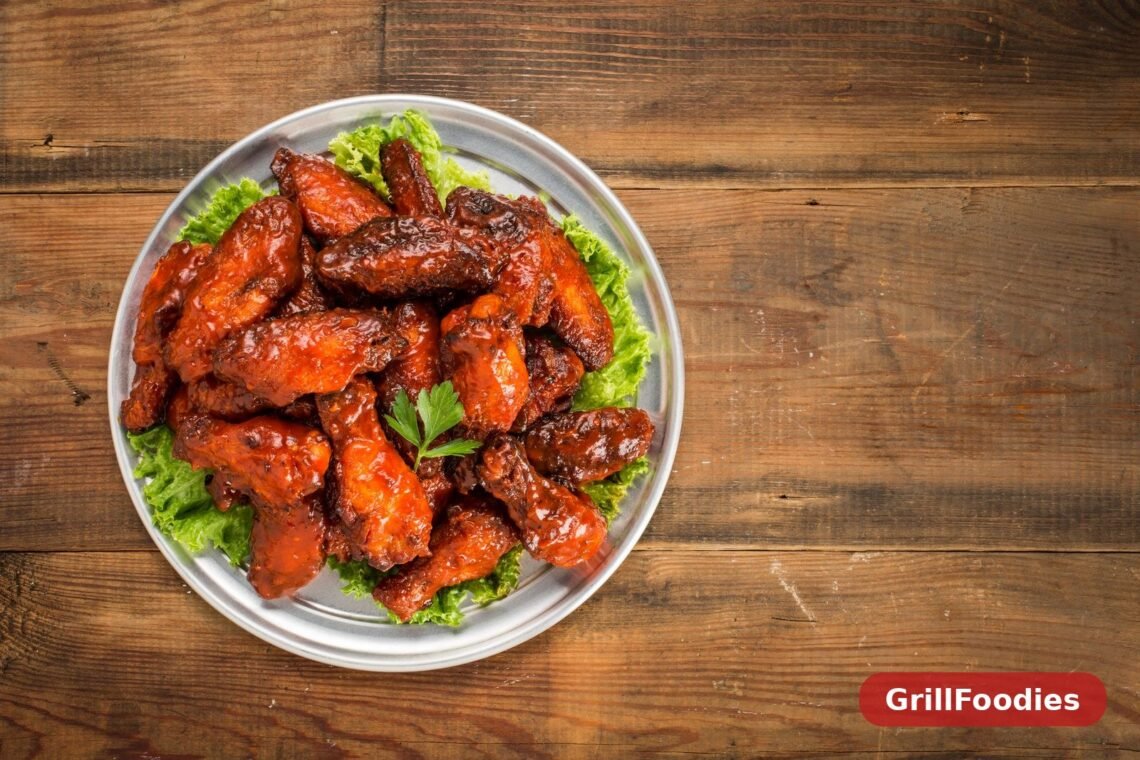
Smoky Grilled Chicken Wings with Alabama White Sauce
There are two kinds of people at a cookout. The ones who hover around the grill, beer in hand, offering unsolicited advice about the coals. And the ones who quietly eat eight chicken wings before anyone else has even sat down. I have always been the second kind, and I am not even a little bit sorry about it.
But here is the thing: for years, my wings were fine. Just fine. Crispy-ish, a little smoky, usually drowned in whatever bottled barbecue sauce happened to be on sale that week. Nobody complained, but nobody asked for the recipe either, and that bothered me more than I wanted to admit. So a couple of summers back, I decided to stop winging it — pun fully intended — and actually learn what makes a great grilled wing. What I found changed the way I cook chicken forever, and it came from the last place I expected: a white sauce from Alabama.
If you have never had Alabama white sauce, let me set the scene. It looks wrong, honestly. You are used to barbecue sauce being red, thick, sweet, sticky. This stuff is pale, creamy, tangy, almost like a ranch dressing that went to finishing school in Decatur. The first time a friend from Huntsville handed me a cup of it, I thought he was pranking me. Then I dipped a wing in it, and I understood immediately. The cool, peppery tang cuts straight through the smoke and the char and the fat, and suddenly the wing tastes like more than just a wing. It tastes like someone actually thought about it.
This recipe is the result of about two dozen batches, a few small kitchen disasters, and one memorable afternoon where I smoked out half the neighborhood because I got the coals too hot and then refused to admit it. What you get here is the version I make now, every single time, the one my friends ask for by name. Smoky wings, crackly skin, a dry rub that does real work, and that white sauce on the side for dipping — never poured over the top, never. Trust me on that.
What Alabama White Sauce Actually Is
Before we get to the grill, let us talk about the sauce, because it is the whole reason this recipe exists. Alabama white sauce was invented in the 1920s by a pitmaster named Big Bob Gibson up in Decatur, Alabama. The story goes that he wanted something different from the tomato-based sauces everyone else was using, something that would work on smoked chicken without overpowering it. What he came up with was mayonnaise-based, thinned with vinegar, sharpened with lemon juice, and kicked up with black pepper and a little cayenne. It was weird. It was also perfect.
The sauce has stayed a North Alabama thing for most of its life, which is a shame, because it might be the most versatile sauce in all of barbecue. It is not just a dip. People use it as a mop sauce while the chicken cooks, as a dressing on slaw, as a sandwich spread. I have even seen someone put it on a baked potato, and I have to admit, that person was onto something. The version I make here is a little thicker than the original, because I want it to cling to a wing instead of running straight off it. If you prefer yours thinner, a splash more vinegar will get you there.
One warning, though, and I say this with love: do not buy the bottled stuff and call it a day. The jarred versions are fine, they really are, but the whole point of this sauce is that it takes five minutes and about six ingredients you already have. The homemade version tastes brighter, fresher, and more alive. The bottled version tastes like it has been sitting in a warehouse since March. Make it yourself. You will taste the difference in the first bite.
Picking the Right Wings
The wings matter more than most people think, and this is where I have seen more cookouts go wrong than anywhere else. You want whole wings, and you want them fresh, not frozen, if you can manage it. Frozen wings are not the end of the world — I have used them plenty of times — but they release more moisture as they thaw, and moisture is the enemy of crispy skin. If frozen is all you have, thaw them overnight in the fridge, then pat them completely dry with paper towels. I mean completely. Every drop of water on that skin is a drop that has to steam off before the skin can crisp, and by then you have lost the race.
Buy about three pounds for a group of four or five people, and be honest with yourself about how many wings your crowd actually eats. I always think three pounds sounds like a lot. It never is. Wings shrink on the grill, and one person who really likes them can put away a pound without even trying. If you are feeding teenagers, double it. I am not joking.
When you get them home, you will need to split them into flats and drumettes if the butcher has not already done it. The little wing tip gets cut off and thrown away, or saved for stock if you are that kind of person. I admire that kind of person. I am not that kind of person. The tip goes in the bin. If you have never broken down wings before, it is easier than it looks: find the joint between the drumette and the flat, press your knife into it, and it will practically fall apart on its own. The joint tells you where to cut. Do not fight it.
The Dry Rub That Does the Heavy Lifting
Here is where I will get a little opinionated, because the rub is what separates a wing that tastes smoky from a wing that tastes like smoke was waved vaguely in its direction. A good rub needs salt, sugar, heat, and something earthy to tie it together. Mine is simple on purpose. You do not need seventeen spices. You need the right five or six, in the right proportions.
For three pounds of wings, mix together two tablespoons of smoked paprika, one tablespoon of kosher salt, one tablespoon of brown sugar, two teaspoons of garlic powder, two teaspoons of onion powder, one teaspoon of black pepper, and half a teaspoon of cayenne. That is it. The smoked paprika is non-negotiable — it is the backbone of the whole thing, and regular paprika just does not give you the same depth. The brown sugar is there for balance and for caramelization, but keep it to a tablespoon; any more and the sugar burns before the wings finish cooking, and burnt sugar tastes bitter, not sweet.
Toss the wings in the rub in a big bowl, or better yet, a zip-top bag, and let them sit for at least thirty minutes. Overnight is better. The salt does slow, quiet work while it sits, drawing a little moisture out of the skin and then letting it back in, seasoned. If you have the patience to rub them the night before and leave them uncovered on a rack in the fridge, you will be rewarded with skin that crisps up like it has something to prove. That overnight rest is the single biggest upgrade you can make to this recipe, and it costs you nothing but a little planning.
Making the Alabama White Sauce
While the wings are sitting in their rub, make the sauce. It takes five minutes, and honestly, most of that is opening jars. Whisk together one cup of mayonnaise, a quarter cup of apple cider vinegar, the juice of one lemon, one tablespoon of prepared horseradish, one tablespoon of Dijon mustard, one teaspoon of black pepper, half a teaspoon of garlic powder, half a teaspoon of cayenne, and a good pinch of salt. Taste it. Then taste it again, because the first taste always lies to you a little.
What you are looking for is a sauce that is tangy first, creamy second, and peppery third. The vinegar should make your mouth water. The horseradish should give you a little tingle at the back of your nose, not a full-on burn. If it tastes flat, add a splash more vinegar. If it tastes too sharp, a teaspoon of honey will round it off without making it sweet. If it tastes too thick to dip, thin it with a tablespoon of water or a little more lemon juice until it coats a spoon and drips off in a slow ribbon.
Let it sit in the fridge for at least thirty minutes before serving, and it will be even better the next day. The flavors need a little time to get to know each other. The garlic softens, the pepper blooms, the vinegar settles down. I make mine the night before whenever I remember, and I keep it in a jar with a tight lid. It will hold for a week in the fridge, easy. The only problem is that it never lasts a week, because once people try it, they start putting it on everything.
Setting Up the Grill
Now, the grill. You can make these wings on gas or charcoal, and I have done both, but I will be honest with you: charcoal wins. It just does. The smoke from real coals is part of the flavor, and no gas grill, no matter how expensive, has ever quite matched it. That said, if gas is what you have, use it. Great wings on a gas grill beat mediocre wings on a charcoal grill every time, and the recipe works either way.
The setup matters more than the fuel. You want a two-zone fire: one side hot, one side cooler. On a charcoal grill, bank the coals to one side. On a gas grill, light one or two burners and leave the others off. The idea is simple. You start the wings over the hot side to get color and char, then you move them to the cool side to finish cooking through without burning. Wings are small and the skin is full of fat, and fat drips, and dripping fat causes flare-ups, and flare-ups turn good wings into blackened regret. The cool zone is your escape hatch. When the flames jump up, you move the wings. Simple as that.
As for temperature, you are aiming for about 400 to 425 degrees at the grate on the hot side. Hot enough to crisp the skin, not so hot that the rub burns before the inside cooks. If your grill has a thermometer, great. If it does not, hold your hand about six inches above the grate. If you can keep it there for three or four seconds, you are in the right range. If you have to pull away after one second, it is too hot. Close the vents a little, wait five minutes, and check again.
If you want an extra layer of smoke, and I usually do, toss a small handful of soaked wood chips on the coals, or a chunk of applewood or hickory if you have it. Applewood is my favorite with chicken because it is gentle and a little sweet, and it does not bully the white sauce the way mesquite can. Hickory works too, just use a little less of it. A little smoke goes a long way on wings. They are small, and they pick up flavor fast.
Grilling the Wings, Step by Step
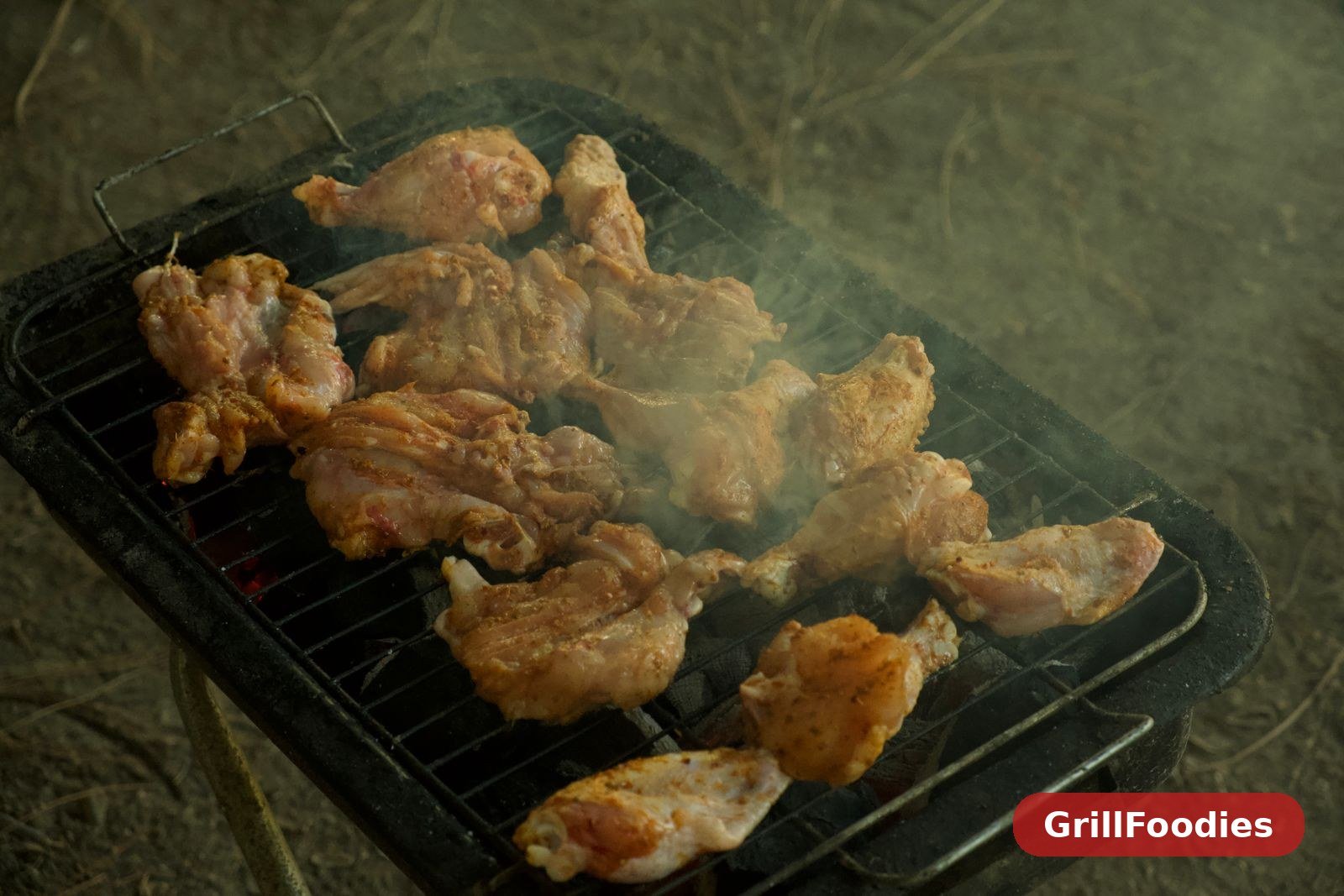
When the grill is ready and the wings have had their time in the rub, it is time to cook. Oil the grates first — a folded paper towel dipped in vegetable oil, held with tongs, wiped across the hot grates. This takes ten seconds and it saves you from the heartbreak of a beautiful wing tearing in half because it stuck. Do not skip it.
Place the wings on the hot side of the grill in a single layer, skin-side down, with a little space between them. Crowding is the enemy here. If the wings are touching, they steam instead of sear, and you end up with soft, pale skin. If your grill is small, cook in two batches. I would rather cook two batches well than one batch badly.
Close the lid and let them go for about ten minutes. Do not poke them, do not move them, do not lift the lid every two minutes to check. Every time you open the lid, you lose heat, and heat is what makes the skin crisp. After ten minutes, flip them. You should see real color on the skin by now — golden brown, maybe a little char at the edges. If they are still pale, give them another few minutes on that side. If they are black, your fire was too hot, and you will want to move them to the cool side sooner next time. It happens. Learn from it and keep going.
After flipping, close the lid again and cook for another eight to ten minutes. Then start checking the temperature. You are looking for an internal temperature of 175 degrees in the thickest part of the wing. Yes, 175, not 165. The USDA safe minimum for chicken is 165 degrees, and you should always respect that, but wings are one of those cuts that actually get better when you take them a little further. The extra ten degrees renders more fat, tightens the skin, and makes the meat pull cleanly off the bone. If you pull them at 165, they are safe, but they can still be a little rubbery. At 175, they are safe and they are better.
Total cooking time is usually twenty to twenty-five minutes, depending on the size of your wings and the heat of your grill. If some wings are cooking faster than others — and they will, because grills have hot spots — move them around. The small flats finish first, the big drumettes take a little longer. That is normal. Pull each wing as it is ready and let it rest on a plate. You do not need to rest wings for ten minutes the way you would a steak, but two or three minutes helps the juices settle, and it gives you time to get the sauce and the serving platter ready.
One thing I learned the hard way: do not sauce the wings on the grill. The white sauce is mayonnaise-based, and mayonnaise does not belong over direct heat. It will split, it will slide off, and it will make a mess of your grill. The sauce is for dipping, at the table, where it belongs. If you want a sauced wing, toss the wings in sauce after they come off the grill, in a big bowl, the way you would with buffalo wings. But honestly, for Alabama white sauce, dipping is the move. You get a crispy wing and a cool, tangy sauce in every bite, and the contrast is the whole point.
Serving Them the Way They Deserve
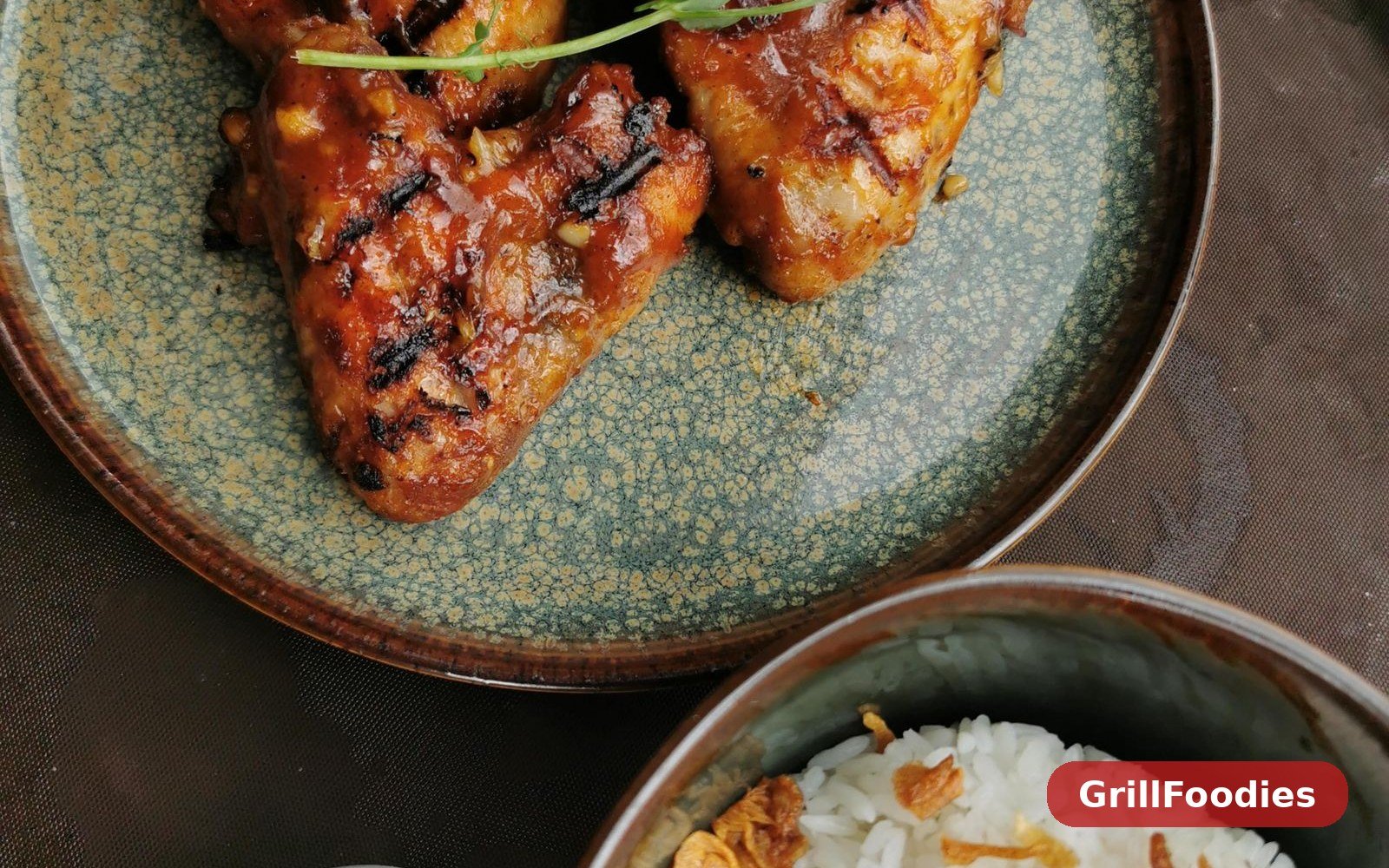
Pile the wings on a big platter, scatter a little chopped parsley over the top if you are feeling fancy, and set the white sauce out in a bowl right next to them, with a spoon in it. I like to put out extra sauce, because someone always asks for more, and it is better to have too much than to watch someone scrape the bottom of the bowl with a wing like they are digging for treasure.
These wings are the main event, but they love company. A cold beer, obviously. A pile of grilled vegetable skewers on the side, something green to balance all that rich, smoky chicken. And if you are feeding a crowd, a big bowl of slaw — the white sauce doubles as a slaw dressing, by the way, and it is shockingly good on shredded cabbage and carrots. Two uses, one jar, zero extra work.
What to Serve With Them
Wings are a party food, and party food needs sides that do not compete with it. I keep it simple: something crunchy, something cool, and something you can eat with your hands. A tray of celery and carrot sticks with a second bowl of white sauce for dipping. A simple slaw, just cabbage, a little carrot, and a splash of that same sauce thinned with vinegar. Corn on the cob, grilled right alongside the wings, brushed with butter and sprinkled with salt. That is a whole meal, and nobody is going to ask where the main course is, because the wings are the main course.
If you are making these for game day, add a bowl of chips and a pot of baked beans, and you are done. If it is a summer cookout, go with the slaw and the corn and a watermelon for dessert, and call it a day. The wings carry the meal. Everything else is just there to make the table look generous.
Leftovers, If You Are Lucky Enough to Have Any
I will be straight with you: leftovers are rare in my house. But when they happen, the wings reheat better than you would think. The oven is your friend here. Spread them on a wire rack over a baking sheet and bake at 400 degrees for about ten minutes, until the skin crisps back up. The microwave will get them hot, but it will also turn the skin soft and a little sad, and nobody wants sad wings. The air fryer works too — 375 degrees, five or six minutes, shake the basket halfway through. And if you have already got a batch of honey chipotle wings in the fridge from the weekend, the same trick works for those too.
The white sauce keeps for about a week in a sealed jar in the fridge. If it thickens up in the cold, stir in a teaspoon of water or lemon juice and it comes right back. Do not freeze it. Mayonnaise-based sauces do not survive the freezer, and you will end up with something separated and grainy that no amount of whisking can save. Just make a fresh batch. It takes five minutes.
Why This Recipe Works
I think it is worth saying plainly why these wings turn out so well, because it is not magic. It is three things, working together. The dry rub builds flavor on the skin, where you actually taste it. The two-zone fire gives you crispy skin without burnt sugar or flare-up disasters. And the white sauce gives you that cool, tangy contrast that makes the smoke and the char taste even better, the same way a squeeze of lemon makes fried fish taste better.
None of those three things is hard on its own. That is the whole point. This is not a fussy recipe. There is no brining, no special equipment, no thermometer you have to buy. It is wings, a rub, a grill, and a sauce you whisk together in a bowl. If you can light a grill, you can make these wings, and I promise you, the first time you watch someone dip a wing and go quiet for a second — that little pause where they are deciding whether to say something or just eat another one — you will understand why I keep making them.
If you are already comfortable with the basics, this recipe also plays nicely with other things on the site. The same two-zone setup works beautifully for smoky rubbed chicken breasts, and once you have the white sauce in the fridge, you will find excuses to use it on lemon garlic thighs and just about everything else that comes off the grill. That is how a recipe earns a permanent spot in the rotation: not because it is complicated, but because it makes everything around it better.
Frequently Asked Questions
Can I make Alabama white sauce ahead of time?
Yes, and you should. It actually tastes better after a day in the fridge, once the garlic and pepper have had time to settle into the mayonnaise. Make it the night before, keep it in a sealed jar, and it will hold for about a week. Just give it a good stir before serving, and thin it with a teaspoon of water or lemon juice if it has thickened up in the cold.
Can I cook these wings in the oven instead of on the grill?
You can, and they will still be good, though you will miss the smoke. Bake them on a wire rack set over a baking sheet at 425 degrees for about 40 to 45 minutes, flipping once halfway through, until they hit 175 degrees inside. For a little extra color, finish them under the broiler for two or three minutes, but watch them closely — the sugar in the rub can go from golden to burnt fast under a broiler.
What is the difference between Alabama white sauce and ranch dressing?
They look similar in the bowl, but they taste quite different. Ranch is built on buttermilk and herbs like dill and chives, and it is meant to taste cool and herby. Alabama white sauce is built on mayonnaise, vinegar, and lemon, with a lot more black pepper and a little horseradish and cayenne. It is tangier, sharper, and more peppery, and it was designed specifically to cut through smoky, fatty barbecue. If you want a full history of the sauce and how it is traditionally used, this grilled wings guide from Once Upon a Chef is a good place to start reading about the technique, and the sauce itself traces back to Big Bob Gibson’s restaurant in Decatur in the 1920s.
How do I keep the wings from sticking to the grill?
Three things: oil the grates, do not move the wings too early, and make sure the grill is properly hot before the wings go on. A cold grate is a sticky grate. Wipe the grates with an oiled paper towel, let the wings sear for a full ten minutes before you try to flip them, and they will release on their own when the skin has crisped. If a wing resists when you try to lift it, leave it alone for another minute. It is not ready yet.
Are chicken wings safe to eat at 175 degrees?
Yes. The safe minimum internal temperature for chicken is 165 degrees, and 175 is above that, so you are well within the safe zone. Wings are dark meat, and dark meat actually improves with a little extra heat — the fat renders out, the skin tightens up, and the meat pulls cleanly from the bone. Just make sure you are measuring in the thickest part of the wing, away from the bone, because the bone conducts heat and can give you a false reading.
Can I use this white sauce on other meats?
Absolutely. It was originally made for smoked chicken, but it is wonderful on grilled pork chops, pulled pork sandwiches, and even as a dressing for potato salad. I have also used it as a dip for fried pickles, which sounds strange until you try it. The only place I would not use it is on anything already sweet, like a honey-glazed ham, because the vinegar and the sweetness end up fighting each other.
How spicy are these wings?
Mild to medium, the way I have written the recipe. The cayenne in the rub and the sauce gives them a gentle warmth at the back of your throat, but nothing that will make anyone reach for a glass of milk. If you like real heat, double the cayenne in the rub and add a few dashes of your favorite hot sauce to the white sauce. If you are cooking for kids or for people who do not like spice at all, leave the cayenne out entirely — the wings will still be smoky and delicious, and nobody will miss it.


You May Also Like
Honey Chipotle Grilled Chicken Wings

Grilled BBQ Chicken Breast with Smoky Rub