
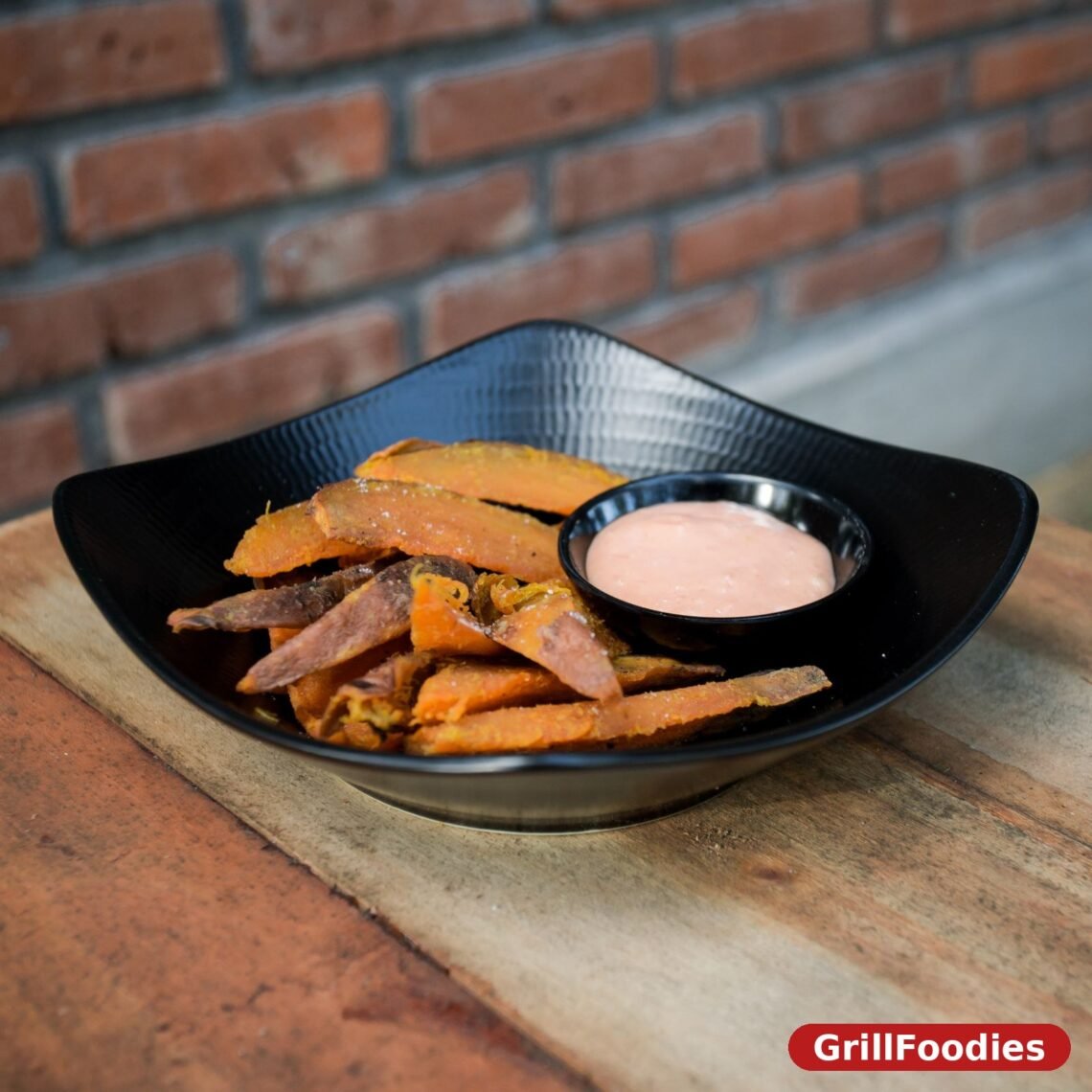
Grilled Sweet Potato Wedges with Chipotle Mayo
There is a particular smell that tells you summer is still hanging around even when the evenings start to cool down, and it is the smell of sweet potatoes hitting a hot grill. It is sweet and a little smoky at the same time, the kind of thing that makes people wander over from the other side of the yard to ask what you are cooking. These grilled sweet potato wedges with chipotle mayo have become the side dish I reach for whenever I want something that feels a little special but does not ask much of me. They are crispy at the edges, soft and almost creamy in the middle, and the sauce — cool, smoky, with just enough heat to keep things interesting — is the part everyone ends up talking about.
I first made a version of these on a night when the main course was nothing fancy, just some grilled chicken thighs and a bag of salad from the fridge. The wedges were supposed to be an afterthought, something to fill the plate. Instead they disappeared first, and the chicken sat there getting cold while everyone went back for more wedges and more sauce. That is usually how you know a side dish has earned a permanent spot. Since then I have made them for cookouts, for quiet weeknight dinners, and once for a neighbour who showed up with a plate of ribs and no side at all. They work everywhere because they are simple, they travel well, and they make the grill do most of the work.
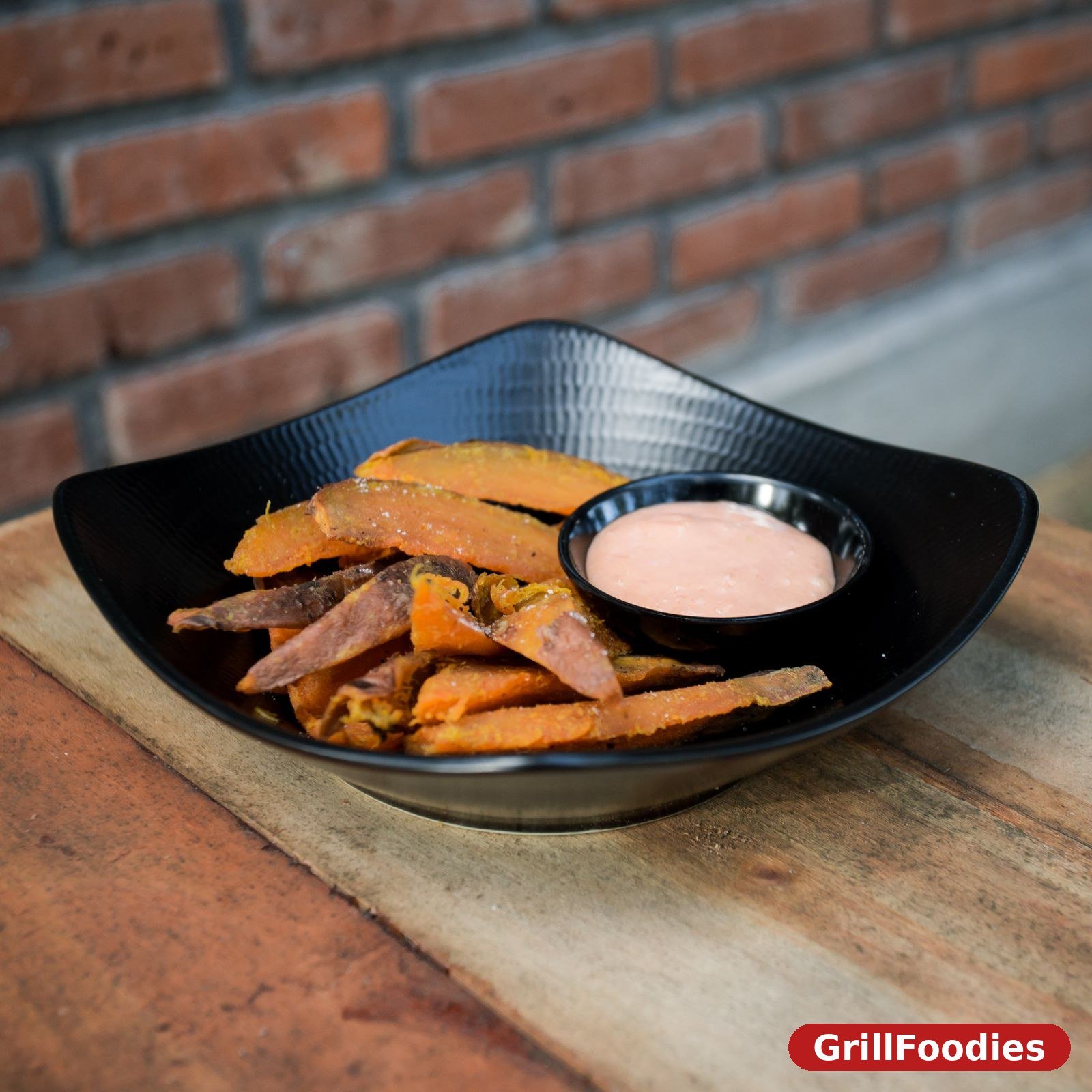
What I like most about this recipe is how forgiving it is. Sweet potatoes are not fussy. They do not dry out the way regular potatoes can, they caramelise beautifully, and they hold their shape on the grates if you cut them right. The chipotle mayo takes about two minutes and uses things you probably already have, and once you taste it you will start putting it on everything — burgers, sandwiches, roasted vegetables, even a fried egg if you are that kind of person. I am that kind of person.
Why Grilled Sweet Potato Wedges Work So Well
Sweet potatoes are almost built for the grill. Their natural sugars caramelise over direct heat, which gives you those dark, sticky edges that taste like they took hours when they actually took minutes. Inside, the flesh goes soft and sweet, a completely different texture from the outside, and that contrast is what makes a wedge worth eating. A regular potato can be wonderful grilled too, but a sweet potato brings its own sweetness to the party, so you do not need to do much to it.
The other reason this works is the shape. A wedge is thick enough to stay juicy inside and thin enough at the edges to crisp up. Cut them too thin and they fall apart or burn before the middle is done. Cut them too thick and the outside chars while the inside stays hard. There is a sweet spot — about an inch wide at the thickest part — and once you find it, the whole thing becomes easy. I will walk you through exactly how I cut them below, because it matters more than almost anything else in this recipe.
Then there is the sauce. Chipotle mayo is one of those things that sounds like a restaurant trick but is really just mayonnaise, a chipotle pepper or two in adobo, lime juice, and a pinch of salt. The smokiness of the chipotle plays off the sweetness of the potato in a way that makes both taste better. It is creamy where the wedges are crisp, cool where the wedges are hot, and it has a slow warmth that builds instead of hitting you all at once. If you have never worked with chipotles in adobo before, do not worry — they come in a small can, they keep for weeks in the fridge once opened, and a little goes a long way.
Choosing the Right Sweet Potatoes
Not all sweet potatoes are the same, and the ones you pick will change how this turns out. Look for sweet potatoes that feel heavy for their size, with smooth skin and no soft spots or cracks. The deep orange ones — the kind usually labelled garnet or jewel — are my first choice for grilling because they are sweet, they hold together well, and they get that gorgeous colour when they caramelise. The paler, cream-coloured ones are lovely too, a little less sweet and a little more starchy, but they work fine if that is what your shop has.
Size matters more than variety here. Medium sweet potatoes, roughly the length of your hand and about as thick as a tennis ball, are ideal. The really big ones tend to be woody in the middle, and the skinny ones are hard to cut into proper wedges. If all you can find are large ones, just cut them into more wedges and keep the pieces even — that matters far more than the variety on the label.
One question I get asked a lot is whether to peel them. I do not. The skin gets crisp and a little chewy on the grill, it holds the wedge together, and it has most of the fibre. Just scrub them well under cold water and dry them properly. Wet potatoes steam instead of searing, and that is the enemy of crisp edges. A clean tea towel does the job in a few seconds.
Ingredients
For the wedges
- 4 medium sweet potatoes, about 900 g in total, scrubbed and dried
- 3 tablespoons olive oil
- 1 teaspoon smoked paprika
- 1 teaspoon garlic powder
- 1 teaspoon ground cumin
- 1/2 teaspoon fine sea salt, plus more to taste
- 1/2 teaspoon black pepper, freshly ground if you have it
- 1 tablespoon cornflour (cornstarch), optional but helpful for extra crispness
- 1 lime, cut into wedges, to serve
- A small handful of fresh coriander or flat-leaf parsley, chopped, to serve
For the chipotle mayo
- 120 g mayonnaise, the full-fat kind if you can
- 1 to 2 chipotle peppers in adobo sauce, finely chopped, plus 1 teaspoon of the adobo sauce from the can
- 1 tablespoon fresh lime juice
- 1 small garlic clove, finely grated or crushed
- 1/4 teaspoon smoked paprika
- A pinch of salt
- 1 to 2 teaspoons water, only if it needs loosening
A note on the cornflour: it is not essential, and I skipped it for years without missing it. But if you like your wedges properly crisp, it is worth trying. A light dusting absorbs surface moisture and helps the outside go golden and crunchy. It does not change the flavour at all. If you are short on time or just do not have any in the cupboard, leave it out and you will still have very good wedges.
Equipment You Will Need
You do not need much, and that is part of the appeal. A grill — gas or charcoal, both work — a sharp knife, a large bowl, a baking tray or plate for carrying things out to the grill, and a pair of long tongs. That is really it. A grill basket or a piece of heavy-duty foil with holes poked in it can help if your grates are widely spaced, but I have never needed one with wedges cut properly. A small bowl and a spoon for the mayo, and a serving platter, round out the list.
If you are using charcoal, you want a medium-hot fire with the coals spread in a single layer. On a gas grill, medium-high heat is the target, somewhere around 200 to 220°C. Either way, give the grates a good scrub while the grill heats up and then brush them with a little oil on a folded paper towel held with tongs. Sweet potatoes are starchy, and starchy things love to stick to a dirty grate. Clean, oiled grates are the difference between wedges that lift off easily and wedges that tear apart.
How to Cut Sweet Potato Wedges
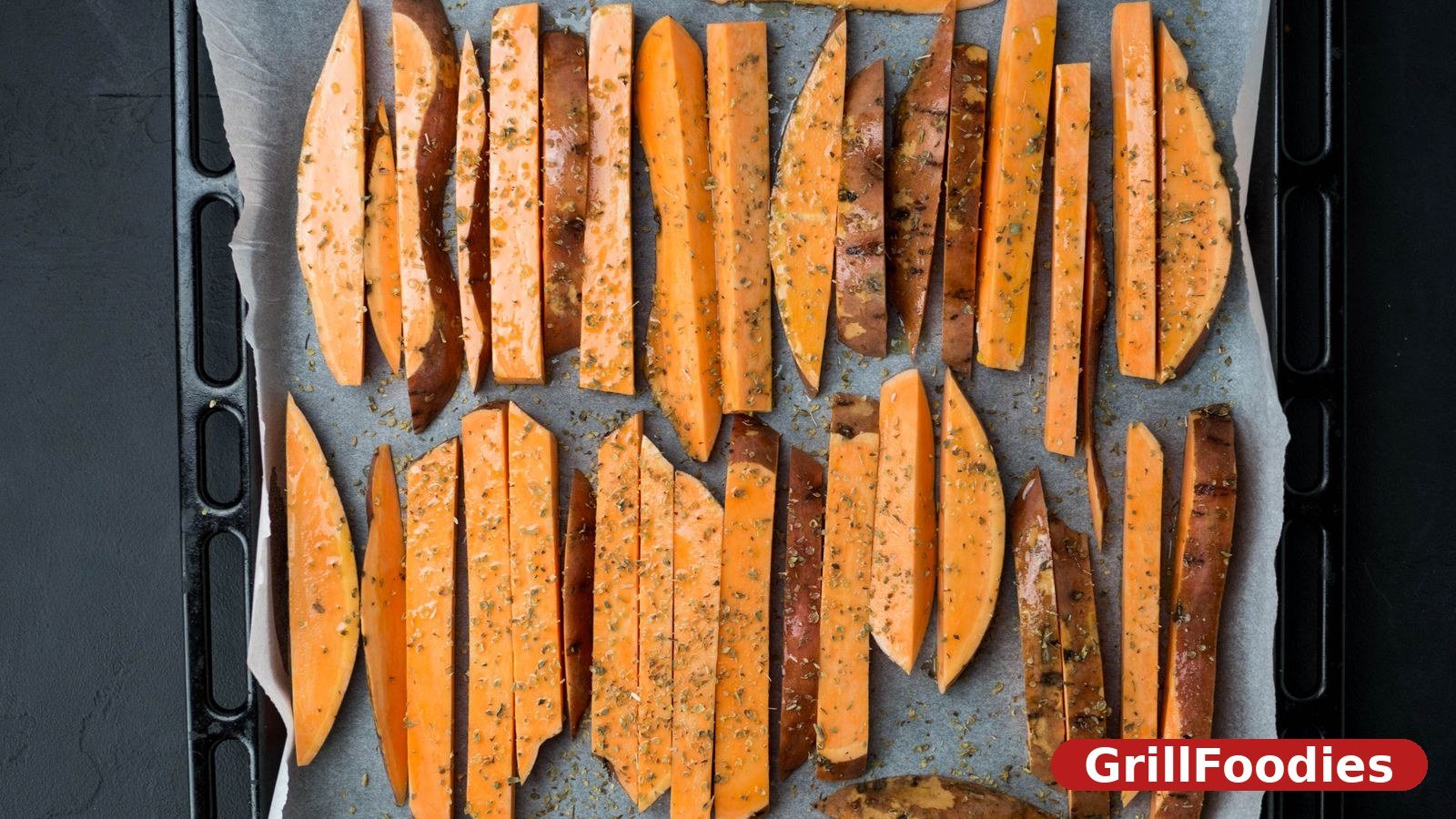
Cutting the wedges is the one part of this recipe worth slowing down for. Start by trimming a thin slice off each end so the potato sits flat. Then cut it in half lengthwise, straight down the middle. Put each half cut-side down on the board — this keeps it stable — and cut it into wedges about 2 to 3 cm wide at the thick end. A medium sweet potato usually gives you six to eight wedges. Try to keep them roughly the same size so they cook at the same rate. A couple of thinner ones will just get extra crispy, which nobody complains about, but a wedge twice as thick as the rest will still be hard in the middle when the others are done.
The other thing to watch is the pointed ends. Wedges taper, and the thin tips will char before the thick part is cooked. That is fine — a little char is flavour — but if the tips are going very dark very fast, just move those wedges to a cooler part of the grill for a minute. You are the cook, not the grill, and moving things around is part of the job.
How to Make It, Step by Step
Step 1: Make the chipotle mayo first
Start with the sauce, because it tastes better after sitting for a few minutes while the flavours settle. Put the mayonnaise in a small bowl, add the chopped chipotle peppers and a teaspoon of the adobo sauce, then the lime juice, garlic, smoked paprika, and salt. Stir it well and taste it. One chipotle gives you a gentle warmth that most people will enjoy. Two gives it a proper kick. If you are feeding people who are nervous about spice, start with one pepper and half the adobo, and let them add more at the table — put the extra chopped chipotle in a tiny bowl next to the sauce and let people help themselves.
If the mayo is thicker than you would like for drizzling, add a teaspoon of water and stir. You want it thick enough to cling to a wedge but loose enough to drizzle from a spoon. Cover it and set it aside, or pop it in the fridge if the grill is going to take a while. It keeps well for a few days, by the way, so make a double batch if you think you will use it again during the week. You will.
Step 2: Season the wedges
Put the cut wedges in your largest bowl and drizzle over the olive oil. Toss them with your hands until every piece is coated — hands are better than a spoon here, because you can feel whether the oil has reached all the surfaces. Then sprinkle over the smoked paprika, garlic powder, cumin, salt, and pepper, and toss again. If you are using the cornflour, sprinkle it over last and toss once more, so it coats the oiled surface evenly rather than clumping in the bowl.
Give the wedges five minutes to sit while the grill heats up. This is not a marinade — nothing is soaking in — but it lets the spices settle onto the surface and gives the cornflour a moment to absorb any moisture. If you have more time, you can season them up to an hour ahead and leave them at room temperature, covered. Do not refrigerate them once they are oiled, or the oil will thicken and the coating will go patchy.
Step 3: Grill the wedges
When the grill is hot and the grates are clean and oiled, lay the wedges out in a single layer with a little space between them. Do not crowd the grill. Crowded wedges steam each other and never crisp up. If they do not all fit, cook them in two batches — it is better to wait a few minutes than to serve a pile of soft, pale wedges.
Place each wedge with one cut side down, not skin-side down, for the first few minutes. The flat cut surface is where the caramelisation happens, and direct contact with the grate is what builds it. Leave them alone for four to five minutes. I know it is tempting to move them around, but every time you lift a wedge early you tear off the crust that is forming. Let the grill do its work.
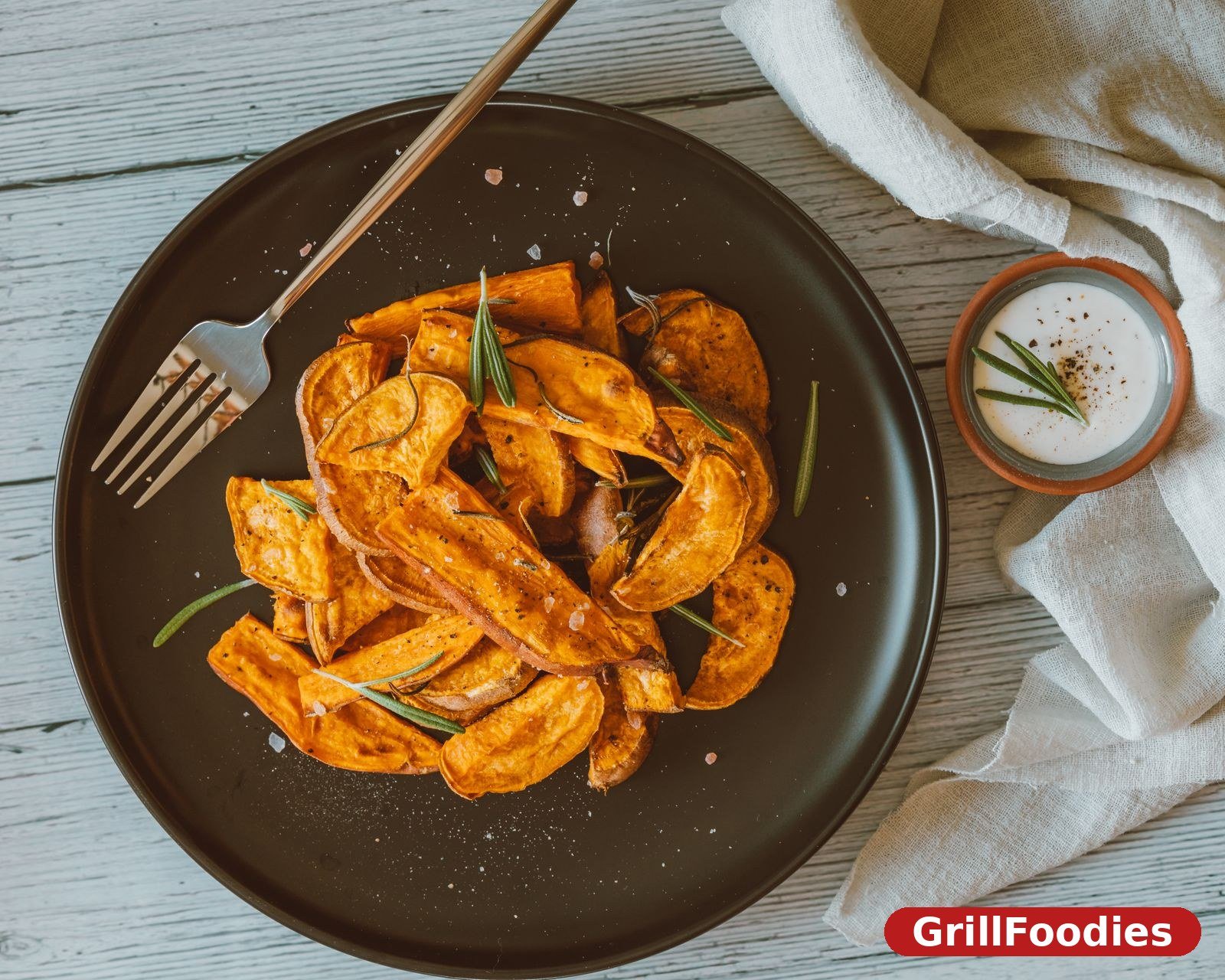
Step 4: Turn once, then again
After four or five minutes, the first side should have good grill marks and a golden-brown crust. Use your tongs to flip each wedge onto the other cut side. Cook for another four to five minutes. Then turn them onto their skin side for the last two to three minutes, which lets the skin crisp up and gives the thickest part of the wedge time to soften through without burning the flat sides.
The whole cook takes about twelve to fifteen minutes, depending on how thick your wedges are and how hot your grill runs. You will know they are done when a knife or a skewer slides into the thickest part with just a little resistance, like a baked potato that is almost there. The edges should look dark and caramelised in places, and the skin should feel crisp when you tap it with the tongs. If a few wedges are done before the others, move them to a cooler part of the grill or onto a plate tented with foil while the rest finish.
Step 5: Rest, season, and serve
Take the wedges off the grill and let them rest for two minutes. This is not just politeness — the inside is still cooking from residual heat, and the crust sets as it cools slightly. Sprinkle over a little extra flaky salt if you like, scatter the chopped coriander or parsley over the top, and serve them on a platter with the chipotle mayo in a small bowl alongside and the lime wedges tucked around the edges.
Serve them hot, but honestly, they are also very good at room temperature, which is why they work so well at cookouts where food sits out for a while. A squeeze of lime over the top just before eating brightens everything up and cuts through the richness of the mayo. Do not skip the lime.
What to Serve With Them
These wedges are a side dish, but they are the kind of side dish that sometimes becomes the main event, so think about what they are going with. They are a natural partner for anything smoky or grilled — grilled BBQ chicken breast with a smoky rub is an obvious one, and the chipotle mayo works as a sauce for the chicken too, so you do not need a second sauce on the table. They are also great with burgers, ribs, or a simple piece of grilled fish, where their sweetness balances out something rich or salty.
For a lighter meal, I have served them with a big chopped salad and some warm flatbread, and nobody missed the meat. They also sit happily next to other grilled vegetables — try them with grilled vegetable skewers with herb butter and you have a table full of colour and almost no washing up. And if you are cooking for a crowd, double the recipe and serve the wedges alongside smoky baked beans with bacon — the beans bring the richness, the wedges bring the brightness, and together they cover everyone at the table.
One more idea, because it is too good not to mention: leftover wedges, chopped up and thrown into a breakfast hash with an egg on top, are genuinely wonderful. The chipotle mayo works as the sauce there too. If you ever have leftovers, and you probably will not, that is what to do with them.
Variations Worth Trying
Once you have the basic method down, this recipe is easy to play with. The wedges themselves are a blank canvas. Swap the smoked paprika for chipotle powder if you want more heat in the wedges themselves, or add a teaspoon of brown sugar to the spice mix for extra caramelisation — the sugar helps the edges go dark and sticky, though it also means you need to watch them more closely, since sugar burns fast.
For the sauce, the easiest change is the base. Half mayonnaise and half Greek yoghurt makes a lighter version that is still creamy, with a little tang that works well with the lime. A spoonful of sour cream stirred in gives it a different richness. If you want it dairy-free, use a plant-based mayonnaise — it works exactly the same way. And if you cannot find chipotles in adobo, a teaspoon of chipotle powder plus a little extra lime juice gets you most of the way there, though you will miss the deep, almost raisiny flavour of the adobo sauce itself.
Herbs are worth experimenting with too. I usually use coriander, but flat-leaf parsley is safer if your crowd is divided on coriander, and a little chopped spring onion scattered over the top adds a nice sharpness. A crumble of feta or cotija over the finished wedges is also very good — salty, creamy, and it melts just slightly from the heat of the wedges.
Storage, Leftovers, and Reheating
Store any leftover wedges in an airtight container in the fridge for up to three days. Keep the chipotle mayo separate, in its own small container — it will keep for up to five days and only gets better as the flavours develop. Do not store the wedges with the sauce on them, or they will go soft.
To reheat, the oven or air fryer is your friend. A hot oven, around 200°C, for eight to ten minutes will bring back most of the crispness. The air fryer is even better — three or four minutes at 190°C and they come out almost as good as fresh. The microwave will heat them through, but it will not crisp them, so only use it if you are in a real hurry. And if you are reheating a big batch, spread them out in a single layer on a tray. Piling them up undoes all the work the grill did.
Freezing is not something I recommend for these. Sweet potatoes go a bit watery when thawed, and the texture never quite comes back. They are best made fresh, and since the whole thing takes less than half an hour, there is not much reason to freeze them anyway.
A Few Things I Learned the Hard Way
The first time I made these, I cut the wedges too thin and crowded the grill, and what came off it was more like sweet potato crisps that had seen better days. They tasted fine, but they were not wedges. The lesson was simple: give each piece space, and give the thick end room to cook. If your grill is small, cook in batches. It is an extra ten minutes, and it is worth it.
The second lesson was about heat. A grill that is too hot will char the outside before the inside has a chance to soften, and you end up with wedges that look done and taste raw. If your wedges are blackening too fast, move them to a cooler part of the grill or turn the heat down. You can always finish them on indirect heat with the lid closed for a few minutes — that is basically turning your grill into an oven, and it works perfectly.
The third lesson is about the sauce, and it is a small one: taste it before you serve it. Chipotles vary from can to can, and some are much hotter than others. What was mild last time might have a real kick this time. Taste, adjust the lime and salt, and if it is too hot, stir in another spoonful of mayonnaise. That is the fix, every time.
Why This Belongs in Your Regular Rotation
There are side dishes you make once because a recipe told you to, and there are side dishes that become part of how you cook. This one is the second kind. It takes thirty minutes from start to finish, most of which is the grill doing the work. It uses ingredients you can find in any supermarket. It works with almost any main course, it pleases people who like things spicy and people who do not, and it looks like you tried much harder than you did.
It is also one of those recipes that teaches you something about grilling in general. Cutting evenly, leaving things alone on the grate, managing heat instead of fighting it — once you have those habits, everything else you grill gets better. Sweet potatoes are a forgiving teacher, and they reward you for paying attention.
If you are looking for more grilled sides to round out your meals, crispy grilled potatoes without oil use a similar technique with a different result, and grilled zucchini with parmesan is another quick side that comes together in minutes on the same grill. Both are worth adding to your list.
Frequently Asked Questions
Do I need to boil or parboil the sweet potatoes first?
No, and I would not recommend it. Parboiling makes the wedges softer, but it also makes them more likely to fall apart on the grill and less likely to crisp up. Raw wedges cooked directly over medium-high heat come out with the right contrast — crisp outside, tender inside. Just make sure they are not cut too thick, and give them the full twelve to fifteen minutes they need.
Can I make these in the oven instead of on the grill?
Yes, absolutely. Heat your oven to 220°C, spread the seasoned wedges on a baking tray lined with parchment, and roast for 25 to 30 minutes, turning once halfway through. You will not get the same smoky flavour or the grill marks, but you will get crispy, caramelised wedges that are very good. If you have a grill pan, you can use that on the hob to get some char marks before finishing them in the oven.
How spicy is the chipotle mayo?
With one chipotle pepper it is mild to medium — most people describe it as warm rather than hot. With two, it has a proper kick that builds as you eat. The mayonnaise and lime take the edge off, so it is never as hot as eating a chipotle on its own. If you are unsure, start with one pepper, taste it, and add more. You can always add heat, but you cannot take it away except by adding more mayonnaise.
Can I make the chipotle mayo ahead of time?
Yes, and it actually tastes better after a few hours in the fridge, once the garlic and chipotle have had time to blend into the mayonnaise. Make it up to three days ahead and keep it in a sealed container. Give it a stir before serving, and check the seasoning again — cold dulls flavour a little, so it might need another squeeze of lime.
What if I cannot find chipotles in adobo?
Look in the international or Mexican aisle of your supermarket — the small cans are usually there. If you really cannot find them, use a teaspoon of chipotle powder or smoked paprika plus a pinch of cayenne, and add an extra teaspoon of lime juice. It will not taste exactly the same, but it will still be smoky and good. You can also order chipotles in adobo online, and one can lasts for weeks in the fridge once opened.
Why did my wedges stick to the grill?
Usually one of two things: the grates were not clean, or the wedges were moved too early. Sweet potatoes are starchy, and starch bonds to a dirty grate. Scrub the grates well while the grill is heating, oil them lightly, and then leave the wedges alone for a full four to five minutes before you try to flip them. If they are still stuck when you try, give them another minute — they will release on their own once the crust has formed.
Are sweet potatoes healthy?
Sweet potatoes are a genuinely nutritious food — they are rich in vitamin A, a good source of fibre and potassium, and they have a lower glycaemic index than regular potatoes. Grilling them with a little olive oil is one of the healthier ways to cook them. The chipotle mayo is the indulgent part, and you can lighten it by swapping half the mayonnaise for Greek yoghurt if you prefer. For more detail on what is actually in a sweet potato, the Healthline guide to sweet potatoes breaks down the nutrition clearly, and the USDA FoodData Central database has the full nutrient profile if you want the numbers.
Can I use regular potatoes instead?
You can, and the method works the same way, but the result is different. Regular potatoes are less sweet, so you lose the caramelised sweetness that makes this recipe special, and they tend to dry out more on the grill. If you do use them, choose a waxy variety and keep the wedges a little thinner so they cook through. The chipotle mayo works just as well with them, so if sweet potatoes are not your thing, give it a try.



One Comment
Pingback: