
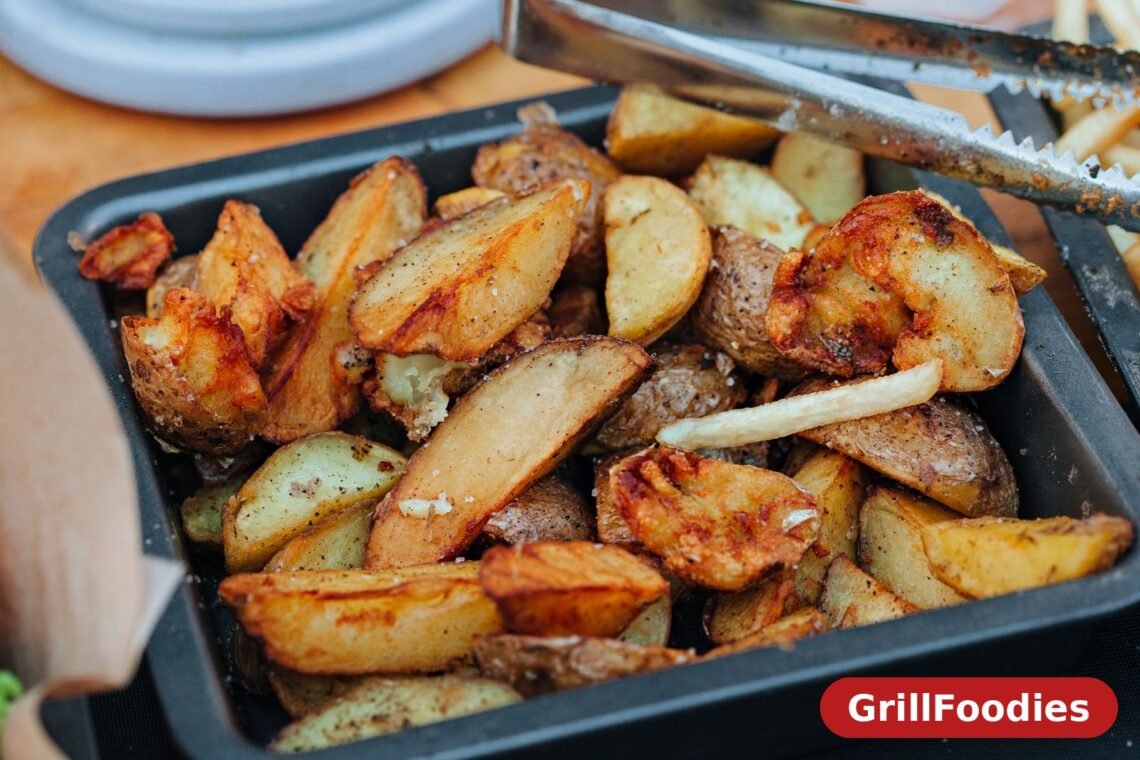
Air Fryer Smoky Paprika Potato Wedges
There is a particular sound I wait for when I make potato wedges in the air fryer. Not the beep at the end, not the fan winding down — the little scrape of the spatula against the basket when I shake them halfway through, and the wedges, which went in soft and pale, come back golden and stiff at the edges. That sound means dinner is about twelve minutes from being saved.
I did not grow up making wedges at home. Wedges were the thing you ordered with a burger, the thing that arrived in a red cardboard sleeve and was gone before you got to the bottom. The first time I tried them in my own kitchen they came out limp, which is a polite way of saying they were steamed potato slices with paprika on them. It took me a few rounds — too much oil, too little oil, wedges cut too thick, the basket so full nothing could breathe — before I figured out the handful of small things that make the difference. This recipe is the version I kept. It is the one my family asks for by name now, usually on nights when the main dish is already decided and I just need a side that behaves itself.
Smoky paprika is doing most of the work here. Not the sweet kind, not the hot kind — the smoked one, the deep red powder that smells faintly like a campfire even before it hits the heat. It gives the wedges their color and most of their personality, and it pairs so well with potatoes that I honestly wonder why I ever bothered with plain salt and pepper. A little garlic powder, a little onion powder, and you are most of the way there.

Why These Wedges Work So Well in the Air Fryer
An oven can make good wedges. I have done it plenty of times, and on a big sheet pan with enough space, they turn out fine. But the air fryer has two advantages that are hard to beat on a weeknight. First, it heats up in about three minutes instead of fifteen, which matters when you get home late and everyone is already circling the kitchen. Second, the hot air moves fast and constantly around the food, so the outside of each wedge dries out and crisps while the inside stays soft. An oven does this too, eventually. The air fryer just does it faster and more reliably.
The other thing I like about the air fryer is how little oil it needs. Two tablespoons for a kilo and a half of potatoes sounds like nothing, and the first time I measured it out I was convinced it would not be enough. It is. The oil is there to help the seasoning stick and to carry heat across the surface of the potato, not to fry anything. If you drown the wedges, the seasoning slides off and pools in the basket, and you end up with greasy wedges and a basket that takes forever to clean. Ask me how I know.
There is one catch, and it is the same catch with almost everything in an air fryer: space. Wedges need room. If they are piled on top of each other, the ones in the middle steam instead of crisping, and no amount of shaking fixes that. I cook mine in two batches when I am feeding four people, and I would rather do two quick batches than one crowded one. It takes the same amount of time in the end, and the results are not even close.
Picking the Right Potatoes
Russets are my first choice, and it is not really a contest. They are starchy, which means the inside goes fluffy and almost mashed-potato soft while the outside crisps. That contrast is the whole point of a wedge. Waxy potatoes like red potatoes or new potatoes will work — they hold their shape nicely and they taste good — but they stay firmer inside, more like a roasted potato than a wedge. If russets are what you have, use them. If all you have is something else, the recipe still works, just expect a slightly different bite.
Size matters more than variety, though. Try to pick potatoes that are roughly the same size, because wedges cut from a giant potato and wedges cut from a small one will not cook at the same speed, and you will end up with some burnt and some pale. I usually grab medium russets, about the size of my fist. Four of those, around 700 grams total, feeds four people as a side. Six feeds a crowd, or two teenagers, which amounts to the same thing.
And keep the skin on. Please keep the skin on. The skin is where a lot of the crispness lives, and it holds the wedge together. It also means less prep, which is a benefit I never turn down. Just scrub the potatoes well under cold water and pick off any eyes or green spots. A quick scrub with a brush or even a clean dishcloth gets them clean enough.
The Smoky Paprika Seasoning
Let me talk about the paprika for a minute, because it is the whole flavor of this recipe and there is a real difference between the kinds. Sweet paprika is mild and mostly about color. Hot paprika brings heat. Smoked paprika — sometimes labeled pimentón — is made from peppers that were dried over oak smoke, and it tastes like it. It is warm and earthy and a little bit like bacon, without any bacon involved. If your jar just says “paprika” with no other word on it, it is probably sweet paprika, and the wedges will still be good, but they will not have that smoky depth. If you can find the smoked kind, buy it. It lasts for months in the cupboard and you will find yourself reaching for it constantly.
The rest of the seasoning is simple on purpose. Garlic powder and onion powder for savory depth, a little salt, black pepper, and — this is my small addition — a pinch of sugar. Not enough to taste sweet. Just enough to help the edges caramelize a little faster in the hot air. I learned that trick from an old roasted potato recipe and I have never left it out since. If you want heat, a pinch of cayenne goes in easily, but I leave it out when the kids are eating with us and put the hot sauce on the table instead.
Mix the seasoning with the oil first, then toss the wedges in it. I used to sprinkle everything over the potatoes in a bowl and hope for even coverage. It never was even. Some wedges came out bare, some came out caked. Stirring the spices into the oil and then tossing makes a paste that coats every wedge the same way. It takes thirty seconds and it is worth it.
How to Cut Potato Wedges That Actually Get Crispy
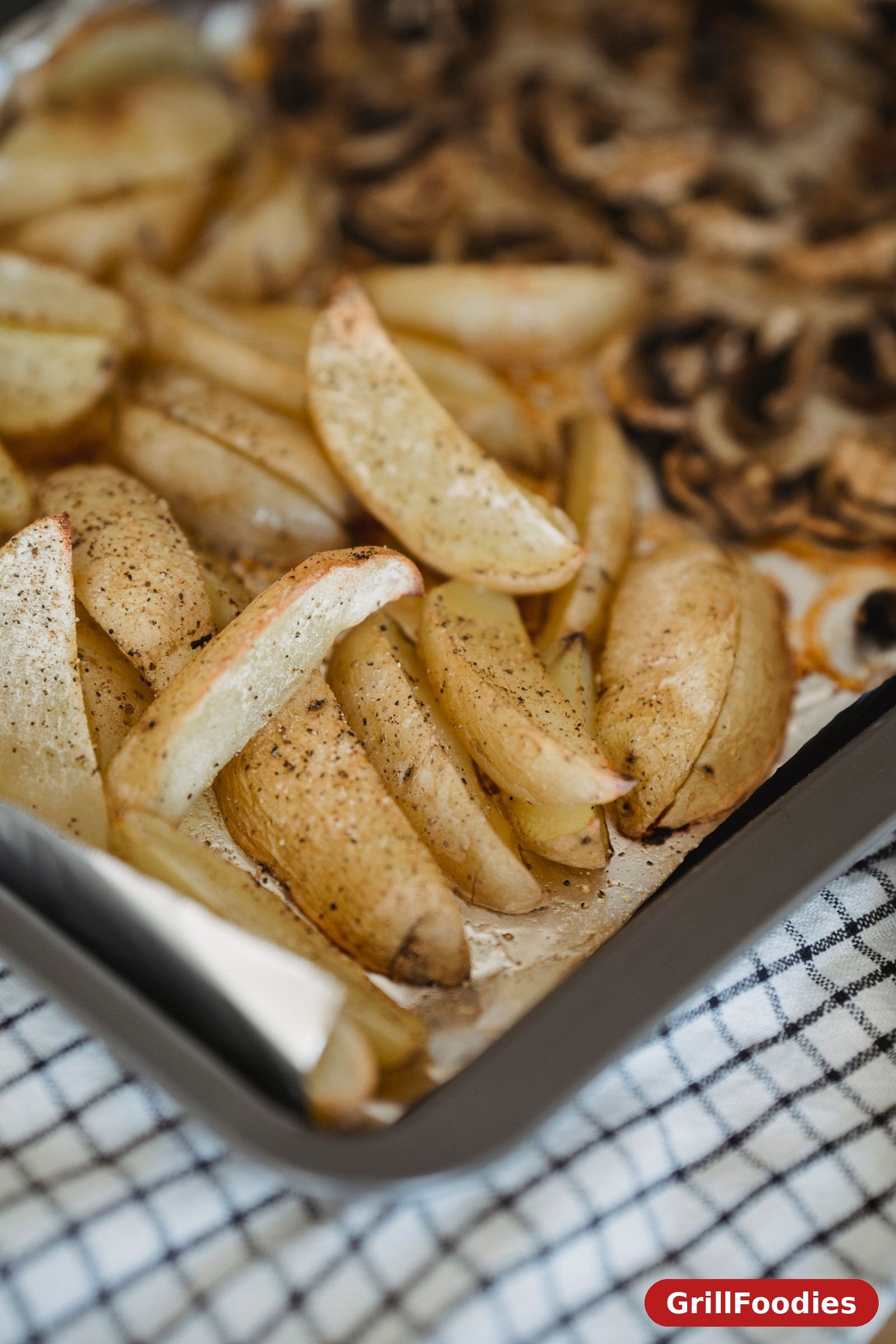
Cutting is where most wedge recipes go wrong, and nobody talks about it enough. Thick wedges look generous and rustic, but in the air fryer they stay soft in the middle and never quite crisp at the edges. Thin wedges crisp beautifully and then burn before the inside is cooked. The sweet spot is a wedge about 2 centimeters thick at its widest point — roughly the width of two fingers.
Here is how I do it. Cut each potato in half lengthwise, then lay each half cut-side down and cut it into three or four wedges, depending on the size of the potato. Try to keep them even. They do not have to be perfect — mine never are — but if one wedge is twice as thick as the others, it will still be pale when the rest are done. I cut them on a damp tea towel under the board to stop it sliding around, which is a small thing that makes the whole job calmer.
One more detail: cut them so each wedge has a flat side. A wedge with a flat side sits flat in the basket, and a flat side touching the hot basket is a side that crisps. Wedges that roll around on their round side never get that same browning. When you place them in the basket, put the skin side down first and give each one a little space. It feels fussy the first time. By the third time it is automatic.
Air Fryer Smoky Paprika Potato Wedges
Prep time: 10 minutes | Cook time: 20 minutes | Total time: 30 minutes | Servings: 4 | Course: Side dish
Ingredients
- 4 medium russet potatoes (about 700 g), scrubbed, skin on
- 2 tablespoons olive oil
- 1 1/2 teaspoons smoked paprika
- 1 teaspoon garlic powder
- 1/2 teaspoon onion powder
- 1/2 teaspoon fine sea salt, plus more to taste
- 1/2 teaspoon black pepper
- 1/4 teaspoon sugar
- 1 tablespoon chopped fresh parsley, to serve (optional)
- Flaky sea salt, to finish (optional)
Instructions
- Cut each potato in half lengthwise, then cut each half into 3 or 4 even wedges, about 2 cm thick at the widest point. Place the wedges in a large bowl.
- Soak the wedges in cold water for 20 minutes if you have the time — this rinses off surface starch and helps them crisp. Drain well and pat them very dry with a clean tea towel. Dry potatoes crisp; wet potatoes steam.
- Preheat the air fryer to 200°C (400°F) for 3 minutes while you season the potatoes.
- In a small bowl, stir together the olive oil, smoked paprika, garlic powder, onion powder, salt, black pepper, and sugar. Pour it over the wedges and toss with your hands until every wedge is evenly coated.
- Arrange the wedges in the air fryer basket in a single layer, skin-side down, leaving a little space between each one. Cook in batches if needed — do not stack them.
- Air fry for 18 to 20 minutes, shaking the basket or turning the wedges at the 10-minute mark. They are done when the edges are deep golden and crisp and a knife slides easily into the thickest part.
- Tip the wedges onto a plate, sprinkle with flaky sea salt and parsley if you like, and serve right away while the edges are still crackling.
The Soak — Worth It or Not?
Every wedge recipe seems to have an opinion about soaking, so here is mine, honestly: it helps, but it is not a deal-breaker. Soaking cut potatoes in cold water for twenty minutes pulls starch off the surface, and less surface starch means a drier, crisper outside. I can tell the difference when I do it. I can also tell you that on a Tuesday night when dinner is already late, I skip it, and the wedges are still good. They are maybe ninety percent as good instead of a hundred.
If you do soak, the drying matters more than the soaking itself. Wet wedges are the real enemy. Pat them dry properly — I mean really dry, with a tea towel, not a quick shake over the sink. Any water left on the surface has to boil off before the potato can start crisping, and by then you have lost time and texture. The same goes for seasoning: oil and spices will not stick to a wet wedge.
One thing I do not recommend is soaking them for hours. Past about thirty minutes you are not gaining anything, and the wedges start to look a little waterlogged. Twenty minutes while you get the rest of dinner going is the sweet spot. If you want more background on why soaking helps potatoes crisp, Taste of Home’s air fryer potato wedges are a good place to compare notes — their version uses a similar soak-and-dry approach.
What to Serve With Them
Wedges are a side dish, but in our house they regularly steal the show. They go with almost anything off the grill, which is why they earn their place here. Next to a burger they are obvious. Next to grilled chicken they are the thing everyone reaches for first. I have served them with a simple green salad and a fried egg for a lazy lunch, and nobody complained.
If you want a dip, keep it simple. A garlicky mayo, a sour cream and chive dip, or even just ketchup with a little smoked paprika stirred in — which is my favorite five-second move — all work. The wedges are smoky enough on their own that the dip should be cool and creamy rather than another layer of spice. If you are already a fan of smoky air fryer sides, my air fryer smoky eggplant fries with garlic dip use the same idea and the same seasoning family, and they disappear just as fast.
For a full grill night, these wedges sit happily next to something with a bit more substance. The air fryer BBQ pulled pork sliders are a natural match — smoky on smoky, and the sliders give you something soft and saucy against the crisp potatoes. Or if you would rather keep the potatoes as part of a lighter spread, a grilled potato salad with mustard vinaigrette alongside gives you two very different potato dishes on the same table, which sounds like too much potato until you watch both bowls empty.
And if you are trying to decide between wedges and another potato side for a barbecue, it is worth knowing that crispy grilled potatoes without oil are the leaner cousin of this recipe — same crispy goal, no oil at all, and a useful option when you want the crunch without the extra fat.
Storing and Reheating Leftovers
Wedges are best straight out of the basket. That is the honest truth, and any recipe that tells you otherwise is being polite. But leftovers happen — usually because I made too many, which is a mistake I make on purpose because reheated wedges are still better than no wedges.
Let them cool completely before you put them away, and store them in a container with the lid slightly ajar or a paper towel tucked inside to catch moisture. In the fridge they keep for three days. To reheat, skip the microwave — it turns them soft and a little sad. Put them back in the air fryer at 190°C (375°F) for four or five minutes, shaking once, and they come back surprisingly close to fresh. A hot oven works too, ten minutes at 200°C on a tray, though the air fryer is faster and does a better job of bringing the edges back.
I do not recommend freezing cooked wedges. They go mealy when they thaw, and life is too short for mealy potatoes. If you want to prep ahead, cut the raw wedges, keep them in cold water in the fridge for up to a day, and then dry, season, and cook them fresh. That is the prep-ahead move that actually works.
Variations Worth Trying
Once you have the base recipe down, it is easy to play with. A teaspoon of dried rosemary or thyme in the seasoning mix gives the wedges a herby, almost roast-dinner feel. Swap the smoked paprika for sweet paprika and add a pinch of cayenne and you get something closer to a spicy chip-shop wedge. For a cheesy version, toss the hot wedges with a handful of finely grated parmesan the moment they come out of the basket — the heat melts it onto the edges and it is genuinely hard to stop eating them.
Sweet potatoes work too, though they cook a little faster and burn more easily because of their natural sugars, so check them at fifteen minutes and pull them as soon as the edges darken. I have also tried this seasoning on parsnips and carrots cut the same way, and it works, though they need a minute or two less. The point is that the method — even cut, dry surface, hot air, space in the basket — matters more than the vegetable.
If you are cooking for someone who avoids nightshades or just does not like paprika, the same method works with a simple garlic and herb mix: garlic powder, dried oregano, salt, and pepper. It will not taste the same — nothing replaces that smoky depth — but it will still be a very good wedge. For another take on the technique, BBC Good Food’s air fryer potato wedges use a slightly different seasoning and timing, and comparing the two is a good way to find your own preferred version.
Frequently Asked Questions
Do I have to soak the potato wedges first?
No, you do not have to, but it does help. Soaking in cold water for about 20 minutes removes surface starch, which lets the outside crisp up better. If you skip it, the wedges will still be good — just make sure you pat them very dry before seasoning, because surface moisture is what really stops them crisping.
Why are my air fryer potato wedges soggy?
Almost always one of three things: the wedges were still wet when they went in, the basket was overcrowded, or they were cut too thick. Dry them properly, cook in a single layer with space between each wedge, and keep them around 2 cm thick. If they still come out soft, give them an extra 3 to 4 minutes and check that your air fryer is actually reaching 200°C — some run cooler than the dial says.
Can I use sweet potatoes instead of russets?
Yes, and they are delicious with smoked paprika. Sweet potatoes cook a little faster and their sugars brown quickly, so start checking at 15 minutes and pull them out as soon as the edges look deep golden. Cut them slightly thicker than russet wedges, about 2.5 cm, because they soften faster.
How do I keep the wedges crispy after cooking?
Serve them straight away, and do not pile them in a bowl with a lid on — trapped steam is the enemy of crispness. If you need to hold them for a few minutes, spread them on a wire rack or a tray in a single layer, uncovered, in a warm oven. Never stack hot wedges on top of each other.
Can I make these ahead of time?
You can prep them ahead, but cook them fresh. Cut the wedges and keep them in cold water in the fridge for up to 24 hours, then drain, dry thoroughly, season, and air fry when you are ready. Cooked wedges reheat well in the air fryer at 190°C for 4 to 5 minutes, but they are never quite as crisp as the first time around.
What temperature should I air fry potato wedges at?
200°C (400°F) is the sweet spot for this recipe. It is hot enough to crisp the outside quickly while the inside cooks through in about 18 to 20 minutes. Lower temperatures make the wedges cook more slowly and they tend to come out softer. If your air fryer runs hot, drop to 190°C and add a couple of minutes.
That is the whole recipe — nothing fancy, nothing you need special equipment for beyond the air fryer itself. Make them once, adjust the salt and the paprika to your taste, and they will become one of those sides you can cook without looking at the recipe at all. Mine already is. The last time I made them I did not measure a single thing, just shook the paprika over the bowl until it looked right, and they were the best batch yet. That is usually how it goes with the recipes that stick around.


You May Also Like

Air Fryer Smoky BBQ Chicken Legs

Air Fryer BBQ Pulled Pork Sliders