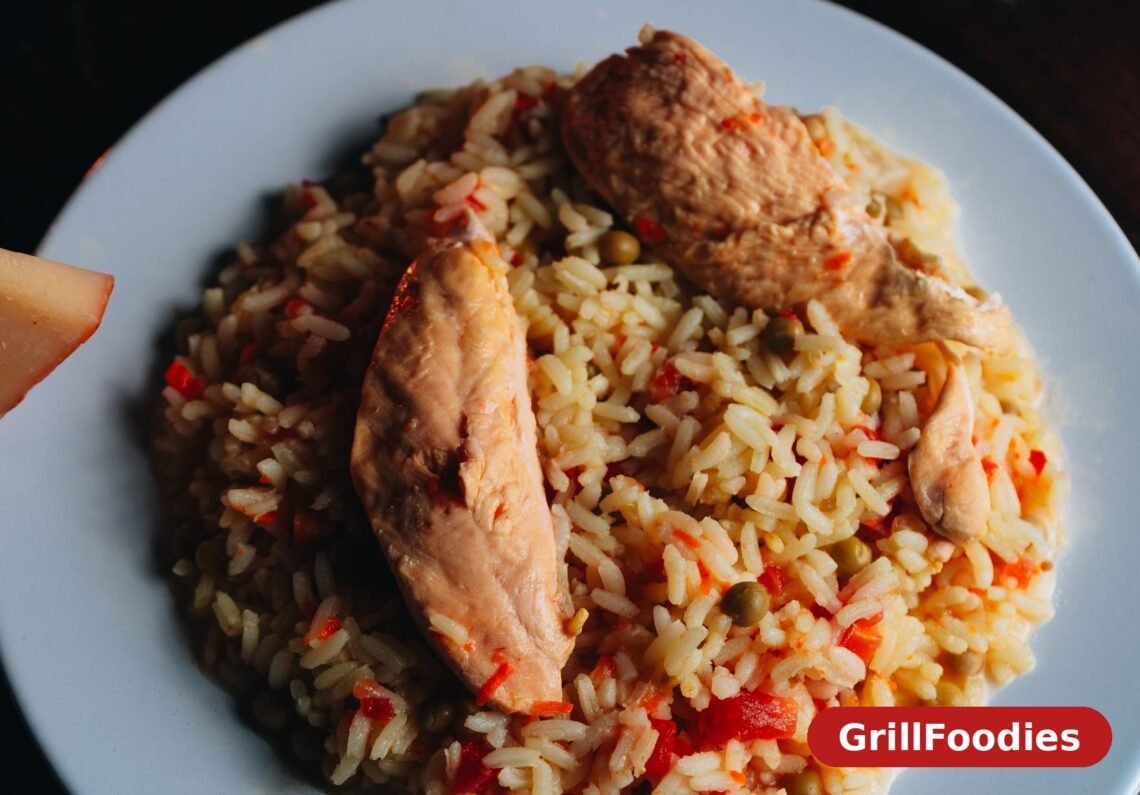
One-Pan Chipotle Chicken and Rice
There is a smell that tells me dinner is going to be fine. It is the smell of chipotle peppers hitting a hot pan — smoky first, then a little sweet, then the heat creeping in behind it. The first time I made this dish, the whole kitchen smelled like a barbecue joint within about two minutes of the peppers going in, and my husband came in from the other room to ask what I was cooking. That has not stopped happening. Every time I make this chicken and rice, someone wanders into the kitchen asking the same question.
I am not a one-pan evangelist by nature. I own too many pans, and I like using them. But there are weeknights when the thought of washing a skillet, a saucepan, and a cutting board full of raw chicken juice makes me want to order takeout, and this is the recipe for those nights. One pan, one cutting board, one spoon. The chicken sears in the same pan the rice cooks in, the sauce builds itself from the browned bits left behind, and by the time the rice is done, the chicken is cooked through and the whole thing tastes like it took far more effort than it did.
The chipotle part is what makes it worth writing down. Chipotle peppers in adobo are one of those ingredients that do an unreasonable amount of work for how little they cost. A single can, less than a dollar most weeks, gives you smoke, heat, and a kind of deep savory richness that plain chili powder never quite manages. You only need two or three peppers from the can for a whole pan of chicken and rice, which means one can stretches across three or four dinners if you freeze the rest in an ice cube tray — a trick I wish someone had told me years ago, back when I was throwing away half-used cans every other week.

Why This One-Pan Dinner Works
The honest reason this recipe works is that rice is very forgiving when it cooks in flavored liquid, and chicken is very forgiving when it finishes cooking in a covered pan. Put those two forgiving things together and you get a dinner that is hard to mess up. The rice absorbs the chicken stock, the tomato paste, and the chipotle sauce as it cooks, so every grain ends up tasting like the sauce instead of tasting like plain rice with sauce on top. The chicken, meanwhile, sits on top of the rice for the last stretch, steaming gently in the lid-on heat, which keeps it from drying out the way chicken sometimes does in a dry skillet.
There is also the matter of the fond — the browned bits stuck to the bottom of the pan after you sear the chicken. A lot of people see those bits and think the pan is dirty. They are not dirt. They are flavor, concentrated. When you pour the stock in and scrape the bottom with a wooden spoon, all of that browned chicken flavor dissolves straight into the cooking liquid, and from there into the rice. If you skip the sear and just dump raw chicken into the pan with the rice, you lose all of that. The dish still works, but it tastes flat, like something is missing that you cannot quite name. That missing thing is the fond.
One more thing I like about this dinner: it scales. Two chicken thighs and a cup of rice feeds two people. Double everything and it feeds a family of four, or a family of two with excellent leftovers. I have made it in a small skillet for just myself on a night when everyone else was out, and I have made it in the big twelve-inch pan when friends came over unannounced and I needed something that looked intentional. The timing barely changes. The only rule is that the pan has to be wide enough for the rice to sit in a fairly even layer — if it is piled up deep in a small pot, the bottom overcooks while the top stays crunchy.
Chipotle Peppers in Adobo — the Whole Flavor of the Dish
Let me explain what is actually in that little can, because the first time I bought one I had no idea what to do with it and it sat in my cupboard for months. Chipotle peppers are jalapeños that have been smoked and dried, and adobo is the tangy, slightly sweet tomato-based sauce they are packed in. Together they taste smoky, a little fruity, and properly hot without being punishing. Two peppers give you a warm, noticeable heat. Three peppers and you will feel it in the back of your throat. Four is for people who put hot sauce on everything and mean it.
The adobo sauce itself is just as useful as the peppers. It is thick and dark red and it stirs into the rice beautifully, tinting everything a warm brick color and carrying the smoke through the whole pan. I use two tablespoons of the sauce along with the chopped peppers, and that is where most of the flavor lives. If you are nervous about the heat, use the sauce and just one pepper, minced fine. You will still get the smoke. The heat is adjustable; the smoke is not, and the smoke is the point.
One practical note: chipotle peppers in adobo are not the same as chipotle powder, and they are not the same as canned green chilies. The powder is fine in a pinch — about a teaspoon replaces one pepper — but it does not have the saucy richness of the real thing. If your grocery store keeps them in the Mexican food aisle, that is where to look. I buy two cans at a time now, use what I need, and freeze the rest in tablespoon-sized blobs on a tray. Once they are frozen solid I toss them in a bag, and they keep for months. It takes five minutes and it means I never have to throw a half-used can away again. For another good take on the flavor, Taste of Home’s chipotle chicken uses the same peppers in a simpler marinade, and comparing the two is a useful way to find how much heat your household actually likes.
Choosing the Chicken
I make this with boneless, skinless chicken thighs, and I am fairly stubborn about it. Thighs are more forgiving than breasts in every way that matters here. They stay juicy through a sear and a twenty-minute simmer, they do not dry out if you overshoot the timing by a few minutes, and they have enough fat to help flavor the rice. Breasts work — I have made it with them when thighs were sold out — but they need more attention. Pull them out a few minutes earlier, or they go from perfect to chalky while you are waiting for the rice to finish.
If you do use breasts, cut them in half horizontally so they are thinner, and take them out of the pan when they hit about 160°F in the thickest part. They will coast up to 165°F while they rest on a plate under foil, and the rice keeps cooking without them. With thighs, you do not need to be that careful. Just nestle them back into the rice and let them finish there.
Size matters too. Try to pick thighs that are roughly the same size, or cut the bigger ones in half so everything cooks at the same speed. And pat the chicken dry before it goes in the pan. I know it sounds fussy, but wet chicken steams instead of searing, and steamed chicken never gets that golden crust that makes the whole dish taste better. A quick press with a paper towel on both sides is all it takes. Season it generously with salt, pepper, and a little cumin before it hits the oil — the seasoning on the surface is what browns, and browned seasoning is what flavors the pan.
The Rice Matters More Than You Think
Long-grain white rice is the right choice here. Basmati is my favorite — it stays separate and fluffy, it does not clump, and it has a gentle nutty flavor that gets along well with the chipotle. Regular long-grain white rice works just as well. What does not work, in my experience, is short-grain rice or arborio. They release too much starch, and you end up with something closer to risotto than to a pan of chicken and rice. It still tastes good, to be fair, but it is a different dish, and it sticks to the pan in a way that makes cleanup miserable.
Rinse the rice. I mean it. Put it in a bowl, cover it with cold water, swish it around with your hand, and pour the cloudy water off. Do it twice, until the water runs mostly clear. That cloudy water is surface starch, and surface starch is what makes rice gummy. Two quick rinses take about a minute and they are the difference between rice where you can see every grain and rice that comes out in a single sticky clump. I learned this the hard way, in front of guests, and I have rinsed my rice every single time since.
The ratio is simple: one cup of rice to one and three-quarter cups of liquid, and the liquid is chicken stock plus the juice from the diced tomatoes. That is slightly less liquid than the package usually calls for, and that is deliberate. The tomatoes give off juice as they cook, and the lid stays on the whole time, so almost nothing evaporates. If you use the full two cups, the rice comes out soft and wet. A little less liquid, and it comes out fluffy with distinct grains that have actually absorbed the sauce instead of swimming in it.

One-Pan Chipotle Chicken and Rice
Prep time: 15 minutes | Cook time: 35 minutes | Total time: 50 minutes | Servings: 4 | Course: Main dish
Ingredients
- 4 boneless, skinless chicken thighs (about 600 g)
- 1 teaspoon ground cumin
- 1 teaspoon smoked paprika
- 1 teaspoon fine sea salt, plus more to taste
- 1/2 teaspoon black pepper
- 2 tablespoons olive oil
- 1 medium onion, finely diced
- 1 red bell pepper, diced
- 3 garlic cloves, minced
- 2 chipotle peppers in adobo, finely chopped, plus 2 tablespoons adobo sauce
- 1 tablespoon tomato paste
- 1 can (400 g) diced tomatoes, undrained
- 1 1/2 cups long-grain white rice or basmati, rinsed
- 1 3/4 cups low-sodium chicken stock
- 1 cup frozen sweetcorn
- 1 can (400 g) black beans, drained and rinsed
- Juice of 1 lime
- 1/4 cup chopped fresh coriander (cilantro), to serve
- Sour cream and lime wedges, to serve (optional)
Instructions
- Pat the chicken thighs dry with paper towels. In a small bowl, mix the cumin, smoked paprika, salt, and black pepper, then rub the mixture all over the chicken on both sides.
- Heat the olive oil in a large, deep skillet or sauté pan over medium-high heat until it shimmers. Add the chicken thighs and sear without moving them for 4 to 5 minutes, until the underside is deep golden brown. Flip and sear the other side for 3 to 4 minutes. The chicken will not be cooked through yet — that is fine. Transfer it to a plate and set aside.
- Turn the heat down to medium. Add the onion and bell pepper to the same pan and cook for 4 to 5 minutes, stirring now and then, until softened. Scrape the bottom of the pan as you go — those browned bits are flavor.
- Add the garlic, chopped chipotle peppers, and adobo sauce. Cook for 1 minute, stirring constantly, until fragrant. Stir in the tomato paste and cook for another minute until it darkens slightly.
- Pour in the diced tomatoes with their juice and the chicken stock. Scrape the bottom of the pan well to release any remaining browned bits. Stir in the rinsed rice, sweetcorn, and black beans, and season with a pinch more salt.
- Nestle the seared chicken thighs back into the pan, spooning a little rice over the edges of each piece but leaving the tops exposed. Bring the liquid to a gentle simmer.
- Turn the heat to low, put the lid on, and cook for 20 to 22 minutes without lifting the lid. Do not stir. When the time is up, take the pan off the heat and let it stand, still covered, for 10 minutes.
- Remove the lid, squeeze the lime juice over the top, and fluff the rice gently with a fork, working around the chicken so you do not break the grains. Check the chicken with a thermometer — it should read at least 165°F (74°C) in the thickest part.
- Scatter the chopped coriander over the top and serve straight from the pan with sour cream and lime wedges on the side.
The Sear — Don’t Skip It
I know the temptation. You are tired, the recipe has a lot of steps, and the chicken is going to cook in the pan anyway, so why bother searing it first? Because the sear is where half the flavor comes from, and you cannot get it back later. A good sear does two things: it browns the outside of the chicken, which creates dozens of new flavors that raw chicken simply does not have, and it leaves those browned bits in the pan, which then flavor the rice. Skip the sear and the whole dish tastes like it was made in a slow cooker — pleasant, but flat.
The trick to a good sear is patience, which is not my strong suit, so I have rules for myself. The pan has to be properly hot before the chicken goes in. The oil should shimmer and move easily when you tilt the pan. The chicken goes in and then I do not touch it for four full minutes. I set a timer, because otherwise I will poke at it after ninety seconds and ruin the crust. When you lift a corner and it is deep golden brown, it is ready to flip. If it sticks, it is not ready yet — leave it alone for another minute and it will release on its own.
One more thing: do not crowd the pan. Four thighs in a twelve-inch skillet have room to breathe. Six thighs in the same pan steam each other and never brown properly. If you are doubling the recipe, sear in two batches. It takes five extra minutes and it is the difference between golden chicken and gray chicken. I have made both versions, and I will never make the gray one again on purpose.
Getting the Rice Right Every Time
The rice is the part people worry about, and honestly it is the part that goes wrong most often, so let me be specific about what can go wrong and how to stop it. The first rule is the one I already mentioned: once the lid goes on, do not lift it, and do not stir. Every time you lift the lid, steam escapes, the temperature drops, and the rice on top stops cooking. Every time you stir, you break grains and release starch, which makes the rice gummy. It is hard to leave it alone for twenty minutes. Set a timer and walk away. Go set the table. The pan does not need you.
The second rule is about heat. Once the liquid is simmering, turn the heat down to the lowest setting your stove has that still keeps a gentle simmer going. If the heat is too high, the bottom layer of rice scorches while the top is still crunchy, and you will smell it before you see it — that acrid, burnt-rice smell is unmistakable. If your stove runs hot, use a diffuser, or slide the pan half off the burner. I have a cheap heat diffuser I bought years ago for exactly this reason, and it has saved more pans of rice than I can count.
The ten-minute rest after cooking matters just as much as the cooking itself. When you take the pan off the heat, the rice is technically done, but it is still steaming inside, and the grains are still firming up and absorbing the last of the moisture. If you fluff it immediately, it comes out wet and sticky. Give it ten minutes with the lid on, and it finishes perfectly — each grain separate, fluffy, and full of flavor. This is the step I used to skip, back when I was impatient, and my rice was always slightly disappointing. Ten minutes of patience fixed it completely.
What to Serve With It
This is a complete meal in one pan, and on a busy night I serve it exactly as it is, straight from the skillet, with sour cream and lime wedges on the side. The sour cream is not optional in my house — a cool spoonful against the smoky heat is what makes the dish feel finished, and the lime juice brightens everything up. A simple green salad with a sharp vinaigrette works well alongside if you want something fresh on the table, and warm tortillas are never a bad idea for scooping up the last of the rice.
If you are building a whole week of one-pan dinners around this one, you will not run out of options. My one-pan smoky chicken and rice is the milder cousin of this recipe — same method, same comfort, less heat, and a good choice for nights when the kids are eating with you. When you want the same one-pan ease with a different flavor entirely, the one-pan BBQ chicken and potatoes swaps the rice for potatoes and leans sweet and smoky instead of spicy.
For a pasta night in the same spirit, the one-pan cheesy BBQ chicken pasta is the one my family asks for most often after this recipe — it is richer, cheesier, and very hard to stop eating. And if you want the simplest version of the whole idea, just chicken and rice with no heat at all, my grilled chicken and rice dinner is the stripped-back weeknight version that started this whole series of one-pan meals in our kitchen.

Storing and Reheating Leftovers
This dish keeps well, which is one of the reasons I make a full batch even when there are only two of us eating. Let it cool completely — spread it out on a tray if you want it to cool faster — then pack it into containers and refrigerate. It keeps for three to four days in the fridge, and the flavor actually gets better on the second day, once the chipotle has had a night to settle into the rice. I often think the leftovers taste better than the first serving, and I am not the only one in the house who says so.
To reheat, sprinkle a tablespoon or two of water or chicken stock over the rice before you warm it up. Rice dries out in the fridge, and that little bit of moisture is what brings it back. The microwave works fine — two minutes, covered, with a quick stir halfway through. A skillet works even better: medium heat, a splash of stock, lid on, five minutes, and it tastes almost like it was just made. Add a fresh squeeze of lime and a little more coriander after reheating and nobody will know it is day two.
It freezes well too, which makes it a genuinely useful meal-prep recipe. Portion it into single servings, let them cool fully, and freeze for up to three months. Thaw overnight in the fridge and reheat the same way. One warning: the rice texture softens slightly after freezing, so it is never quite as fluffy as fresh, but the flavor holds up beautifully. I would not freeze it with the sour cream on top — add that fresh when you serve it.
Variations Worth Trying
Once you have made the base recipe, it is easy to make it your own. For a creamier version, stir in half a cup of heavy cream or a few spoonfuls of cream cheese right at the end, after the rest, and let it melt into the rice. It turns the dish into something richer and rounder, and it tames the heat a little, which makes it a good option if you are feeding people who are nervous about spice. A handful of shredded Monterey Jack or cheddar melted over the top under the lid for the last two minutes does the same job with a bit more drama.
For a vegetarian version, leave the chicken out and use a can of chickpeas and an extra can of black beans, with vegetable stock instead of chicken stock. The method is exactly the same, and the chipotle sauce carries the whole dish. I have made it this way for a vegetarian friend and she asked for the recipe before she had finished eating, which is about as good a review as a recipe gets.
You can also change the grain. Quinoa works if you reduce the stock to one and a half cups and shorten the cooking time to fifteen minutes. Brown rice works too, but it needs more liquid — about two and a quarter cups — and closer to forty minutes under the lid, so it is a slower dinner. And if you want to compare approaches before you commit to one, Tasty’s chipotle chicken marinates the chicken in the peppers overnight, which is a different way into the same flavor and worth trying on a weekend when you have the time to plan ahead.
Frequently Asked Questions
How spicy is this chipotle chicken and rice?
With two chipotle peppers, it is a medium heat — warm and smoky, with a tingle at the back of your throat, but not the kind of heat that makes you reach for a glass of milk. One pepper makes it mild enough for most kids. Three peppers makes it properly spicy. The adobo sauce adds smoke more than heat, so if you want the flavor without the fire, use the sauce and skip the peppers entirely.
Can I use chicken breasts instead of thighs?
Yes, but treat them differently. Cut breasts in half horizontally so they are thinner, sear them the same way, and then take them out of the pan when they reach about 160°F, letting them rest on a plate under foil while the rice finishes. Put them back on top of the rice for the last five minutes of the rest so they warm through without overcooking. Breasts dry out fast in a covered pan, so the resting step is what saves them.
Can I make this ahead of time?
You can do most of the prep ahead. Season the chicken and chop the onion, pepper, and garlic the night before, and keep them in separate containers in the fridge. The actual cooking takes about 35 minutes and is best done fresh, because rice is at its best straight out of the pan. Cooked leftovers keep for three to four days in the fridge and reheat well with a splash of stock.
Why is my rice crunchy on top and mushy on the bottom?
Almost always the heat was too high, or the lid was lifted during cooking. High heat scorches the bottom layer before the steam can reach the top, and lifting the lid lets the steam out so the top grains never finish. Keep the heat on the lowest setting once it simmers, leave the lid on for the full 20 minutes, and let it rest for 10 minutes after. If your stove runs hot, a heat diffuser helps a lot.
Can I use brown rice or quinoa instead of white rice?
Yes, both work with adjustments. Brown rice needs about two and a quarter cups of liquid and around 40 minutes under the lid. Quinoa needs one and a half cups of liquid and about 15 minutes of cooking. In both cases, keep the lid on and let it rest for 10 minutes afterwards, just like the white rice version. The chicken timing stays the same.
What can I use if I can’t find chipotle peppers in adobo?
A teaspoon of chipotle powder plus a tablespoon of tomato paste is the closest substitute, and it will give you the smoke and most of the flavor. Smoked paprika with a pinch of cayenne gets you part of the way there, though it misses the tangy depth of the adobo sauce. If you can find them online or in the Mexican aisle of a larger supermarket, the canned peppers are worth the hunt — one can lasts for several meals if you freeze the rest.
That is the whole recipe, and it is one I come back to at least twice a month. It is fast enough for a weeknight, impressive enough for guests who drop in without warning, and forgiving enough that I have never once ruined it — which is more than I can say for most of the things I cook. Make it once, adjust the heat to your household, and it will quietly become one of those dinners you can cook from memory. Mine already is. The last time I made it, I did not measure the chipotles at all — just spooned in the adobo until it looked right, and it was the best batch yet. That is usually how it goes with the recipes that stick around.

You May Also Like

One-Pan Cheesy BBQ Chicken Pasta

One-Pan BBQ Chicken Nachos